
Does aging always mean losing physical and cognitive abilities? A new Yale study suggests the answer may be more complicated than previously thought.
A Yale University study followed nearly 11,000 adults aged 65 and older for 12 years. Researchers examined changes in memory, thinking skills, and physical function, including walking speed.
They also studied whether people’s beliefs about aging were linked to their long-term health outcomes.
Key findings
During the 12-year follow-up, researchers found that many participants maintained or improved their abilities:
- 45% of participants improved in at least one area of functioning.
- 32% improved cognitive abilities, including memory and thinking skills.
- 28% improved physical function, measured through walking speed.
Some improvements were observed even among participants who had normal abilities at the beginning of the study.
These results suggest that aging does not follow the same pattern for everyone. Some physical and cognitive abilities may remain adaptable later in life.
How beliefs about aging may influence health
People with a positive perspective on aging seemed to show better change over the follow-up period.
The association between perspective on aging and the change in cognitive ability remained even after researchers had accounted for other variables such as the participants’ age, their years of schooling, and whether they had a chronic health problem or had depressive symptoms.
The researchers suggest that positive age beliefs may influence health indirectly by shaping behaviors, stress responses, and engagement in healthy lifestyles.
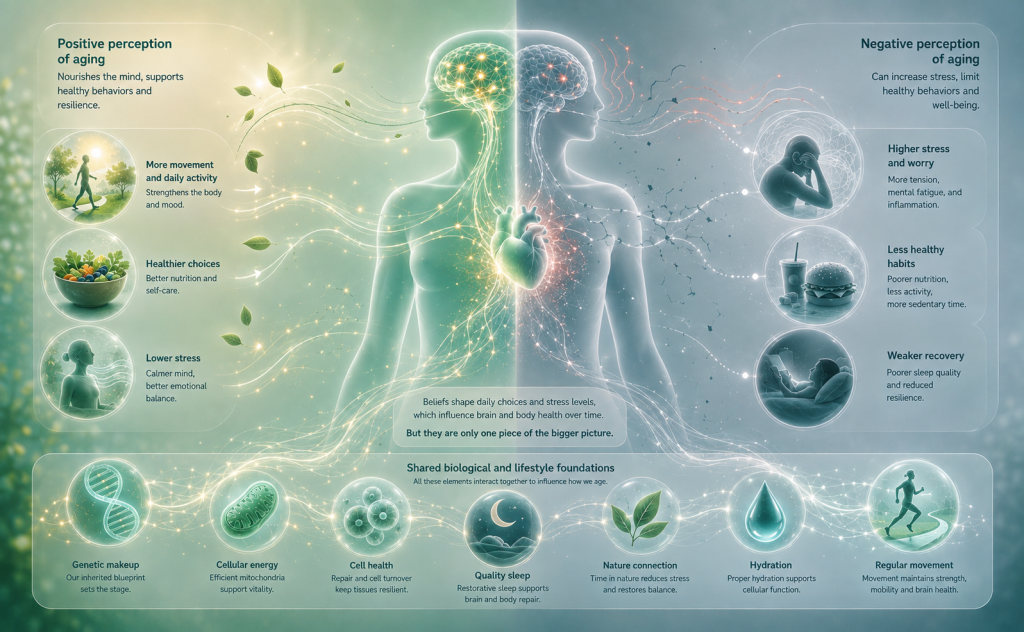
Key concept: What is Stereotype Embodiment Theory?
This theory suggests that beliefs about aging can influence health, behaviors, and physical functioning over time. Negative age beliefs have been linked to poorer health outcomes.
Why these findings matter
These results could help to overturn notions of old age as a period of inevitable deterioration and decline. Specifically, a group identified a number of striking patterns over the 12-year period, including an increase in participants’ walking speed.
“It’s remarkable,” explains University of Michigan psychologist Laura Zahodne, the lead researcher behind the study, “that these individuals actually got better at walking across the study.”
The evidence does not indicate that we can stave off the aging process with positive affirmations but rather shows that other things too may play a role in people getting older.
Level of evidence
This 12-year study shows a link between positive age beliefs and health outcomes. It does not prove that these beliefs directly cause improvements.
Conclusion
This study suggests that aging is not the same for everyone.
Some older adults can maintain or improve their physical and cognitive abilities over time. Future studies, including randomized interventions, will be needed to determine whether changing age-related beliefs can directly influence healthy aging.
Methodology
This article uses information from a peer-reviewed article in the journal Geriatrics. The researchers examined more than 10,000 American and Western European adults aged 65 and over, their memories and thinking abilities, functional capacities, and beliefs about aging for over 12 years.
Disclaimer
This article is for informational purposes only and does not replace medical advice. The study found a link between positive beliefs about aging and health outcomes, but it does not prove that one directly causes the other.
Sources
- Levy, B. R., Slade, M. D., et al. (2026). Aging Redefined: Cognitive and Physical Improvement with Positive Age Beliefs. Geriatrics.
- Yale School of Public Health. Study summary on aging and functional trajectories in older adults.
- Levy, B. R. (2009). Stereotype Embodiment Theory. Perspectives on Psychological Science.