Musculoskeletal health plays an important role in how people move, recover from injuries, and maintain their independence throughout life. From joint conditions and sports injuries to rehabilitation after surgery, orthopaedics and physiotherapy address many of the challenges that can affect physical function and quality of life.
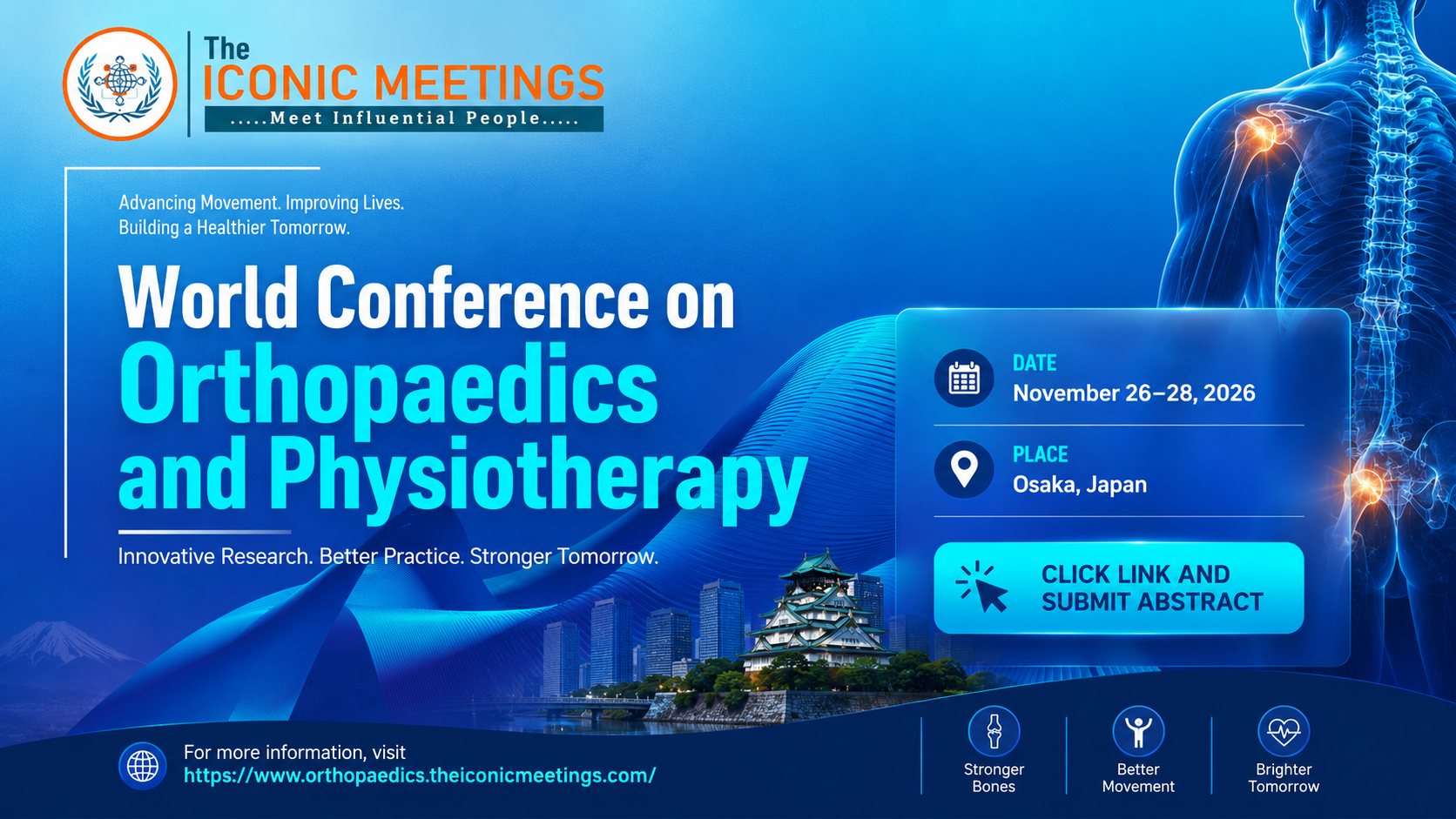
The World Conference on Orthopaedics and Physiotherapy (WCOP-2026) is scheduled to take place from November 26 to 28, 2026, in Osaka, Japan. According to the organizers, the hybrid event will bring together healthcare professionals, researchers, clinicians, and academics to discuss developments in orthopaedics, physiotherapy, and musculoskeletal rehabilitation.
The announced scientific program covers a broad range of subjects, including joint replacement, spine disorders, sports injuries, neurological physiotherapy, movement science, digital health, and regenerative medicine.
For professionals working in healthy aging, these topics are relevant to a wider question: how can advances in musculoskeletal care help people maintain mobility, recover more effectively, and remain active throughout their lives?
Key takeaways
- WCOP-2026 is scheduled for November 26–28, 2026, in Osaka, Japan, with in-person and virtual participation options announced by the organizers.
- The conference focuses on orthopaedics, physiotherapy, musculoskeletal disorders, sports injuries, and rehabilitation.
- Its announced topics include joint replacement, spine care, neurological physiotherapy, biomechanics, digital health, and regenerative medicine.
- Musculoskeletal health is an important part of healthy aging because pain, injury, and reduced physical function can affect mobility and independence.
- The conference aims to encourage scientific exchange and collaboration among professionals working in orthopaedics and rehabilitation.
Why musculoskeletal health matters for healthy aging
Healthy aging involves more than living longer. It also means preserving the physical abilities that allow people to manage daily activities, remain socially engaged, and maintain as much independence as possible.
The musculoskeletal system—including bones, joints, muscles, tendons, and ligaments—supports movement and physical stability. Conditions affecting these structures can make everyday activities more difficult, particularly when pain, reduced strength, or limited mobility persist over time.
Osteoarthritis, osteoporosis-related fractures, spinal conditions, and sports injuries are examples of problems that may require medical assessment and, depending on the situation, treatment or rehabilitation.
Orthopaedics and physiotherapy play complementary roles in addressing these challenges. Orthopaedic care includes the diagnosis and treatment of musculoskeletal conditions, sometimes involving surgery. Physiotherapy focuses on movement, physical function, rehabilitation, and helping people work toward individualized recovery goals.
These disciplines are particularly relevant to older adults, but musculoskeletal health matters at every stage of life. Injury prevention, appropriate treatment, and rehabilitation can all influence how people return to everyday activities after an injury or medical procedure.
The outcomes of treatment vary according to the condition, the individual, and the intervention. Nevertheless, maintaining mobility and physical function remains an important consideration in discussions about healthy aging.
WCOP-2026: An international conference in Osaka
The World Conference on Orthopaedics and Physiotherapy is scheduled for November 26–28, 2026, in Osaka, Japan.
The organizers describe WCOP-2026 as an international meeting for orthopaedic surgeons, physiotherapists, researchers, clinicians, academics, and other healthcare professionals. Its stated aim is to provide a platform for sharing research, discussing developments in clinical practice, and encouraging collaboration between orthopaedics and rehabilitation disciplines.
The event is advertised as a hybrid conference, with participation available in person or virtually.
According to the published event information, the program is expected to include keynote and plenary sessions, scientific presentations, workshops, and poster discussions. These formats can give participants opportunities to present research, discuss clinical questions, and exchange perspectives with professionals working in related fields.
The official website identifies the Grand Prince Hotel Osaka Bay as the venue. Attendees should confirm the latest logistical information directly with the organizers before making travel arrangements.
As with any scientific conference, the value of the discussions will depend on the quality of the research presented and the strength of the evidence supporting individual findings.
What topics will the conference explore?
The announced program covers several areas of orthopaedics, physiotherapy, and rehabilitation. Together, these subjects reflect the range of clinical challenges involved in protecting movement and supporting recovery.
Orthopaedic conditions, joint health, and surgery
The conference lists musculoskeletal disorders, joint replacement and arthroplasty, spine disorders, trauma and fracture management, paediatric orthopaedics, geriatric orthopaedics, and orthopaedic surgery techniques among its scientific topics.
These areas address conditions that can affect movement, comfort, and physical function in different ways.
Joint replacement, for example, may be considered for certain patients with severe joint damage when other treatment options have not provided sufficient relief. Treatment decisions depend on individual circumstances, clinical assessment, expected benefits, and potential risks.
Spine disorders and fractures also require careful evaluation because their effects can range from temporary limitations to significant challenges for mobility and everyday activities.
The inclusion of geriatric orthopaedics is particularly relevant to healthy aging. As people grow older, clinicians may need to consider not only the condition being treated but also the patient’s overall health, functional goals, recovery needs, and ability to return to daily activities.
The conference provides a setting for discussing these subjects, although the effectiveness of any specific surgical technique or treatment must be evaluated using appropriate clinical evidence.
Physiotherapy and rehabilitation
Physiotherapy and rehabilitation form another central part of the announced program.
Recovery after an injury, surgery, or illness can involve rebuilding strength, improving balance, restoring movement, and gradually returning to daily activities. The approach depends on the individual’s condition and should be adapted to their needs and recovery goals.
WCOP-2026 lists rehabilitation techniques in physiotherapy, neurological physiotherapy, cardiopulmonary physiotherapy, manual therapy, exercise therapy, post-surgical rehabilitation, and paediatric rehabilitation among its topics.
These areas address different populations and clinical needs. Neurological physiotherapy, for instance, may support people experiencing movement difficulties associated with neurological conditions, while cardiopulmonary physiotherapy addresses physical function in the context of heart or lung conditions.
Rehabilitation can also be important following orthopaedic surgery or injury. The aim is not simply to complete a course of treatment but to help people work toward functional improvements that matter in everyday life.
Outcomes differ between individuals, and rehabilitation plans should be guided by qualified professionals who can assess progress and adjust treatment when needed.
Sports injuries and movement science
Sports injuries and rehabilitation are also included in the conference program, alongside sports physiotherapy, soft tissue injuries, biomechanics, and movement science.
These fields examine how injuries occur, how the body moves, and how recovery can be supported. They are relevant not only to professional athletes but also to people who exercise for general health and want to remain physically active as they age.
Biomechanics studies the forces acting on the body and the relationship between structure and movement. In clinical and rehabilitation settings, biomechanical assessment may help professionals understand movement patterns and inform decisions about treatment or physical training.
However, no single assessment or intervention guarantees injury prevention. Appropriate exercise, recovery, and treatment depend on individual needs, the type of activity, and the nature of the injury.
By bringing together sports medicine, orthopaedics, and physiotherapy, the conference aims to encourage discussion across disciplines that frequently intersect in patient care.
Pain management and bone health
The announced topics also include pain management in orthopaedics, chronic pain and functional recovery, arthritis, and osteoporosis management.
Pain can affect sleep, movement, physical activity, and participation in everyday life. Persistent pain may require a broader assessment that considers its underlying causes, the person’s overall health, and the impact on physical and emotional well-being.
Bone health is another important component of musculoskeletal care. Osteoporosis can increase the risk of fractures, and fractures may have substantial consequences for mobility and independence, particularly among older adults.
Prevention, diagnosis, and treatment depend on individual risk factors and clinical assessment. When fractures occur, treatment and rehabilitation may be important parts of recovery.
These subjects connect orthopaedic practice with the wider goals of healthy aging: maintaining function, managing symptoms, and supporting people in their daily lives.
Digital health and emerging technologies
WCOP-2026 also lists advanced imaging in orthopaedics, assistive devices and prosthetics, regenerative medicine, robotic and minimally invasive surgery, and tele-rehabilitation among its scientific themes.
Digital health and technology are increasingly discussed in relation to assessment, treatment planning, rehabilitation, and access to care. Tele-rehabilitation, for example, may allow some patients to receive guidance remotely, depending on their needs, available technology, and the clinical services provided.
Robotic systems and advanced imaging may support particular procedures or clinical workflows, while assistive devices and prosthetics can help some people manage mobility limitations.
Regenerative medicine is a broad field investigating approaches intended to repair or restore biological structures and functions. Treatments involving stem cells or other regenerative approaches differ considerably in their evidence, safety, and regulatory status.
The inclusion of a technology in a conference program should not be interpreted as proof that it is effective or suitable for routine clinical use. Each intervention requires its own assessment of benefits, risks, evidence, and regulatory approval where applicable.
The connection between rehabilitation and longevity
For the longevity field, one of the most important questions is how to preserve physical function as people age.
Mobility can influence a person’s ability to work, exercise, travel, maintain social relationships, and manage daily responsibilities. When pain, injury, or physical limitations interfere with these activities, appropriate healthcare and rehabilitation may help address some of the resulting challenges.
Musculoskeletal health is only one part of healthy aging. Cardiovascular health, cognition, nutrition, mental well-being, social connection, and access to healthcare also contribute to long-term quality of life.
Nevertheless, orthopaedics and physiotherapy have a clear place in discussions about functional aging. They address problems that can affect how comfortably and independently people move through the world.
Scientific meetings can help professionals exchange research findings and discuss approaches to diagnosis, treatment, and rehabilitation. Whether these discussions lead to better patient outcomes depends on the quality of the evidence and how effectively relevant knowledge is translated into clinical practice.
For patients, treatment decisions should remain individualized and guided by qualified healthcare professionals.
Who may benefit from attending WCOP-2026?
Based on the topics announced by the organizers, the conference may be relevant to several professional groups:
- Orthopaedic surgeons and clinicians interested in musculoskeletal conditions, surgical approaches, joint replacement, and treatment developments.
- Physiotherapists and rehabilitation specialists working with patients recovering from injuries, surgery, neurological conditions, or other health problems.
- Researchers and academics studying biomechanics, movement science, rehabilitation, orthopaedics, or related disciplines.
- Healthcare professionals interested in pain management, arthritis, osteoporosis, and physical function.
- Professionals exploring rehabilitation technologies such as tele-rehabilitation, assistive devices, and emerging digital health approaches.
The organizers also advertise opportunities for oral and poster presentations. Researchers interested in participating should consult the official website for the latest submission requirements, deadlines, registration conditions, and presentation guidelines.
Event details
Event: World Conference on Orthopaedics and Physiotherapy (WCOP-2026)
Dates: November 26–28, 2026
Location: Osaka, Japan
Venue: Grand Prince Hotel Osaka Bay, as listed on the official website
Format: In person and virtual, according to the organizers
Main topics: Orthopaedics, physiotherapy, musculoskeletal disorders, sports injuries, joint replacement, rehabilitation, pain management, biomechanics, digital health, and regenerative medicine.
Official website: https://www.orthopaedics.theiconicmeetings.com/
Participants should check the official website for the latest conference schedule, participation options, registration details, and venue information.
Conclusion: Supporting Movement at Every Stage of Life
Musculoskeletal health is closely connected to the ability to remain active and independent. From treating joint conditions and managing injuries to supporting recovery through rehabilitation, orthopaedics and physiotherapy address challenges that can affect people throughout their lives.
WCOP-2026 plans to bring professionals from these fields together in Osaka in November 2026. Its announced program spans established areas of clinical practice as well as emerging subjects in digital health, movement science, and regenerative medicine.
For the healthy aging community, these topics are relevant because preserving physical function is an important part of maintaining quality of life. The conference’s contribution will ultimately depend on the quality of its scientific discussions and the evidence supporting the approaches presented.
As research and clinical practice continue to evolve, collaboration between orthopaedics, physiotherapy, and related healthcare disciplines remains important to understanding how best to support mobility, recovery, and long-term well-being.
Level of evidence
Evidence level: Event announcement and descriptive overview; not a clinical evidence review.
This article describes the conference and provides general context about its announced topics. It does not assess the effectiveness or safety of individual medical treatments, technologies, or rehabilitation protocols.
Event details and program themes are based on information published by the organizers. General statements about musculoskeletal health are included for educational context and should not be interpreted as a systematic review of clinical evidence.
Frequently Asked Questions
When will WCOP-2026 take place?
The World Conference on Orthopaedics and Physiotherapy is scheduled for November 26–28, 2026.
Where will the conference be held?
The event is scheduled to take place in Osaka, Japan. The official website identifies the Grand Prince Hotel Osaka Bay as the venue. Attendees should confirm final arrangements with the organizers.
Will virtual participation be available?
Yes. The organizers describe WCOP-2026 as a hybrid event, with in-person and virtual participation options.
What subjects will be discussed?
The announced program includes musculoskeletal disorders, joint replacement, spine conditions, sports injuries, physiotherapy, rehabilitation, pain management, biomechanics, digital health, and regenerative medicine.
Who should consider attending?
The event may be relevant to orthopaedic surgeons, physiotherapists, rehabilitation specialists, researchers, academics, and healthcare professionals working in related fields.
Can researchers submit abstracts?
The organizers provide an abstract submission section on the official website. Interested researchers should check the site for current deadlines, eligibility criteria, and submission instructions.
Does the conference establish that a particular treatment is effective?
No. A conference provides an opportunity to present and discuss research, but the effectiveness and safety of a treatment must be evaluated through appropriate scientific evidence and clinical assessment.
Methodology
This article was prepared using the conference brochure supplied by the organizers and information available on the official WCOP-2026 website at the time of drafting. General background on musculoskeletal health, physiotherapy, rehabilitation, and healthy aging was included to explain the relevance of the announced conference themes to Sogevity’s readership.
The article is an editorial overview of the event, not an independent assessment of the scientific committee, individual speakers, or the quality of the research that will be presented. Conference details may change and should be confirmed with the organizers before publication.
Disclaimer
This article is intended for informational and educational purposes only. It does not constitute medical advice, diagnosis, or treatment recommendations. Readers should consult qualified healthcare professionals regarding individual medical concerns. Conference dates, program details, participation options, and registration conditions should be confirmed directly with the event organizers.
Continue exploring longevity
Explore this longevity topic