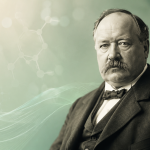
French, world-famous paleoclimatologist, Jean Jouzel has dedicated his career to the study of polar ices in order to understand the evolution of Earth’s climate. Former vice-president of the Intergovernmental Panel on Climate Change, he has become one of the main French voices on global warming. His work occupies a major place in contemporary reflections on human longevity, directly linking health, environment, quality of life and ecosystem stability.
“What the scientific community had anticipated is now happening”
Jean Jouzel’s scientific voice has never been dissociated from a sense of collective responsibility. For decades, he has occupies a particular position in the French public sphere: that of a researcher capable of transforming complex data on past climates into a clear and accessible explanation of humanity’s future. His approach is based on a constant conviction: Earth’s ancient climate can help anticipate future risks. “We understand a lot about future climate by looking at the past”, he stated in an interview dedicated to his work on Antarctic ice.
This position progressively gave him a role that extends beyond laboratory research alone. Through conferences, scientific work or public interventions, Jean Jouzel defends a long-term vision in which the climate issue also becomes a question of collective lifespan, global health resilience and the stability of human societies.
His career
Born in Brittany in 1947, Jean Jouzel first trained in physical chemistry before joining research work related to isotopes and past climates. Very soon, he became interested in polar ice as natural archives of Earth’s climate. This scientific direction shape his career.
In the 1970s, he joined major international programs dedicated to Antarctica and Greenland. Ice cores became essential tools for understanding climatic variations over several hundred thousand years. With Claude Lorius and others French researchers, he contributed to demonstrating the link between greenhouse gas concentrations and global warming. This 1987 publication marked a major turning point in modern climatology.
His scientific recognition increased internationally. Jean Jouzel participated to the IPCC (Intergovernmental Panel on Climate Change) in the 1990s, before becoming vice-president of a working group responsible for the physical basis of climate change between 2002 and 2015. During this period, IPCC reports became increasingly important in international politics and turned climate into a major geopolitical issue.
In addition to his research work, he developed a rare form of science communication for a researcher at his level. Books, conferences, public interventions, media appearances, and discussions with policymakers progressively became a natural extension of his scientific work. In France, he became one of the principal figures in the fight against global warming. His influence extended beyond academia and reached policy, economic, and educational spheres.
His vision of longevity
Jean Jouzel’s thinking is not limited to global temperatures issues. His vision of longevity is rooted in a systemic approach in which human health depends directly on environmental stability. In his public appearances, he regularly recalls that climate crises are already affecting the fundamental conditions of life: access to water, food supply, air quality, migration, or exposition to extreme events.
According to him, discussing longevity without considering ecological limits means ignoring the real determinants of future health. This perspective contrasts with certain technological approaches to longevity focused mainly on medicine or the biological enhancement of human capacities. Instead, Jean Jouzel places the question of life within a broader balance between human societies and the environment.
His discourse is also structured around a particular timeline. Where many public debates are focused on a short term horizons, he reasons in terms of several generations. This perspective come directly from his work on ancient ice. “I have long believed that looking at the past is a key to understanding the future”, he stated regarding his climate research.
However, over the years, his tone has hardened in response to political inaction. In many recent interviews, he has expressed a sense of frustration regarding the gap between available scientific knowledge and actual political decisions.
“I am disappointed. What the scientific community had anticipated for fifty years is now happening”, he reported while reflecting on decades of climate warnings.”
His vision of longevity is therefore less about an artificial extension of life than about a collective ability to preserve habitable conditions over the long term. He argues that human life expectancy cannot be separated from climatic stability. In this logic, environmental prevention becomes as important as medical innovations.
This position also leads him to criticize certain economic models based on intensive growth and continuous fossil fuel resources exploitation. According to him, limiting global warming requires a profound transformation of production systems, mobility, and consumption patterns. Climate change thus become as much a civilizational issue as a scientific one.
His influence and impact
Jean Jouzel’s impact can be observed at multiple levels. For example, in scientific terms, his work on polar ice core has contributed to establishing the modern foundations for understanding climate change. He has also played a key role in making complex scientific data accessible to a broad French audience.
His role has also become symbolic. In France, he is regarded as a major scientific in a debate often marked by polemics and ideological tensions. However, he is criticized by two very different groups, for opposing reasons: Climate deniers on one side, and environmental activists on the other, who argue that the political world is sometimes too slow in responding to scientific warnings.
Within contemporary debates on health and longevity, Jean Jouzel has also contributed to shifting perspectives. He emphasizes that gains in life expectancy resulting from medical progress could be undermined by environmental degradation. Heatwaves, pollution-related diseases, and food crises are, in this perspective, direct public health challenges.
His influence stems from his ability to maintain a stable scientific discourse over several decades, despite the evolution of public debate. This consistency gives his voice particular credibility in current discussions about the future of societies.
Living longer, but in what kind of world?
Jean Jouzel is part of a scientific generation that has seen a climate hypothesis become a reality. His career illustrates how fundamental research can progressively transform collective representations of the future. In his approach, longevity is not only linked to medicine or biotechnology, but also to the capacity to preserve stable living conditions for decades to come.
As climate challenges become increasingly central to global health debates, his work takes on a new dimension: a reflection on the possible duration of human equilibrium. And in this perspective, the question is no longer only how many years we can live, but in what kind of world life can continue.