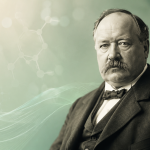
“The death of a species is what truly matters. The individual, on the other hand, is already destined to die.”
Jean-Marie Pelt was one of the main French figures of humanist ecology. A biologist, botanist, pharmacologist and author, he dedicated his life to studying the links between humans and their natural environment. Known for his books, radio broadcasts and documentaries, he developed a line of thought combining health, biodiversity and ecological balance. Long before longevity was considered from an environmental perspective, he already defended a global vision of life and the conditions necessary to preserve it.
Jean-Marie Pelt occupied a particular place in the French intellectual landscape. Trained as a scientific, he very early chose to make complex subjects related to nature, food, and health more accessible. His approach was based on a simple conviction: humans cannot be separated from the surrounding biological equilibrium. This idea appeared throughout his books and public speeches.
In several interviews, he emphasized the importance of observing the plant world to better understand the mechanisms of life. “Plants teach us wisdom”, he stated in an interview with the magazine “La vie” in 2015. This sentence mostly summarizes his thought. According to him, plants represented a model capable of adaption, cooperation and balance, offering insights for contemporary human societies.
His career
Born in Moselle in 1933, Jean-Marie Pelt developed a strong early interest in botany and the rural landscapes of his childhood. After studying pharmacy and biology, he became a research professor at the University of Nancy, where he specialized in medicinal plants and plant biology. His research led him to travel across several regions of the world to study traditional pharmacopoeias and the medical uses of plants.
These experiences played an important role in shaping his thinking. While a large part of the scientific world preferred a highly specialized approach, Jean-Marie Pelt focused on the relationships between species, biological interactions and natural balance. This holistic vision progressively became the central axis of his work.
In the 1970s, he contributed to the emergence of urban ecology in France. In Metz, where he held municipal responsibilities, he supported projects aimed at protecting natural areas and enhancing environmental heritage. In 1971, he founded the European Institute of Eology to promote a transdisciplinary reflection on the relationship between humans, health and the environment.
His influence extended beyond the academic world. Through program such as “L’Aventure des plantes” (adventure of plants) and his radio broadcasts, his voice became familiar in the French ecological debate. écologique français. His pedagogical and narrative style allowed him to reach a wide audience without adopting an activist or alarmist tone. Above all, he sought to transmit a more precise understanding of the mechanisms of life.
His vision of longevity
For Jean-Marie Pelt, longevity is not limited to life extension. It relies on a broader reflection on the biological, social, and environmental conditions necessary for a sustainable existence. According to him, human health depends directly on the quality of ecosystems, food and ecological balance.
Early on, he criticized the effects of an economic model based on the intensive exploitation of natural resources. In many books, he warned about the health consequences caused by pollution, soil depletion and industrialized agriculture. This reflection led him to defend a preventive approach to health, based both on living environments and medical progress.
In “l’Homme re-naturé”, published in 1977, he wrote: “It seems obvious that economic growth often happens tat the expense of ecological degradation.” This sentence illustrates a central idea in his work. According to Jean-Marie Pelt, modern societies gradually weaken the biological conditions that make their own development possible.
His view of the plant world also played an important role in his reflection on longevity. He considered plants as models of adaptation and interdependence. Contrary to a vision focused solely on competition, he emphasized the phenomena of cooperation observed in nature. Understanding the living world also informed his social reflection.
In many conferences, he stated that living organisms survive not through domination, but through balance and complementarity. This approach influenced his view of public health. According to him, a sustainable society relies as much on the quality of human relationships and the environment as on technological advances.
Jean-Marie Pelt was also cautious about certain technoscientific promises. Without rejecting medical research, he regularly reminded that innovation cannot sustainably compensate for the deterioration of natural environments. In an interview on ecology and the beauty of living world, he said: “I do not want ecology to become a purely technology-driven discourse.” This position reflects his desire to preserve a cultural and sensitive dimension in ecological reflection.
His thinking now resonates with several debates on environmental health, prevention and the limits of contemporary societies. Long before these issues became central, he already emphasized that human well-being depends on a stable and diversified environment.
His influence and impact
Jean-Marie Pelt contributed to bringing ecological issues into the French public debate sphere at a time when these topics were still marginal. His influence comes both from his scientific work and from his ability to popularize complex subjects. He contributed to the spread of the idea that human health, food and biodiversity are deeply interconnected and cannot be considered separately.
His approach sometimes sparked debates, particularly on pesticides, genetically modified organisms, and the limits of the industrial agriculture. Some observers considered his discourse too philosophical or insufficiently focused on technological innovation. However, many of the issues he addressed in the 1970s and 1980s have since become major public health concerns.
His intellectual legacy remains visible in contemporary reflections on environmental health and prevention. He helped reposition concepts such as quality of life and ecological balance at the center of discussions about the future of human societies.
To endure is not to survive
Jean-Marie Pelt belongs to a generation of thinkers who contributed to anticipating several issues that are now central in debates on health and longevity. Through his work, he promoted a vision of life based on interdependence rather than the domination of nature. His work reminds us that longevity cannot be understood solely through medical or technological progress.
In a context marked by environmental and health crises, his analysis retains a particular relevance. He contributed to showing that achieving sustainable living conditions requires prioritizing both ecological balance and scientific innovation. This reflection continues today to inform debates on how to live in contemporary societies.