In Monaco, the quest for excellence is no longer confined to real estate or finance; it now extends to human biology. In a world where life expectancy is stalling despite technological advances, the H.I.R.O center (Health Institute of Regeneration and Optimisation) offers a radical departure. Here, longevity is not treated as a biological inevitability to be endured, but as a precious capital to be optimized with the rigor of an engineer and the vision of a pioneer.
We met with Jean-Marie Butterlin, the founder of this revolutionary approach, to understand how his center succeeds in transforming the science of regeneration into a true life strategy for an exacting clientele in search of lasting vitality.
A career dedicated to health engineering
Behind every innovation often lies a drive to understand systems in depth. For Jean-Marie Butterlin, the transition from engineering to natural health was marked by a focus on optimization and a global vision.
Can you introduce yourself and tell us about your background?
An engineer by training, I have always had a specific relationship with health—that of an entrepreneur looking for systems, not recipes. Since 1990, I have evolved within the world of natural health, building several companies specialized in the manufacturing and distribution of food supplements: Labeffiplex, Perfect Health Solutions, and Lifespan Plus.
More than thirty years of experience in this field allowed me to understand the biological mechanisms underlying health—but also, and above all, their limits. You can formulate the best molecules in the world, but if they are not part of a global and personalized strategy, their impact remains partial. This realization, matured over the years, led me to found H.I.R.O Monaco—a center dedicated no longer to merely compensating for deficits, but to building active and sustainable longevity.
Today, I lead this center with a deep conviction: optimal health is not a state you reach; it is a capital you steer. And this steering is something you learn, measure, and refine over time.
What led you to found H.I.R.O Monaco and specialize in regenerative medicine?
Passion, first and foremost. A passion for innovative and effective medical solutions—and the desire to help people live longer, more intense lives, as free as possible from the constraints of physiological decline.
But also a field observation accumulated over three decades: conventional medicine, as effective as it is in treating proven pathologies, remains structurally ill-equipped to support deep prevention and health optimization. It intervenes after the fact. When the alarm signals are already there. However, aging doesn’t announce itself—it sets in silently, long before symptoms emerge.
Regenerative medicine and longevity represent, for me, the most fascinating frontier of modern medicine. We are no longer just talking about healing or preventing—we are talking about repairing, regenerating, and pushing back the biological boundaries of aging. It’s an ongoing revolution, and H.I.R.O Monaco is the means to let those who are willing to invest early benefit from it.
The H.I.R.O Method: Anticipation at the heart of the protocol
The “Longevity 360” program does not settle for classic check-ups. It offers total immersion and a fine analysis of biomarkers to act before decline sets in.
Your program relies on advanced diagnostics: what does this change concretely?
The difference is fundamental, and it boils down to two words: anticipation and personalization.
Conventional medicine largely operates on a reactive model—you consult because you are in pain, because an annual check-up revealed an anomaly, or because a clinical threshold has been crossed. This is a useful model for treating declared diseases, but it always arrives a bit late to prevent their onset.
The Longevity 360 program works in reverse. We intervene upstream, on parameters that have not yet tipped into the pathological but which, measured with precision, reveal silent areas of fragility. We track dozens of biomarkers—inflammatory, hormonal, metabolic, epigenetic—to draw a detailed biological map of each client. From there, we build a tailor-made program that specifically addresses their weak points.
Concretely, follow-up is organized throughout the year, remotely, with regular protocol adjustments, and twice a year, an intensive week at our center in Monaco. These immersion weeks are dense—about three hours of interventions per day—but they allow us to concentrate complementary therapies in a controlled environment, with an efficiency that home follow-up alone cannot achieve. The goal is always the same: to eliminate risks before a pathology declares itself and to optimize the biological capacities of each person over the long term.
You work with stem cell therapy and PRP: where does the science stand on these approaches?
This is a field in full effervescence, and we must speak about it with the rigor it deserves—neither excessive enthusiasm nor paralyzing caution.
Regarding stem cells, science is progressing fast but remains incomplete. We are currently working on developing protocols that will be integrated into the center in the near future. Current research—notably around Yamanaka factors and partial cellular reprogramming—opens extraordinary perspectives for tissue regeneration and cellular rejuvenation. However, these approaches still require rigorous clinical validation before being offered on a large scale.
While waiting for these protocols, the best way to naturally activate one’s own stem cells remains, to date, a prolonged 72-hour fast. This is not an intuition—it is a solidly established scientific fact. A 72-hour fast triggers a deep process of autophagy (cellular “recycling”) and stimulates the mobilization of hematopoietic stem cells. It is one of the most powerful biological levers we currently have for regeneration.
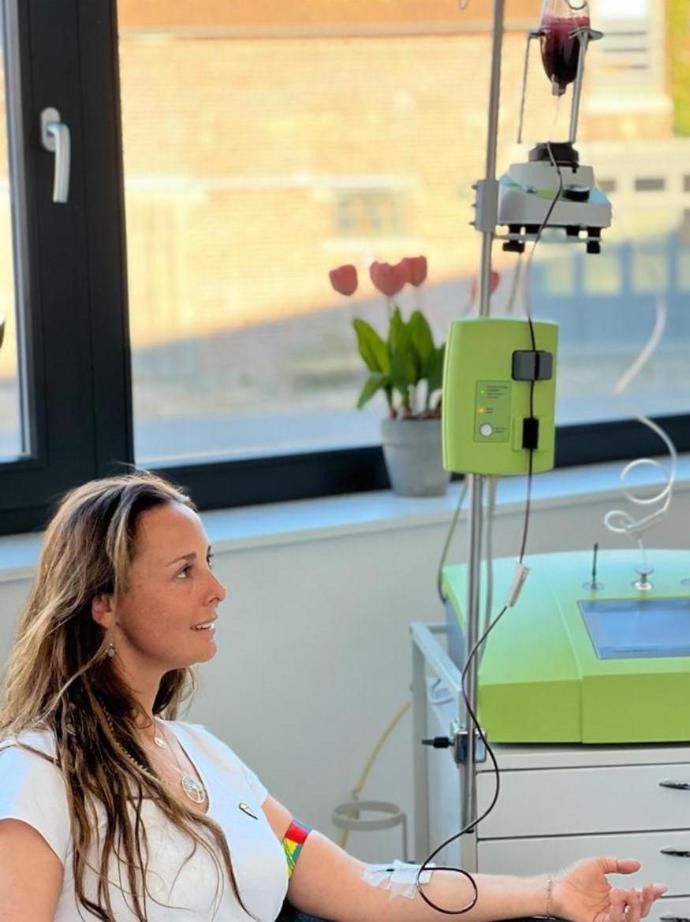
PRP (Platelet-Rich Plasma) follows a different logic: it is a local and targeted regeneration approach. By concentrating the growth factors naturally present in the patient’s blood, we stimulate tissue repair at specific sites—joints, skin, muscles. The results are well-documented in several fields, from sports medicine to regenerative dermatology. It is a precise tool, not a global promise.
A holistic vision: Beyond biology
While technology is essential, Jean-Marie Butterlin reminds us that longevity also rests on human pillars sometimes overshadowed by pure biohacking.
What is, in your opinion, the often-forgotten key to aging well?
If I had to choose just one that is systematically underestimated in the field of longevity, I would say: the sense of touch. And more precisely—being touched.
This might seem anecdotal compared to major discussions on mitochondria or epigenetics. But biology is formal: human physical contact—and particularly contact with one’s partner—produces measurable effects on dozens of body systems. Oxytocin secretion increases, cortisol decreases, the autonomic nervous system shifts toward parasympathetic relaxation, and immunity is bolstered. Studies on couples show that the quality of emotional and physical life is one of the most robust predictors of longevity—sometimes more effective than much more complex biohacking protocols.
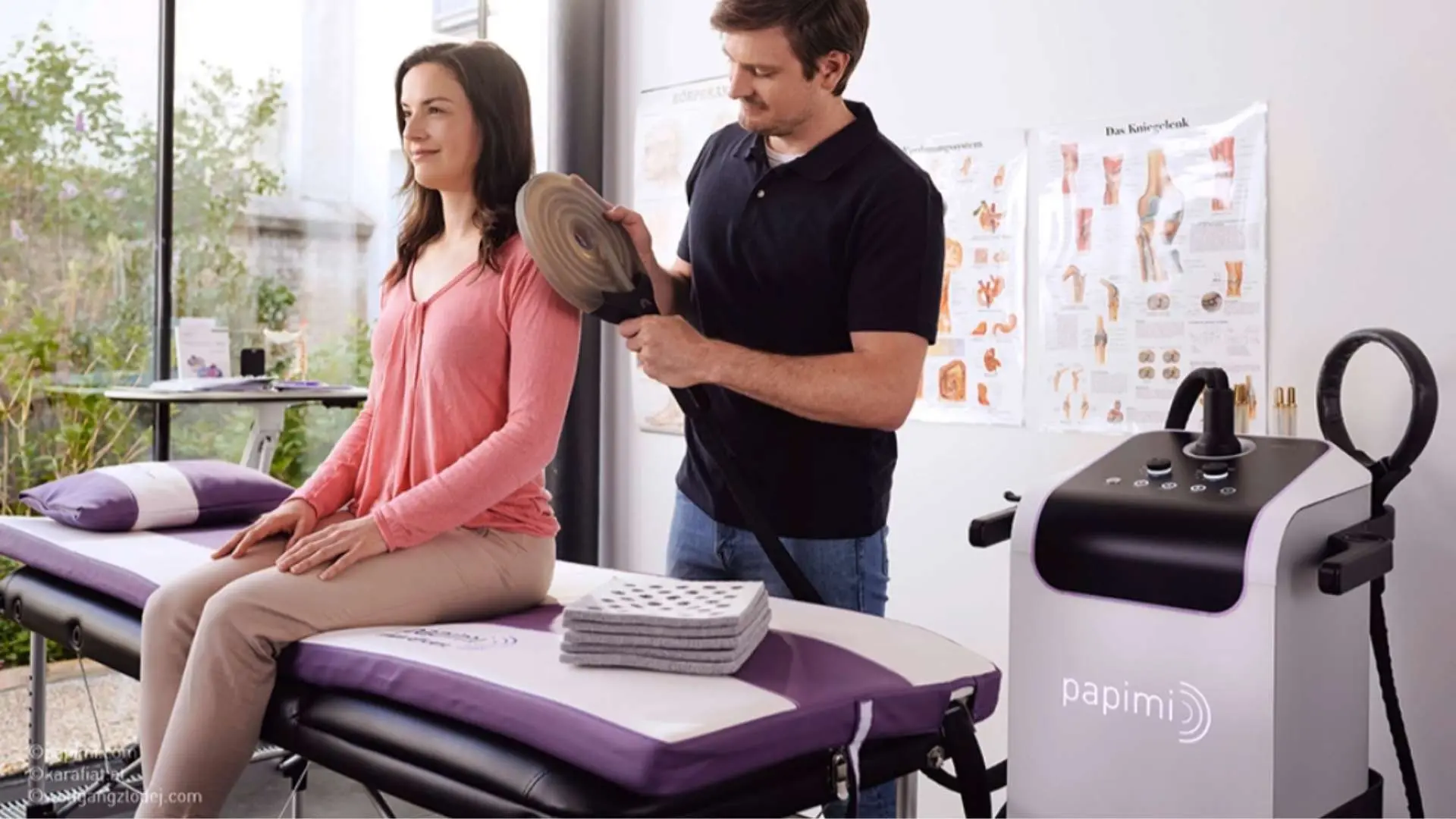
And this also applies to massage: a regular massage is not a trivial luxury. It is a biological intervention on the nervous system, circulation, and inflammation. Receptors in the skin send signals to the brain that lastingly modify the physiological and emotional state.
So yes, goodbye pajamas and long live human connection! It is one of the most accessible, enjoyable, and underestimated levers of longevity.
Who are your programs for, and what concrete impact do they have?
Our clients aren’t looking to cure something. Most of them do not have heavy pathologies. What distinguishes them is an acute awareness: aging well is not luck; it is an investment. In time and in attention.
These are people—men and women, often from their forties, sometimes earlier—who have understood that health is capital. That it is built, measured, and steered. And that the cost of inaction is, in the long run, much higher than the cost of active prevention.
The concrete impact? It is twofold. Objectively: improved biomarkers, normalized inflammatory profiles, and slowing biological aging markers. The consequences: regained energy, strengthened mental clarity, improved sleep quality, and—often—a deeply transformed relationship with one’s own body. One moves from a passive relationship to an active one with their health. And that changes everything.
The future of regeneration
With international expansion projects, H.I.R.O wishes to transform the medical experience into an inspiring journey, combining cutting-edge science with an exceptional setting.
What are your upcoming projects?
Our ambition is clear: to open new centers around the world in places that make sense—locations of beauty, calm, and inspiration. Environments where people spending a week with us are not undergoing a medical protocol, but living an experience.
The model we are developing is that of a stay with three hours of interventions per day—intensive, targeted, effective—surrounded by a setting that allows each client to live their passions, decompress, and reconnect with what matters. Longevity is not just biological: it is also a state of mind, a quality of presence. And the location matters.
The next centers will be located in destinations that combine exceptional quality of life with accessibility for an international clientele. We are also developing our remote follow-up capacity so that the support does not stop at the center’s doors.
One last piece of advice for improving longevity?
Start early. As early as possible.
At 30, we don’t think about longevity. It’s human—the effects of aging are not yet visible, the body seems solid, and alarm signals are absent. And yet, that is precisely where everything is decided.
The mechanisms of aging kick in long before we perceive them. Oxidative stress accumulates. Telomeres shorten. The epigenetic profile evolves. And every decade of active prevention—good nutrition, physical activity, stress management, sleep quality—produces compound effects that will be measured thirty, forty, or fifty years later.
It is the effect of compound interest applied to biology: the earlier you start, the more the benefits accumulate. And life after 100—which will become an increasingly common reality—will be all the more intense and fulfilling if we started laying the foundations at 30 rather than 60.
Toward a new era of proactive and personalized health
The H.I.R.O Center, nestled in Bordighera just a stone’s throw from Monaco, does not just offer treatments; it outlines the medicine of tomorrow. By combining the clinical expertise of Dr. Schmitz with cutting-edge diagnostic technologies, the institute allows everyone to transition from the status of passive patient to that of the pilot of their own biology.
This approach, which places regeneration and optimization at the heart of the human experience, proves that aging is no longer a linear inevitability, but a modular process. Whether through innovative therapies like PRP or deeper paradigm shifts like a return to human connection, H.I.R.O offers a precious compass to those who consider their health their most valuable capital.
Ultimately, Jean-Marie Butterlin’s goal is simple yet bold: to ensure that every year gained is not just an extra unit of time, but an opportunity to live with renewed intensity and clarity.
Practical Information and Contact The H.I.R.O Center, located in Bordighera near Monaco, offers an integrative approach in a professional and soothing setting. The team supports you with state-of-the-art technology and individualized protocols to add life to your years.
- Website: www.hiromonaco.com
- Email: info@hiromonaco.com
- Phone: +33 4 65 84 65 75
- Location: Bordighera
Continue exploring longevity
Explore this longevity topic