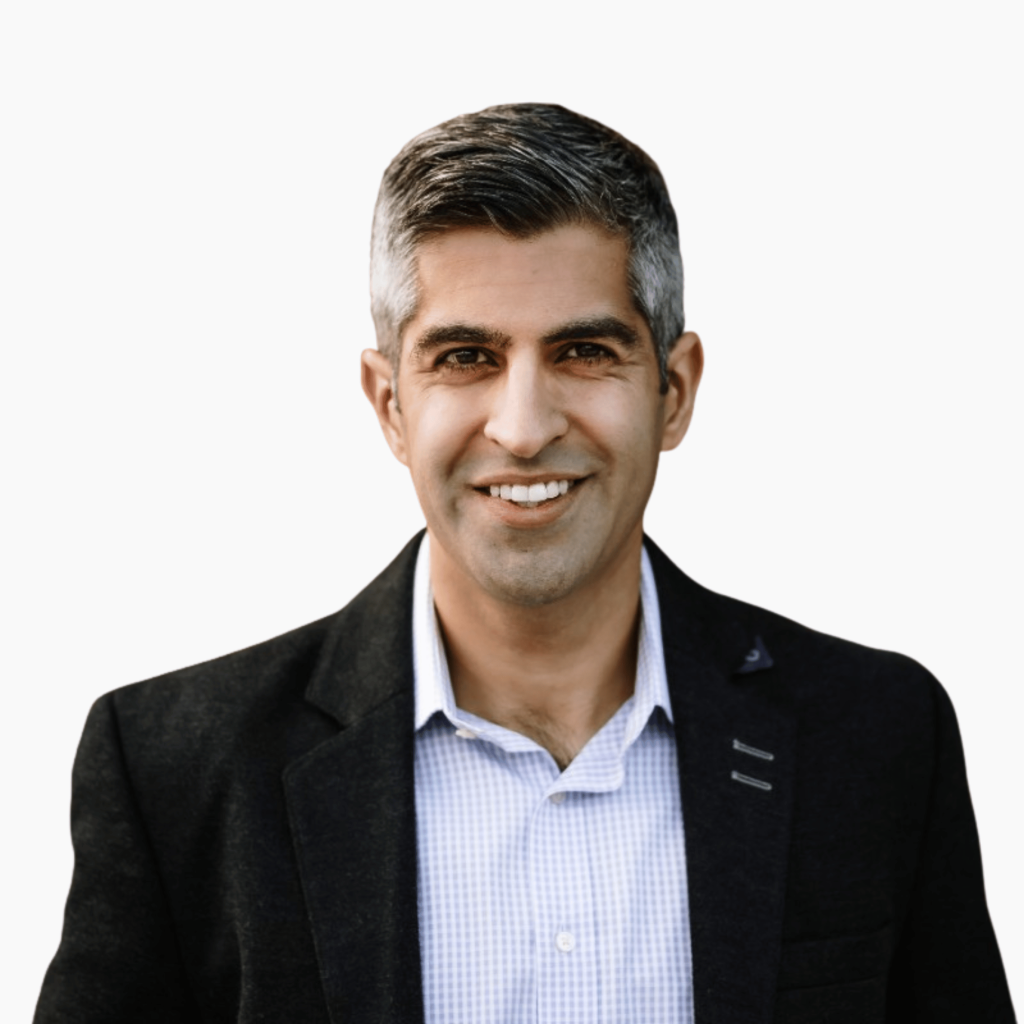
What if aging weren’t a biological inevitability, but a process that medicine could finally learn to slow at its root? That is the challenge Robin Mansukhani, co-founder and CEO of Deciduous Therapeutics, has set out to meet.
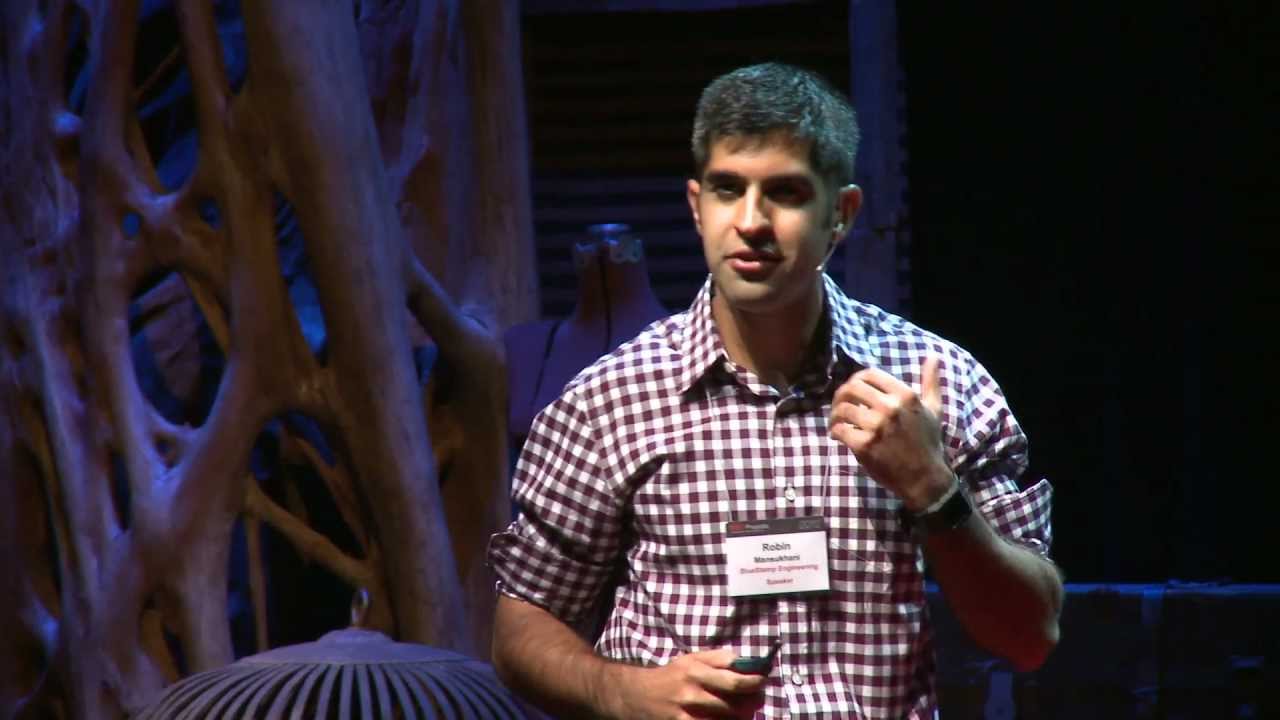
Far from being a newcomer to the health ecosystem, this biochemistry graduate from Case Western Reserve University has long navigated the intersection of disruptive innovation and strategy. After cutting his teeth in venture capital and investment banking, he led Alzeca Biosciences, a NIH-backed pioneer in Alzheimer’s disease diagnostics. A noted speaker (including on the TEDx stage) and committed entrepreneur — having co-founded BlueStamp Engineering for future engineers and served with AmeriCorps — Robin Mansukhani brings a systemic vision to longevity.
In a scientific landscape where drug development still follows the “one disease, one drug” model, Deciduous Therapeutics is taking a radical path. Based in San Francisco, the company is working on small molecules capable of restoring an immune function that erodes with age: the ability to eliminate senescent cells. These “zombie” cells, silently accumulating in our organs, fuel the chronic inflammation responsible for more than 35 pathologies, from pulmonary fibrosis to diabetes.
The ambition is immense: a single dose, administered intermittently, could act on all these systems simultaneously. Laetitia, Head of Partnerships and Content at Sogevity, sat down with this leader (and father of three daughters, passionate cook and sports enthusiast) to understand how his technology could transform our health journeys by 2040.
At the origin of everything: restoring what time damages
Behind every longevity startup lies a deep conviction ; and for Robin Mansukhani, it is both simple and radical: the immune system, if it still functioned as it did at 25, would be sufficient to prevent a large part of age-related diseases.
What inspired you to create Deciduous Therapeutics, and what is the problem you are most determined to solve in aging science?
Robin Mansukhani: What really motivated us was the desire to restore immune function in order to treat age-related diseases. We sought to understand the immune link behind the elimination of pathological inflammatory senescent cells.
The starting observation is fairly straightforward: when you are 20 or 30 years old, your immune system works very well. It is what naturally protects you from diabetes, metabolic diseases, frailty, and sarcopenia. But as we age, this immune function begins to decline. And when it declines, it opens the door to the accumulation of pathological inflammatory cells.
What we wanted to do was simply restore the immune function behind the elimination of these senescent cells. That is our starting point.

Senescent cells: understanding the enemy to better target it
They accumulate silently, invisible to the naked eye, yet their effects are devastating. Senescent cells are at the heart of the biology of aging ; and yet they remain largely unknown to the general public. Robin Mansukhani takes the time to demystify the mechanism, before explaining what Deciduous Therapeutics has managed to achieve where other approaches have hit a wall.
Your work focuses on targeting senescent cells. Can you explain simply how your approach works and why it represents an advance in treating age-related diseases?
Robin Mansukhani: In simple terms, senescent cells are permanently damaged cells. Sometimes a cell is damaged but can be repaired ; through DNA repair mechanisms ; and it then returns to its normal cell cycle. But other cells are irreversibly damaged: they no longer replicate, can no longer be repaired, and have no functional utility left.
Normally, the immune system identifies and eliminates them fairly quickly. But with age, this elimination capacity deteriorates. And when these senescent cells begin to accumulate, they cause chronic inflammation and fibrosis ; progressive tissue destruction across different organs. This is a fundamental mechanism of aging.
What we discovered early on in the company is that it is the NKT cells ; natural killer T lymphocytes ; that have the unique ability to recognize and eliminate these pathological senescent cells. And we have demonstrated in our models that administering a single dose of our small molecule drug can restore the function of these NKT cells. When we do that, we resolve fibrosis and metabolic diseases by approximately 75%.
Preventive medicine, accessible, and designed for everyone
Beyond laboratory results, the real question is that of access and large-scale impact. Robin Mansukhani sketches a vision here that goes beyond the strictly medical framework; and touches on the global health economy.
How do you see this technology evolving over the next 10 to 20 years, and how could it change the future of longevity and preventive medicine?
Robin Mansukhani: Over the coming years, we will first test our approach clinically and generate quantitative results on the actual efficacy of the drug in specific patient populations ; fibrosis first, then metabolic diseases.
But the long-term value rests on several things. First, the dosing regimen is intermittent ; these are not medications taken every day. It would be more like something done roughly once a year, or even less frequently, somewhat like a vaccination schedule. You administer the treatment, eliminate the senescent cells, and they take a long time to re-accumulate; so you may not need to return for a year or more.
Then there is the cost. Small molecules are not expensive to produce. What this means concretely is that this approach could be accessible to a global population. That is something I am truly proud of, because we want to create therapies that everyone can benefit from. It is good for families, for productivity, for healthcare systems ; for everyone.
And finally, there is the systemic dimension. When we administer this therapy, it acts on all organ systems. So if you have comorbidities, which most older people do, you will likely see a benefit not on just one disease, but on several simultaneously, with a single therapy.
Pulmonary fibrosis: the first clinical testing ground
With more than 35 diseases linked to the accumulation of senescent cells, the strategic choices of Deciduous Therapeutics speak volumes about their approach to clinical development: maximizing proof of efficacy while targeting where the need is greatest.
Which diseases or conditions could benefit most from your technology in the near future?
Robin Mansukhani: There are approximately 35 different diseases for which the accumulation of senescent cells is causally implicated in disease progression. They range from metabolic diseases to fibrotic diseases, through ocular diseases, brain diseases, and muscular disorders.
We are tackling pulmonary fibrosis first. And the reason is that most patients with pulmonary fibrosis have comorbidities that are themselves caused by senescent cells. So in our studies, we may not only see an impact on lung function — we could also see an impact on those comorbidities. That gives us multiple opportunities to demonstrate the efficacy of the approach.
Prove, don’t promise: the challenge of quantitative proof
The road between a promising discovery and an approved drug is long, complex, and fraught with obstacles. Robin Mansukhani is straightforward on this point: the real challenge is not only scientific; it is that of irrefutable, measurable proof that outperforms current standards.
What are the greatest scientific or regulatory challenges you still need to overcome before bringing your therapies to market?
Robin Mansukhani: The best way to advance a therapy is by demonstrating quantitative improvement. Because many studies or trials show qualitative improvements, based on what patients report themselves ; and that data can be quite unstable, it fluctuates. What I want to show is quantitative improvements, which can be objectively verified, and which are better than standard of care.
That is the next set of milestones we need to reach.
2040: health as a trajectory, not an emergency
The final question may be the most vertiginous ; and Robin Mansukhani answers it with a caution that stands in contrast to the sometimes grandiose discourse of the sector. For him, the key to everything, before longevity, is safety. Without it, nothing holds.
If everything goes as planned, what would a “longevity-optimized” health journey look like in 2040?
Robin Mansukhani: For this to truly work, the safety profile of the therapies must be impeccable. If we are talking about preventive medicine, if we want to administer therapies to people who are still healthy, the side effects and off-target effects must be near zero. Healthy people are not going to take treatments that induce side effects. .
But if that condition is met, then I believe we can begin to see a real impact on the extension of healthspan ; not necessarily lifespan, but healthy lifespan. Concrete functional measures.
One example: as we age, your insulin-producing beta cells become less efficient. Combined with metabolic slowdown and other age-related factors, you become at high risk for prediabetes or diabetes. With our approach, we have shown that we can resolve these factors: restore blood glucose levels, reduce insulin resistance, improve HbA1c. And doing that preventively is exactly where this kind of approach can change things.
The dawn of medicine that thinks in systems
What Robin Mansukhani articulates with disarming clarity is perhaps one of the most profound paradigm shifts medicine will need to make in the coming decades: moving from the logic of “one drug, one disease” to that of a systemic, intermittent, accessible intervention ; capable of treating multiple pathologies simultaneously by addressing their common root.
The promise is great. But what distinguishes Deciduous Therapeutics’ approach from mere longevity hype is their grounding in the fundamental biology of immunity, their strategic choice to begin with quantitative clinical proof, and their explicit commitment to making this medicine universally accessible; not reserved for those who can afford a five-figure biohacking program.
For centuries, aging was perceived as an inevitable trajectory: we rise, we decline, we disappear. The science of senescent cells is beginning to draw a different map ; one in which decline is not fatal, but interruptible. And if clinical results confirm what the models show, Deciduous Therapeutics could well be among the companies that will have changed that map for good.
One to watch very closely.
Continue exploring longevity
Explore this longevity topic