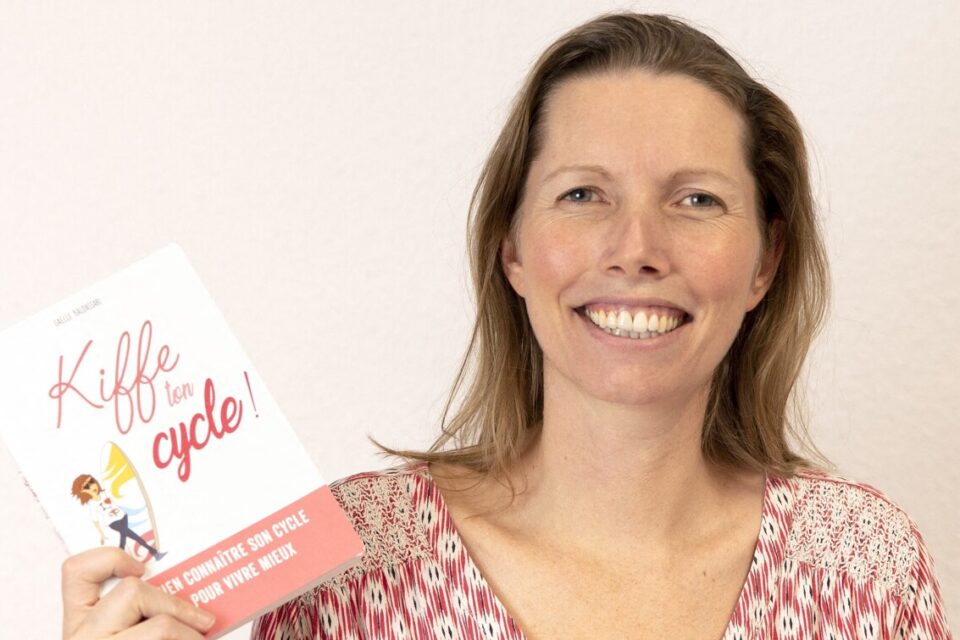
The menstrual cycle is not just a matter of fertility or monthly comfort. For Gaëlle Baldassari, founder of “Kiffe ton Cycle”, it is a true health barometer and a frequently ignored lever for longevity. From banking to science communication, her journey is one of resilience that led her to break taboos and offer women the keys to their own biology. Interview.
A journey born from an electroshock
Gaëlle’s story begins far from research laboratories, in the hushed world of finance. But a dramatic personal event would act as a wake-up call, forcing her to look closely at a body she thought she knew.
Can you introduce yourself and tell us about your background?
I am Gaëlle Baldassari, creator of Kiffe ton Cycle. For 15 years, I worked in banking. Nothing predestined me to menstrual education. It was a journey through medically assisted procreation (IVF) that changed everything. I have polycystic ovary syndrome (PCOS), and the IVF process almost cost me my life: I suffered stage 4 ovarian hyperstimulation syndrome and spent several days between life and death.
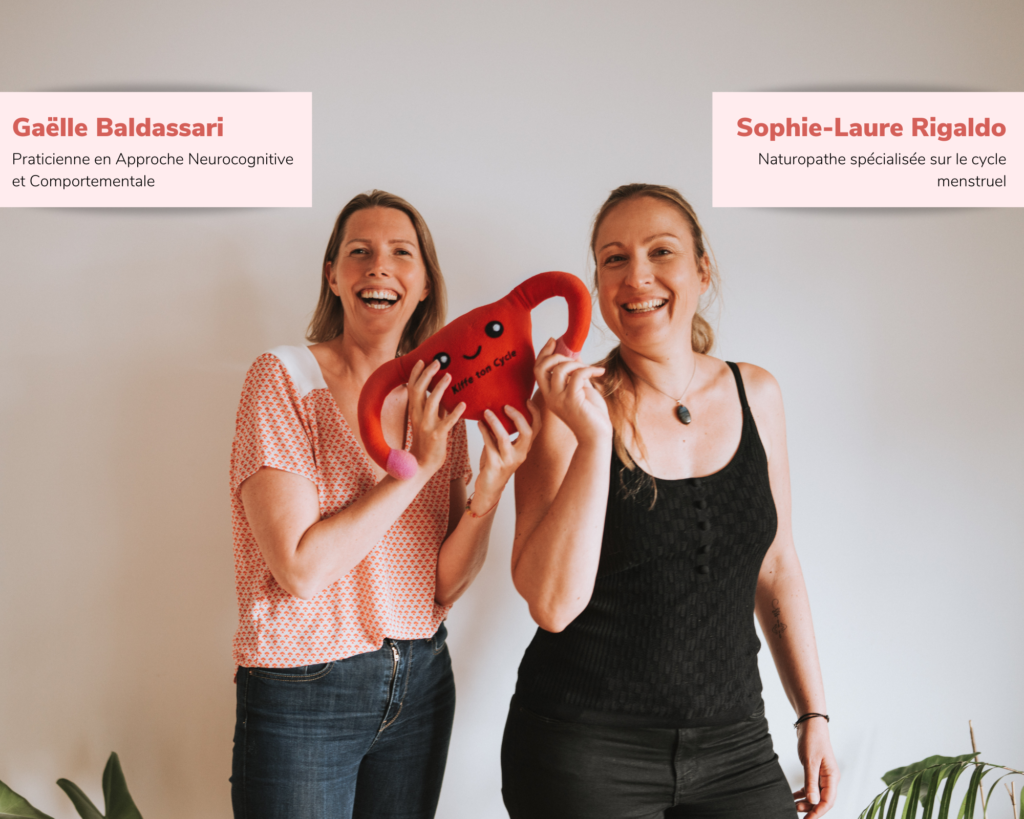
This experience was an electroshock. I realized that the menstrual cycle remained one of the last great taboos. Twelve years ago, when I started, it was a largely unexplored subject, surrounded by massive ignorance, including among healthcare professionals. I was self-taught; I interviewed over 250 researchers and experts on topics related to the menstrual cycle, and scientists themselves reached out to me to exchange ideas. Today, I am a certified coach in the Neurocognitive and Behavioral Approach and a science communicator. I have published two books with Larousse, and with the Académie Kiffe ton Cycle, we have trained over 300 menstrual educators.
Turning constraints into allies
Behind the creation of her platform lies a simple yet powerful mission: moving from ignorance to empowerment. For Gaëlle, understanding one’s hormones means reclaiming power over daily life.
What led you to create Kiffe ton Cycle?
Right after my daughter was born, I opened a coaching practice dedicated to supporting women’s empowerment. While talking with them, I realized a striking reality: the ignorance surrounding the menstrual cycle was abyssal, even among women themselves. Most didn’t know that their mood swings and energy fluctuations were directly linked to their cycle. They just endured them without understanding. I told myself that women absolutely needed to know this was normal, and above all, that they could do something with it rather than just suffer through it. That is how Kiffe ton Cycle was born. And gradually, the topic expanded far beyond mood and energy. The real question became: what is normal to experience during your cycle, and what is not?
The cycle: a global health indicator
From a longevity perspective, the female cycle is not an isolated biological function. It acts as an early warning system, an interface between our environment and our future health.
What is the link between knowing the female cycle and longevity?
The menstrual cycle is an extraordinary, yet highly misunderstood—and even mistreated—whistleblower. By observing its fluctuations, the quality of ovulation, and appearing symptoms, a woman can detect deficiencies, hormonal imbalances, and health issues that would otherwise fly under the radar. The cycle is the tip of the iceberg. It makes visible what would otherwise remain invisible. And if a woman supports her body in resolving what the cycle is signaling, she lives healthier, longer. Knowing your cycle is not a matter of comfort or personal development. It is a full-fledged preventative tool.
What discovery or conviction has most transformed your relationship with your body and health?
The discovery that changed everything was understanding that in the West, we wait for problems to be severe and deeply established before addressing them. A disease exists when symptoms are present, visible, and impossible to ignore. In other cultures, the logic is reversed: the very first signs are taken seriously. And the menstrual cycle, through its 8 health indicators, allows exactly that. It allows us to observe a problem taking shape before it sets in. Before, I was one of those people who believed that as long as the medical check-up was good, everything was fine. Today, I look at weak signals. I try to give my body what it needs and view every signal as an opportunity: the chance to resolve an issue before it imposes itself, rather than waiting to suffer from it and treat it.
Preparing for tomorrow: the importance of physical capital
Aging well as a woman requires anticipating major hormonal shifts. Here, Gaëlle emphasizes a pillar that is often overshadowed by aesthetics, yet is vital for independence.
In your opinion, what is the frequently forgotten key to aging well as a woman?
The completely underestimated key, in my view, is muscle mass. Having sufficient quality and quantity of muscle is a central pillar of women’s health, yet nobody presents it that way. After menopause, the drop in hormones naturally leads to muscle wasting. If your muscle capital is sufficient beforehand, this transition won’t be problematic. And everything flows from there: the physical activity required to build this muscle will also keep bones healthy and limit the risk of osteoporosis, reduce the risk of type 2 diabetes, and strengthen the body’s overall resilience. The problem is that in our society, a muscular woman is still perceived as unappealing. This vision is deadly. It distances women from exactly what could protect them in the long run.
An education for all ages
The work of Kiffe ton Cycle goes beyond simple consultations. It is a transmission movement aimed at educating new generations and professionalizing support.
Who is your work aimed at, and what concrete impact does it have on the daily lives of the women you support?
I like to remind people that 100% of humanity was born thanks to the menstrual cycle. Therefore, 100% of humanity should understand it. Menstrual education work is meant for all stages of life. We work with young girls a few years before their first period, and then with co-ed audiences in middle school so that boys and girls have the same level of information. After that, throughout menstrual life, right up to perimenopause and menopause, through various workshops.
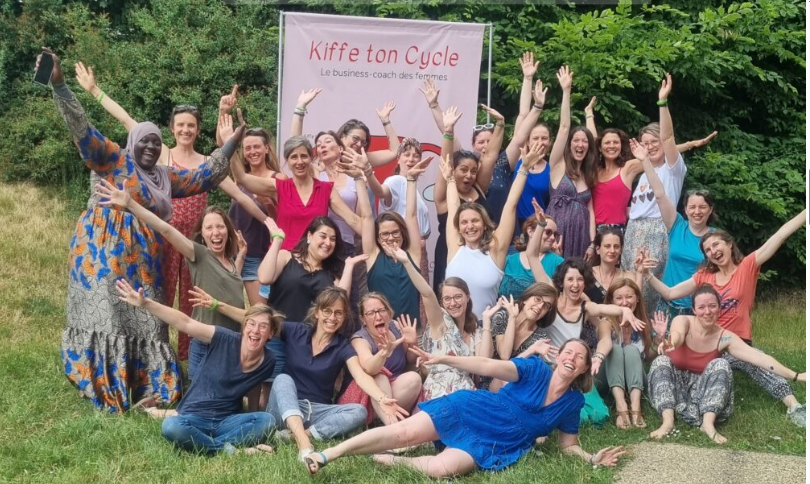
The concrete impact on these women is profound: they stop suffering from their cycle and start seeing it as an ally, a positive and informative phenomenon that briefs them on their health status. This is the feedback we receive most often: this shift in perspective changes absolutely everything. Today, personally, I focus more on training. With the Académie Kiffe ton Cycle, I train menstrual educators who then run these workshops on the ground. I particularly target professionals in coaching, care, well-being, and healthcare who already support women and want to add this skill to their practice. For them, it’s another string to their bow: they understand the women they support better, they are better equipped to inform them, and it allows them to grow their professional activity from a new angle.
What are your upcoming projects?
After creating the profession of menstrual educator, we are currently creating that of menstrual well-being consultant. This new profession aims to provide individual support to menstruating individuals facing difficulties, working on all aspects of lifestyle, as a complement, of course, to medical care. The idea is to understand the impact of lifestyle on cycle issues and take action to improve daily experience. The first cohort is currently training. The ambition, let’s be clear, is to change the world so that menstrual well-being becomes the norm in our society. First through information, thanks to menstrual educators, by continuing to train as many as possible. Then through support, thanks to menstrual well-being consultants, so that those experiencing difficulties feel less alone, are supported, guided, and can move toward better well-being.
If you had to give just one piece of advice to improve longevity, what would it be?
Verify, throughout your menstrual life, that your cycles are ovulatory. And if the cycle shows deficiencies or unusual signals, do not ignore them: listen to what is happening and look for solutions to return to a balance. This simple reflex could truly change the lives of menstruating individuals.
A new perspective on women’s well-being
Gaëlle Baldassari’s approach highlights the importance of proactively reading female biological signals. By placing the menstrual cycle back at the heart of global health and prevention, she offers a paradigm shift where self-knowledge becomes a tool for autonomy. Whether through educating the youngest or supporting women toward menopause, the goal remains the same: transforming a natural biological function into a genuine management tool for long-term health.
About Kiffe ton Cycle
Kiffe ton Cycle reinvents menstrual education so that the cycle is better understood and better lived. From puberty to menopause, the organization offers tools and professional training to make menstrual well-being a source of empowerment.
Their mission: To educate, inspire a positive relationship with hormones, and empower every individual.
Key offerings:
- Training to become a Menstrual Educator or Menstrual Well-being Consultant.
- Thematic online programs: Kiffe tes premières règles, Kiffe ton SPM, Kiffe tes règles sans douleur, Kiffe ta préménopause.
- A network of over 200 ambassadors throughout the French-speaking world.
To learn more, discover their articles and masterclasses at: www.kiffetoncycle.fr
Continue exploring longevity
Explore this longevity topic