Key information
- Betaine can help maintain skin hydration thanks to its osmoregulatory action
- It acts as an osmoprotective agent, helping skin cells preserve their water balance
- It is associated with a reduction in mild inflammation and cellular stress.
- It is used in cosmetics to calm, soften, and strengthen the skin barrier.
- In vitro studies suggest that it can support the function of keratinocytes exposed to environmental stress.
In the world of skincare, certain ingredients stand out by their stealth and gentle efficiency; betaine is one of them. This ingredient is naturally present in certain plants and incorporated in several dermo cosmetic formulas for its capacity to support hydration and cellular balance.
At a time when the skin is exposed to constant stressors such as pollution, climate change, and oxidative stress, preserving its integrity becomes a matter of a long-lasting, sustainable health project. This has led to growing interest in its potential role in protecting skin cells and maintaining a functional barrier. This article studies its origin, its mechanisms of action, and its place in a routine aimed at promoting skin longevity.
What is it ?
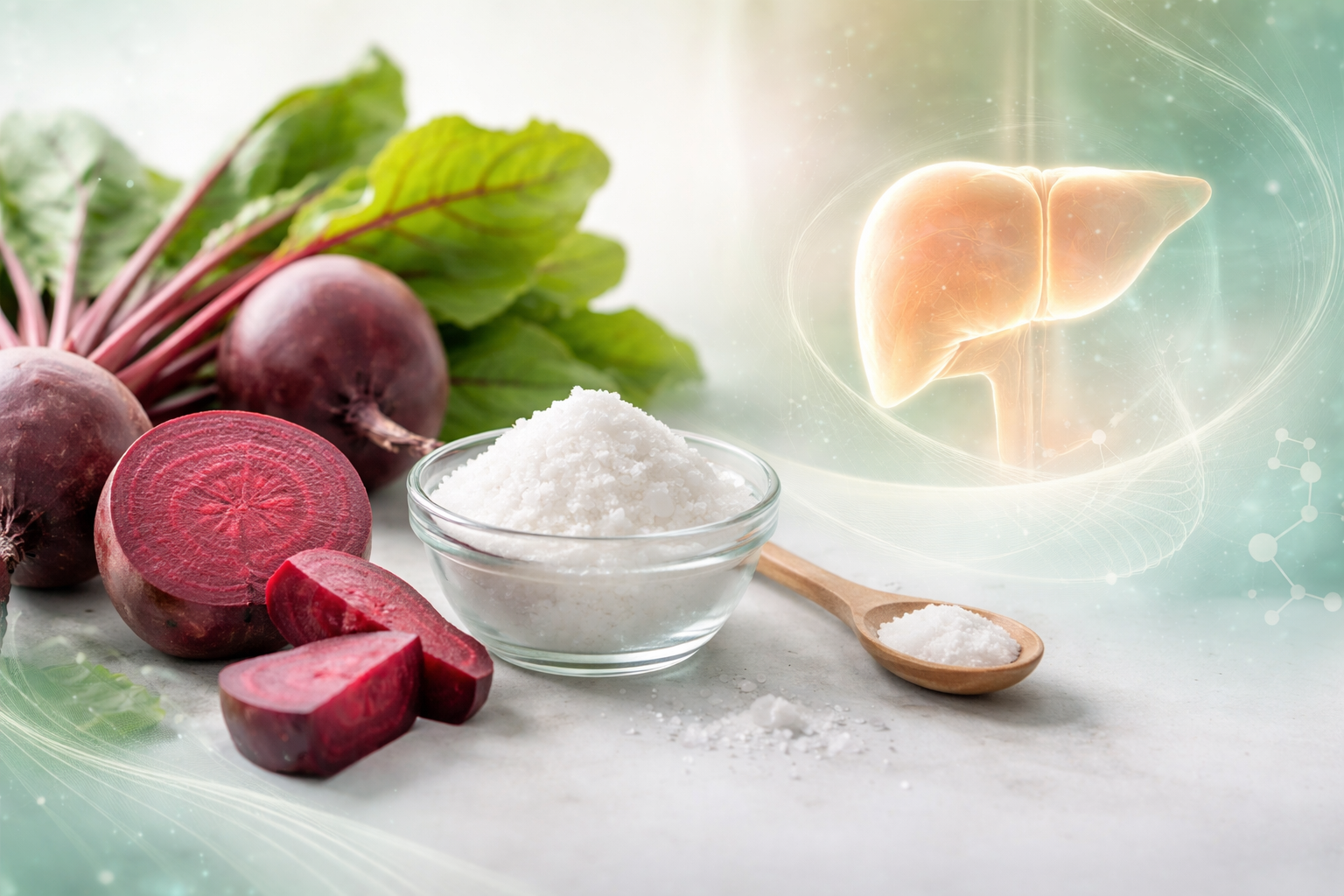
Betaine, also known as trimethylglycine, is a derivative of an amino acid naturally present in plants such as sugar beet (beta vulgaris), from which it gets its name.
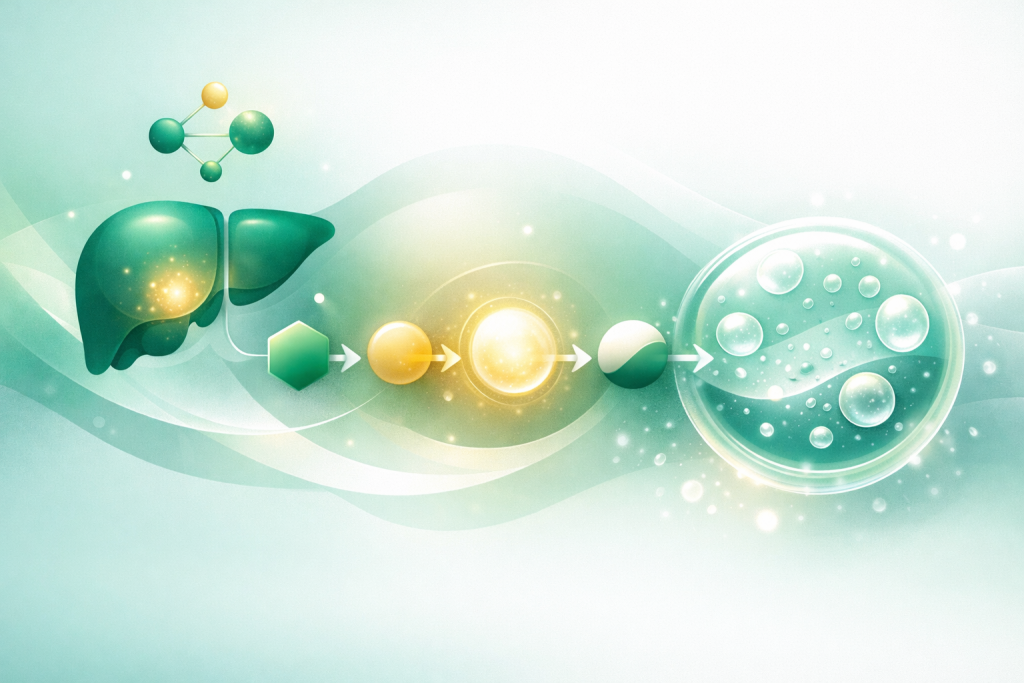
In the body, betaine acts as a methyl donor and participates in various metabolic processes. In cosmetics, its value lies mainly in its osmolyte capacity that helps cell regulation and water balance in response to environmental variations.
Its key feature resides in its capacity to stabilize protein and membrane structures, which helps preserve the integrity of the skin cells
Did you know
Research in cell biology shows that betaine can improve the survival of cells exposed to osmotic stress by stabilizing their intracellular environment.
How does it work ?
Main action
Betaine acts mainly as an osmoprotectant. It helps keratinocytes (which are the majority of cells in the epidermis) maintain their moisture balance when the environment becomes dry or harsh. Regulating intracellular osmotic pressure limits water loss and helps maintain cell structure. This mechanism indirectly supports the skin’s barrier function.
Effects at the skin level
Betaine is associated with improved hydration of the stratum corneum, but also with the strengthening of the epidermal barrier and the reduction of irritation sensation. In the same way it modulates mild inflammation caused by environmental stress and can help preserve the skin’s suppleness and softness, while supporting its physiological balance.
What it means in terms of longevity
From a skin longevity perspective, maintaining optimal hydration and limiting cellular stress is essential. Betaine could indirectly support cellular energy by reducing osmotic imbalances that cause cellular fatigue. It does not transform the skin, but it can help its natural defense mechanisms and promote more balanced skin aging.
Study Box
2019 – In vitro study (International Journal of Cosmetic Science)
The results suggest that betaine could improve keratinocyte tolerance to osmotic stress and support barrier function.
Benefits
Long- lasting hydration
Betaine attracts and retains water in cells without creating an occlusive film. It acts deeply at the cellular level, supporting water balance. In practice, this can result in more supple skin, less prone to tightness, especially in dry or air-conditioned environments.
Skin soothing
Thanks to its impact on cellular balance, it is associated with reduced skin discomfort. It can help limit the inflammatory response linked to daily aggressions. Betaine is therefore interesting for skincare products designed for sensitive or fragile skin.
Support for the skin barrier
By stabilising cellular membranes, betaine helps maintain the integrity of the epidermal barrier.
A functional barrier supports skin vitality, limits water loss, and protects against environmental factors that can accelerate aging.
Sources naturelles
Betain can be found in several natural sources such as sugar beet, spinach, quinoa, wheat bran, or seafood.
Dosage, forms & bioavailability
In cosmetics, betaine is generally used in concentrations between 1% and 5%.
It’s available in the form of a water-soluble powder or directly incorporated into serums, creams, or gentle cleansers.
It can act in combination with: hyaluronic acid, glycerin and ceramides. Its use is compatible with regular use. Visible results are related to daily application for several weeks.
Safety & precautions
Betaine has a high tolerance profile regarding skin application. It is generally well tolerated by sensitive skin. Side effects are rare and mostly related to the overall formula of the product rather than to betaine itself.
As with any skincare product, a test is recommended for those with reactive skin. Professional advice is recommended for individuals with a particular skin condition.
How to incorporate it in a longevity routine
When to use it
Apply directly on the skin in the morning and/or evening, after cleansing.
Possible combinations
It can be associated with moisturizing and repairing active ingredients such as hyaluronic acid or ceramides, as well as mild antioxidants.
Example of a simple routine
- Gentle cleanser containing betaine
- Moisturizing serum
- Barrier cream
- Sunscreen for daytime use
For whom is it particularly interesting
For individuals with dry, dehydrated, or sensitive skin. It can also be used in urban environments or dry climates as well as in a preventive approach to skin aging.
A gentle ally to support cellular balance?
Betaine is an important factor in a delicate and respectful approach to skin physiology. It helps natural mechanisms of cellular adaptation to environmental stress instead of imposing intensive corrective action. In a conscious approach to longevity, maintaining hydration, supporting the skin barrier, and limiting mild inflammation are fundamental pillars. Betaine can therefore play a role in a routine aimed at maintaining skin vitality and comfort over time. A simple, scientifically sound step to support the skin’s long-term balance.
Sources
- International Journal of Cosmetic Science – Études sur les osmolytes et la fonction barrière
https://onlinelibrary.wiley.com/journal/14682494 - Lever, M., & Slow, S. (2010). The clinical significance of betaine. Annual Review of Nutrition, 30, 219–238.
https://pubmed.ncbi.nlm.nih.gov/20420535/ - Kwon, T. R., et al. (2019). Osmoprotective effects of betaine on skin cells. International Journal of Cosmetic Science.