
A healthy smile is often associated with vitality, confidence and overall well-being. In recent years, cosmetic dental bonding has become one of the fastest-growing treatments in cosmetic dentistry because it offers natural-looking improvements without major dental alteration.
Unlike more invasive procedures, cosmetic dental bonding focuses on preserving the natural tooth structure while correcting visible imperfections with precision. Using advanced composite resin materials, cosmetic dentists can repair chipped teeth, improve tooth symmetry, close small gaps and restore smile harmony in a relatively short appointment.
The popularity of cosmetic bonding teeth procedures reflects a broader shift in modern aesthetics. Patients today increasingly seek subtle and refined enhancements rather than artificial transformations. They want treatments that respect natural anatomy while improving confidence and appearance.
Beyond aesthetics, oral health also plays an important role in overall wellness. Research published through organizations such as the National Institutes of Health continues to explore the relationship between oral inflammation, systemic health and long-term well-being.
At Sogevity, we call this conscious longevity: improving quality of life while preserving the body’s natural structures.
In this complete guide, you will discover:
- what cosmetic dental bonding is
- how the procedure works
- cosmetic dental bonding before and after expectations
- how long bonding lasts
- cosmetic dental bonding cost
- bonding vs veneers comparison
- risks and limitations
- aftercare recommendations
- expert insights and FAQ answers
What is cosmetic dental bonding?
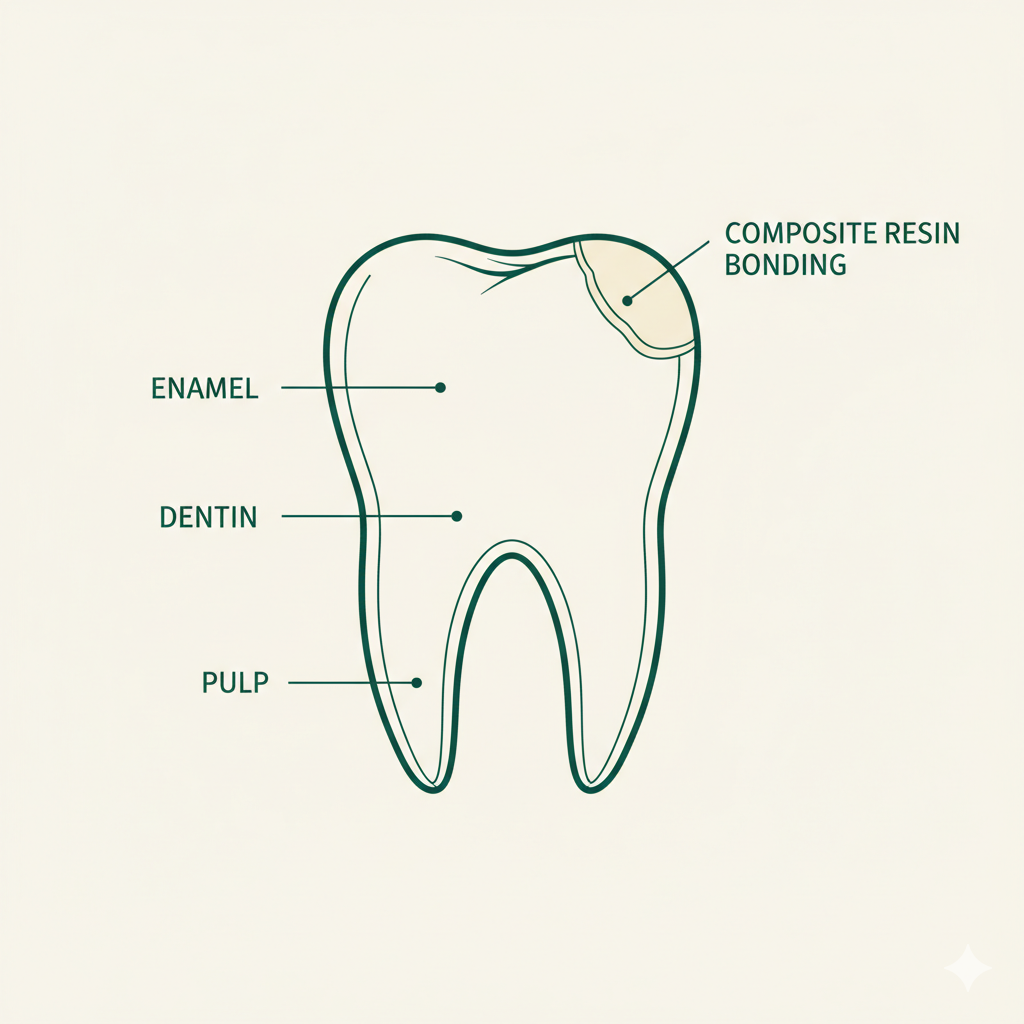
Cosmetic dental bonding is a minimally invasive cosmetic dentistry procedure that uses tooth-colored composite resin to improve the appearance of teeth.
The resin is carefully applied to the tooth surface, sculpted to create a natural shape and hardened using a special curing light. Once polished, the final result blends closely with the surrounding enamel.
Dentists commonly use cosmetic dental bonding for:
- chipped teeth
- cracked teeth
- uneven tooth edges
- mild discoloration
- small gaps between teeth
- asymmetrical teeth
- reshaping short teeth
- smile enhancement
One of the major advantages of cosmetic dental bonding is enamel preservation.
Unlike veneers or crowns, bonding usually requires little to no removal of healthy tooth structure. This conservative philosophy aligns with modern preventive dentistry and minimally invasive aesthetic care.
Why patients choose cosmetic dental bonding
Many patients prefer cosmetic bonding because it offers:
- natural-looking results
- same-day treatment
- lower cost compared to veneers
- minimal discomfort
- little or no anesthesia
- reversible adjustments in some cases
- preservation of natural enamel
The treatment is especially attractive for individuals looking for subtle smile improvements rather than dramatic cosmetic transformations.
Did you know?
Cosmetic dental bonding often requires significantly less enamel removal compared to porcelain veneers, making it one of the most conservative cosmetic dentistry procedures available today.
How does cosmetic dental bonding work?
The cosmetic dental bonding procedure is typically completed during a single appointment.
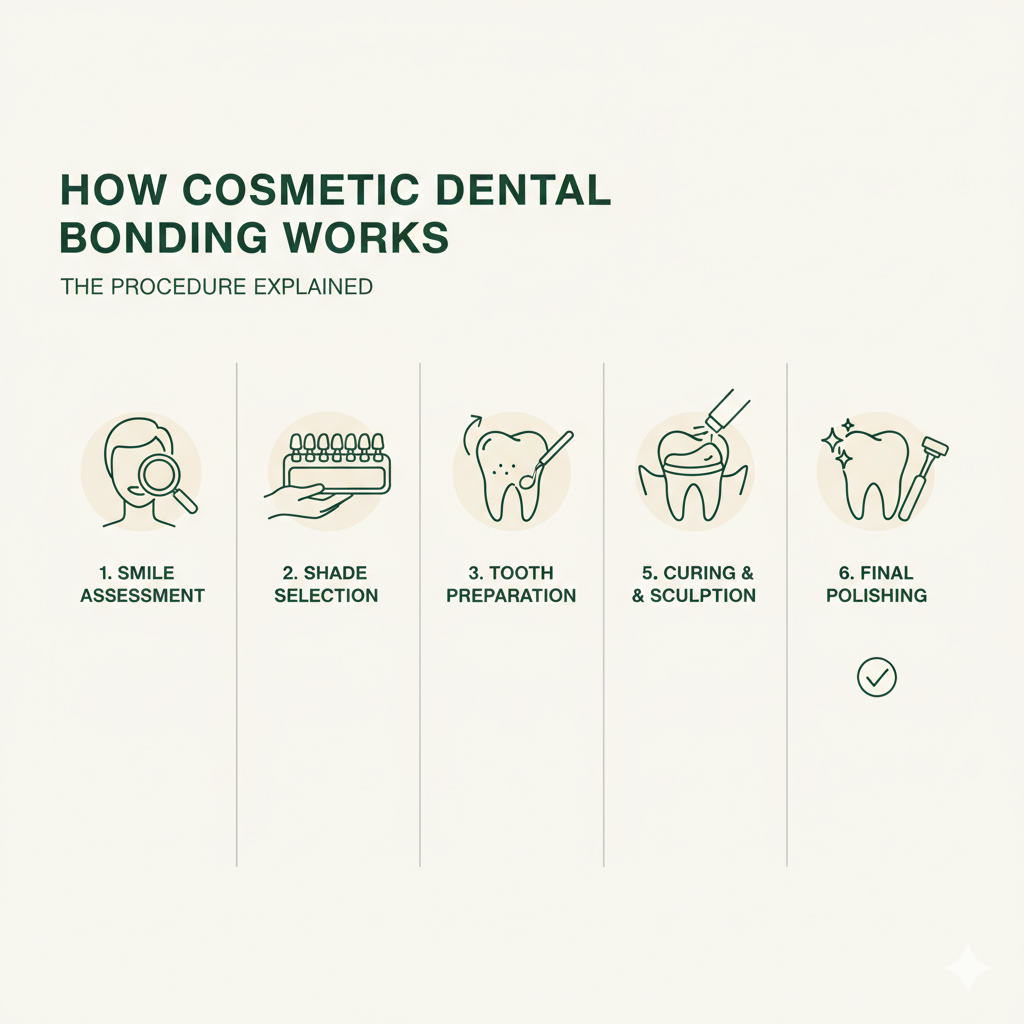
Step 1: smile assessment
The dentist evaluates:
- oral health
- gum condition
- enamel quality
- bite alignment
- smile proportions
- aesthetic goals
Step 2: shade selection
A composite resin color is selected to match the natural shade of the surrounding teeth.
Step 3: tooth preparation
The tooth surface is gently prepared using a conditioning solution that improves adhesion.
Step 4: composite application
The resin is applied in layers and sculpted carefully to recreate natural tooth anatomy.
Step 5: curing and polishing
A curing light hardens the material before final polishing creates a smooth enamel-like finish.
Most procedures last between 30 and 90 minutes per tooth.
Patients can usually return to normal activities immediately after treatment.
Cosmetic dental bonding before and after: what results can you expect?
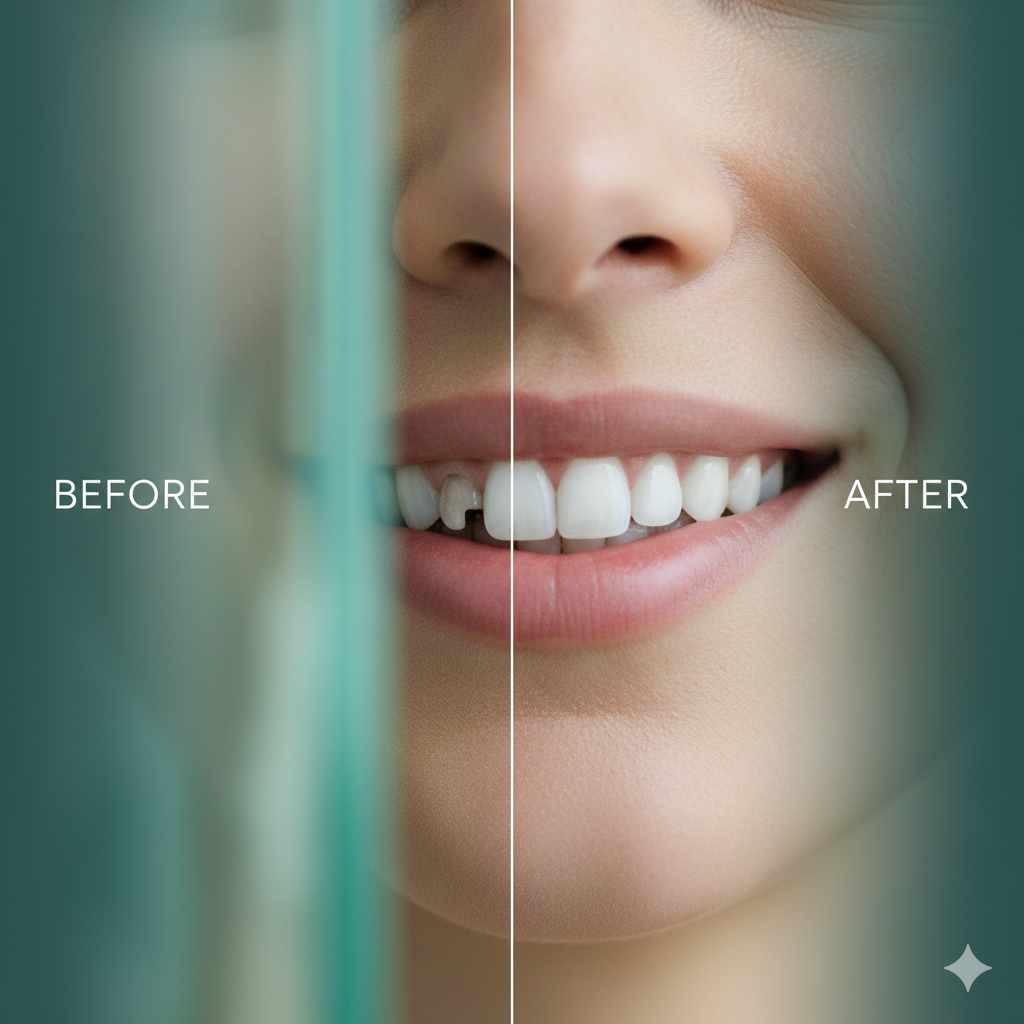
One of the reasons cosmetic dental bonding before and after results attract so much attention online is because the improvements are often subtle yet highly effective.
Rather than creating an artificial smile, bonding typically enhances harmony and balance.
Common cosmetic improvements include:
- smoother tooth edges
- repaired chips
- improved symmetry
- smaller visible gaps
- more balanced proportions
- brighter overall smile appearance
The quality of the final result depends heavily on:
- dentist expertise
- artistic precision
- composite quality
- patient oral habits
- bite balance
Highly experienced cosmetic dentists focus not only on the teeth themselves but also on facial aesthetics, light reflection and smile dynamics.
The objective is simple: natural enhancement without obvious cosmetic signs.
Cosmetic dental bonding cost
Cosmetic dental bonding cost varies depending on several factors.
Average prices generally range between €150 and €600 per tooth in Europe and North America.
Factors influencing dental bonding cost
- dentist experience
- clinic location
- complexity of treatment
- number of teeth treated
- quality of materials
- artistic customization
Although bonding is usually more affordable than porcelain veneers, choosing an experienced cosmetic dentist remains essential.
Poorly executed bonding may lead to:
- visible composite edges
- unnatural tooth shape
- discoloration
- bite discomfort
- premature wear
In cosmetic dentistry, expertise significantly influences the quality and longevity of results.
How long does cosmetic dental bonding last?
One of the most searched questions online is: how long does cosmetic dental bonding last?
On average, cosmetic bonding lasts between 3 and 10 years.
However, durability depends on:
- oral hygiene
- smoking habits
- coffee and wine consumption
- teeth grinding
- bite pressure
- maintenance frequency
- dietary habits
Composite resin is slightly more porous than porcelain and may gradually stain over time.
Fortunately, bonding is often easy to repair or polish when necessary.
Expert recommendations to extend bonding longevity
Dental professionals generally recommend:
- brushing twice daily
- flossing every day
- using non-abrasive toothpaste
- limiting tobacco exposure
- attending regular dental cleanings
- avoiding biting hard objects
- wearing a night guard if needed
Long-term oral care remains important not only for aesthetics but also for systemic health.
Several scientific studies suggest that oral inflammation may influence broader inflammatory pathways associated with cardiovascular and metabolic wellness.
Cosmetic dental bonding vs veneer
Many patients compare cosmetic dental bonding vs veneers before making a decision.
Although both procedures improve smile aesthetics, they differ significantly.
| Procedure | Average cost | Durability | Enamel preservation | Stain resistance | Ideal for |
|---|---|---|---|---|---|
| Cosmetic dental bonding | Moderate | 3–10 years | High | Moderate | Small to moderate corrections |
| Porcelain veneers | Higher | 10–15 years | Medium | High | Larger smile transformations |
| Dental crowns | High | 10–20 years | Lower | High | Structural restoration |
Advantages of cosmetic dental bonding
- minimally invasive
- lower cost
- repairable
- same-day treatment
- preserves enamel
- natural appearance
Advantages of veneers
- longer lifespan
- stronger stain resistance
- highly durable
- ideal for extensive cosmetic changes
The best option depends on:
- smile goals
- enamel condition
- oral habits
- budget
- long-term expectations
A personalized dental consultation remains essential before choosing a treatment.
Does cosmetic dental bonding damage teeth?
When performed correctly, cosmetic dental bonding is generally considered safe and conservative.
One of the main reasons dentists recommend bonding is because it usually preserves most of the natural tooth structure.
However, inappropriate application or poor technique may increase the risk of:
- premature wear
- bonding fractures
- discoloration
- bite imbalance
- uneven texture
Choosing an experienced cosmetic dentist is therefore extremely important.
Patients with severe bruxism or major structural damage may require alternative restorative procedures.
Is cosmetic dental bonding worth it?
For many patients, cosmetic dental bonding offers an excellent balance between affordability, aesthetics and enamel preservation.
It is particularly valuable for individuals seeking:
- subtle smile improvements
- minimally invasive treatment
- affordable cosmetic dentistry
- fast smile enhancement
- natural-looking results
The procedure can create meaningful visual improvements while maintaining facial authenticity.
Modern cosmetic dentistry increasingly prioritizes refinement over transformation.
This philosophy aligns closely with conscious longevity and preventive wellness.
Risks and limitations of cosmetic dental bonding
Although cosmetic bonding offers many benefits, it is important to understand its limitations.
Composite resin is generally less durable than porcelain and may require maintenance over time.
Potential limitations include:
- gradual staining
- chipping under pressure
- wear over time
- need for polishing or repair
- lower resistance compared to veneers
Bonding may not be suitable for:
- severe structural damage
- major bite problems
- extensive discoloration
- advanced grinding disorders
Balanced and transparent information improves treatment expectations and supports better long-term outcomes.
Expert insight
“Modern cosmetic dentistry increasingly focuses on preserving natural enamel and improving aesthetics through minimally invasive techniques.”
Dr. Emily Carter, DDS
How to maintain cosmetic dental bonding properly
Maintaining cosmetic dental bonding correctly helps preserve both appearance and durability.
Maintain excellent oral hygiene
Daily brushing and flossing reduce plaque buildup and preserve composite brightness.
Limit staining substances
Coffee, tea, red wine and tobacco may gradually discolor bonding materials.
Wear a protective night guard
Patients who grind their teeth at night may place excessive pressure on bonding restorations.
Schedule regular professional cleanings
Routine dental visits help detect early wear and maintain smile balance.
Avoid using teeth as tools
Opening packages or biting hard objects may damage composite bonding.
Preventive care remains one of the most important pillars of long-term oral wellness.
Scientific sources and references
The information presented in this article is supported by current cosmetic dentistry and oral health research.
Recommended references include:
- American Dental Association (ADA)
- National Institutes of Health (NIH)
- PubMed clinical studies on composite resin longevity
- Research on oral inflammation and systemic health
Suggested study topics:
- minimally invasive cosmetic dentistry
- composite bonding clinical outcomes
- oral health and inflammation
- dental resin durability
A more conscious approach to cosmetic dentistry
Cosmetic dental bonding has become one of the leading minimally invasive cosmetic dentistry treatments for patients seeking natural smile enhancement.
Its growing popularity reflects modern aesthetic priorities:
- natural results
- enamel preservation
- affordability
- subtle refinement
- fast treatment
- conservative dentistry
Whether repairing chipped teeth, improving symmetry or restoring confidence, cosmetic bonding offers a flexible and modern solution adapted to today’s wellness-oriented approach to aesthetics.
At Sogevity, we believe longevity is not only about living longer.
It is also about preserving vitality, confidence and harmony over time.
Sogevity. The longevity experience
Live longer. live better.
FAQ – cosmetic dental bonding
Is cosmetic dental bonding permanent?
No, cosmetic dental bonding is not permanent.
Although composite bonding is durable, the resin material may eventually require polishing, repair or replacement over time. On average, cosmetic dental bonding lasts between 3 and 10 years depending on oral hygiene, lifestyle habits and maintenance.
Patients who avoid smoking, excessive coffee consumption and teeth grinding often maintain results longer.
How much does cosmetic dental bonding cost?
The cost of cosmetic dental bonding typically ranges between €150 and €600 per tooth.
Pricing depends on several factors, including:
- dentist experience
- clinic location
- number of teeth treated
- complexity of the procedure
- quality of composite materials
Compared to porcelain veneers, cosmetic bonding is generally considered a more affordable cosmetic dentistry option.
How long does cosmetic dental bonding last?
Most cosmetic dental bonding treatments last between 3 and 10 years.
The longevity of dental bonding depends on:
- oral hygiene habits
- smoking
- coffee or wine consumption
- teeth grinding
- bite pressure
- regular dental maintenance
Professional cleanings and proper aftercare can help extend the lifespan of composite bonding.
Does cosmetic dental bonding hurt?
Cosmetic dental bonding is generally painless.
Most bonding procedures do not require anesthesia because very little enamel preparation is involved. Patients can usually return to normal activities immediately after treatment.
Some individuals may experience mild temporary sensitivity after the procedure.
Can cosmetic dental bonding fix chipped teeth?
Yes, cosmetic dental bonding is commonly used to repair chipped or cracked teeth.
The dentist carefully applies composite resin to restore the natural shape, texture and appearance of the damaged tooth while preserving most of the natural enamel.
Bonding is often considered one of the fastest and most conservative treatments for minor tooth damage.
Does cosmetic dental bonding stain over time?
Yes, cosmetic bonding can gradually stain over time.
Composite resin is slightly porous and may absorb pigments from:
- coffee
- tea
- red wine
- tobacco
- highly colored foods
Maintaining good oral hygiene and limiting staining substances can help preserve the brightness of dental bonding.
Is cosmetic dental bonding better than veneers?
Cosmetic dental bonding and porcelain veneers serve different purposes.
Dental bonding is generally:
- more affordable
- minimally invasive
- faster to complete
- easier to repair
Porcelain veneers are usually:
- more durable
- more stain resistant
- longer lasting
The best option depends on the patient’s smile goals, enamel condition, budget and long-term expectations.
Can you eat normally after cosmetic dental bonding?
Yes, most patients can eat normally after cosmetic dental bonding.
Dentists may recommend avoiding very hard foods and highly pigmented drinks during the first 24 to 48 hours after treatment.
Long term, maintaining healthy oral habits helps preserve both the appearance and durability of the bonding.
Is cosmetic dental bonding safe?
Yes, cosmetic dental bonding is generally considered safe when performed by a qualified cosmetic dentist.
Because the procedure is minimally invasive and preserves most of the natural tooth structure, bonding is widely used in modern cosmetic dentistry for subtle smile enhancement.
Who is a good candidate for cosmetic dental bonding?
Good candidates for cosmetic dental bonding are individuals with healthy teeth and gums who want to improve small to moderate aesthetic imperfections.
Bonding is commonly recommended for:
- chipped teeth
- uneven edges
- small gaps
- mild discoloration
- asymmetrical teeth
A consultation with a cosmetic dentist helps determine whether bonding is the most suitable treatment option.
Medical disclaimer
This article is for informational and educational purposes only and does not replace professional dental advice, diagnosis or treatment.
Always consult a qualified dentist before undergoing cosmetic dental procedures.
Sources
- PubMed composite restoration studies
- NIH oral health research
- American Dental Association cosmetic dentistry resources
Continue exploring longevity
Explore this longevity topic