
Key takeaways
- A Stable Derivative of Vitamin C 3-O-Ethyl Ascorbic Acid (EAA), is a more stable, less prone to oxidation and better penetrating derivative of Vitamin C.
- It can help support the natural processes in the skin’s collagen synthesis and the defense systems from oxidative stress, one cause of early skin aging.
- It can help make the skin’s complexion more homogeneous and the skin luminous.
- Research indicates that it has a similar biological activity to vitamin C and, at the same time, better stability when formulated into skin cosmetics.
By the standards of modern cosmetic science, there are few vitamin C derivatives that have been so thoroughly explored as 3-O-Ethyl Ascorbic Acid.
Everyone knows that the body needs the pure, original vitamin C to manufacture the collagen that holds the body’s structure together and protects skin from the environment, but as an ingredient in cosmetic products, pure vitamin C cannot withstand light, water, or air, all of which lead it to degrade very quickly.
For the purpose of enhancing the appearance and condition of skin for as long as possible, the scientists decided to design the derivative of vitamin C.
That is what is called 3-O-Ethyl Ascorbic Acid, a vitamin C designed not just to defend but in fact, even to assist the skin with long-term cellular preservation.
What is it?
3-O-Ethyl Ascorbic Acid is an ethylated derivative of L-ascorbic acid. A targeted chemical modification protects the molecule against oxidation while allowing it to be gradually converted into biologically active vitamin C within the skin.
Its enhanced stability is one of its greatest advantages. Compared with pure ascorbic acid, it is significantly more resistant to changes in temperature, pH, and light exposure, making it particularly suitable for advanced cosmetic formulations.
Biologically, it supports many of the same functions attributed to vitamin C, including antioxidant defense, collagen synthesis, and the regulation of pathways involved in skin pigmentation.
Did You Know?
This experimental research indicates ethylated vitamin C forms are able to effectively exert antioxidant activity but show significantly improved stability over plain vitamin C, particularly appealing for use in topical skincare applications.
How does it work?
Primary mechanism of action
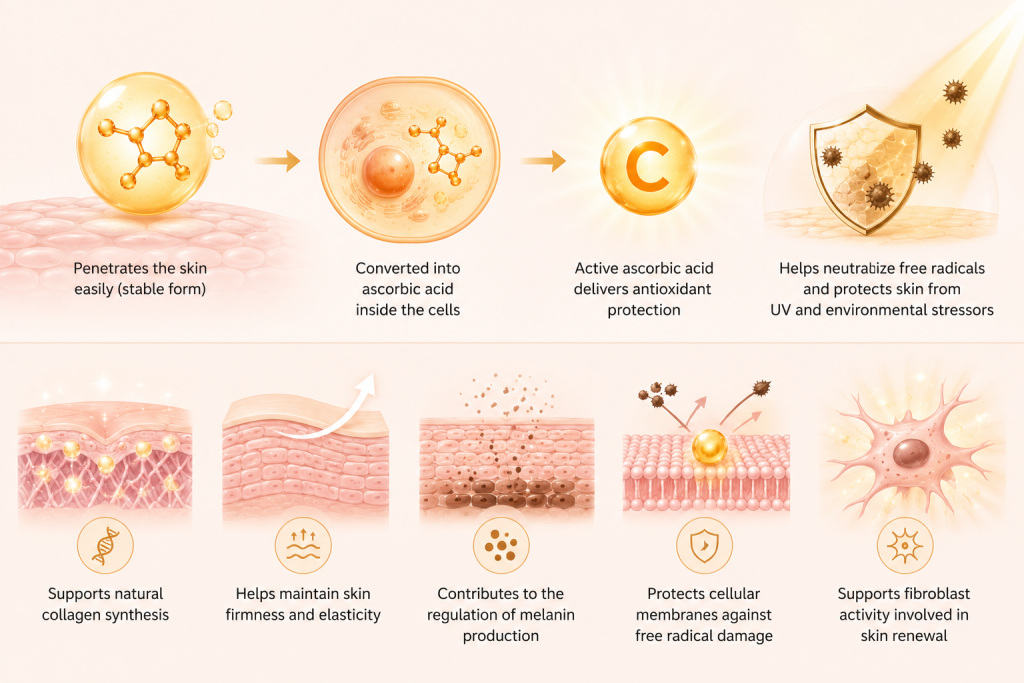
3-O-Ethyl Ascorbic Acid can be converted into its active form ascorbic acid inside your cells. This allows the skin to receive continued antioxidant support and mitigate oxidative damage caused by ultraviolet radiation and other external stressors.
Effects at the tissue level
Within the skin, it is associated with several biological actions:
- Supporting natural collagen synthesis
- Helping maintain skin firmness and elasticity
- Contributing to the regulation of melanin production
- Protecting cellular membranes against free radical damage
- Supporting fibroblast activity involved in skin renewal
What this means for healthy aging
From a healthy aging perspective, a cellular environment with decreased oxidative stress may support the normal functioning of the skin. 3-O-Ethyl Ascorbic Acid does not reverse the aging of biological time but supports the processes that may lead to a preserved skin condition and balance over the long run and strengthen the skin’s resilience.
Research Spotlight
- Year: 2018
- Study type: Scientific review on vitamin C derivatives (https://pmc.ncbi.nlm.nih.gov/articles/PMC5579659/)
- Key finding: Stable vitamin C derivatives, including 3-O-Ethyl Ascorbic Acid, may improve formulation stability while maintaining favorable biological activity.
Potential benefits
Supporting natural Collagen production
Vitamin C is also used as a cofactor for some enzymes in charge of maturing collagen. Given its higher stability, 3-O-Ethyl Ascorbic Acid could supply more sustained vitamin C activity to the skin. This could potentially help maintain skin elasticity, firmness, and skin quality as part of a daily routine.
Promoting a More Even Skin Tone
According to the study, the derivatives could be able to inhibit tyrosinase, one of the main enzymes in the melanin synthesis process. Thus, step by step, the derivatives can help lighten and even skin complexions and diminish the look of dark spots without interfering with the skin’s natural rhythm.
Strengthening antioxidant protection
Free radicals occur naturally with metabolism and additionally are produced in response to UV light exposure, pollution, and various other ecological stresses. 3-O-Ethyl Ascorbic Acid might assist in keeping cellular harmony in the body’s antioxidant skin security system for ongoing skin vigor.
Natural sources
3-O-Ethyl ascorbic acid does not naturally occur in foods.
However, vitamin C is naturally abundant in:
- Acerola
- Kiwi
- Orange
- Red bell pepper
- Broccoli
Dosage, forms & bioavailability
In cosmetic formulations, 3-O-ethyl ascorbic acid is typically used at concentrations ranging from 0.5% to 20%, depending on the intended application.
Many studies suggest that concentrations between 5% and 15% provide a balanced combination of efficacy, stability, and skin tolerance.
It is frequently combined with:
- Vitamin E
- Ferulic acid
- Hyaluronic acid
- Niacinamide
Visible improvements generally require consistent daily use over several weeks.
Safety & precautions
However, 3-O-Ethyl Ascorbic Acid is usually safe when used appropriately in cosmetic formulations.
People who have extremely sensitive skin might feel a slight sting or irritation for the first few times they use it.
Any time you try out a new skincare product with an active ingredient, do a patch test. If you have a known skin condition or are worried, speak to a medical professional before using a product with 3-O-Ethyl Ascorbic Acid.
How to incorporate it into a healthy aging routine
When to use it
Topically, it is generally applied in the morning after cleansing and before moisturizer and broad-spectrum sunscreen.
What to pair it with
It works well alongside:
- Niacinamide
- Hyaluronic acid
- Ceramides
- Vitamin E
- Daily broad-spectrum sunscreen
Simple daily routine
- Gentle cleanser
- 3-O-Ethyl Ascorbic Acid serum
- Hydrating serum
- Moisturizer
- Broad-spectrum SPF sunscreen
Who may benefit most?
This can be an excellent ingredient for those interested in improving radiance, combating the visible signs of environmental aging, or taking advantage of an easily tolerated vitamin C supplement.
Could stability be the key to long-term skin health?
3-O-Ethyl Ascorbic Acid reflects the evolution of cosmetic science, where the focus is no longer solely on powerful ingredients but also on ensuring their stability and sustained availability within the skin. Its favorable stability profile, antioxidant potential, and generally good skin tolerance make it an appealing ingredient for routines focused on preserving skin quality and supporting long-term cellular balance. While it is not intended to stop the natural aging process, it may contribute to maintaining healthier-looking skin by supporting the body’s own physiological defense and repair mechanisms over time.
References
- Pullar, J. M., Carr, A. C., & Vissers, M. C. M. (2017). The Roles of Vitamin C in Skin Health. https://pmc.ncbi.nlm.nih.gov/articles/PMC5579659/
- Pinnell, S. R. (2017). Cutaneous Photodamage, Oxidative Stress and Topical Vitamin C. https://pmc.ncbi.nlm.nih.gov/articles/PMC5579659/
- Scientific Committee on Consumer Safety. Opinion on Vitamin C (Ascorbic Acid), Ethyl Ascorbic Acid and Related Derivatives in Cosmetic Products.
- Lin, F. H., et al. Ferulic Acid Stabilizes a Solution of Vitamins C and E and Doubles Its Photoprotection of Skin. https://pubmed.ncbi.nlm.nih.gov/12569111/