Key takeaways
- The $100 breakthrough: Stanford’s Michael Snyder is developing an affordable, decentralized home-based testing kit to routinely track individual health trajectories.
- Tracking the healthy: The initiative flips the entire clinical paradigm away from tracking reactive, advanced diseases to continuously engineering early wellness.
- The ARPA-H megaproject: Funded by the US government’s ARPA-H PROSPR grant, this massive initiative aims to achieve FDA approval for a quantitative health score.
- Decentralized microsampling: Using advanced home-based devices, individuals can mail in tiny finger-prick blood droplets to measure over 650 discrete metabolic analytes.
- The intrinsic capacity era: Unlike abstract biological age numbers, this platform mathematically monitors physical, cognitive, sensory, and psychological vital structures concurrently.
Bringing the invisible clinical dashboard into the living room
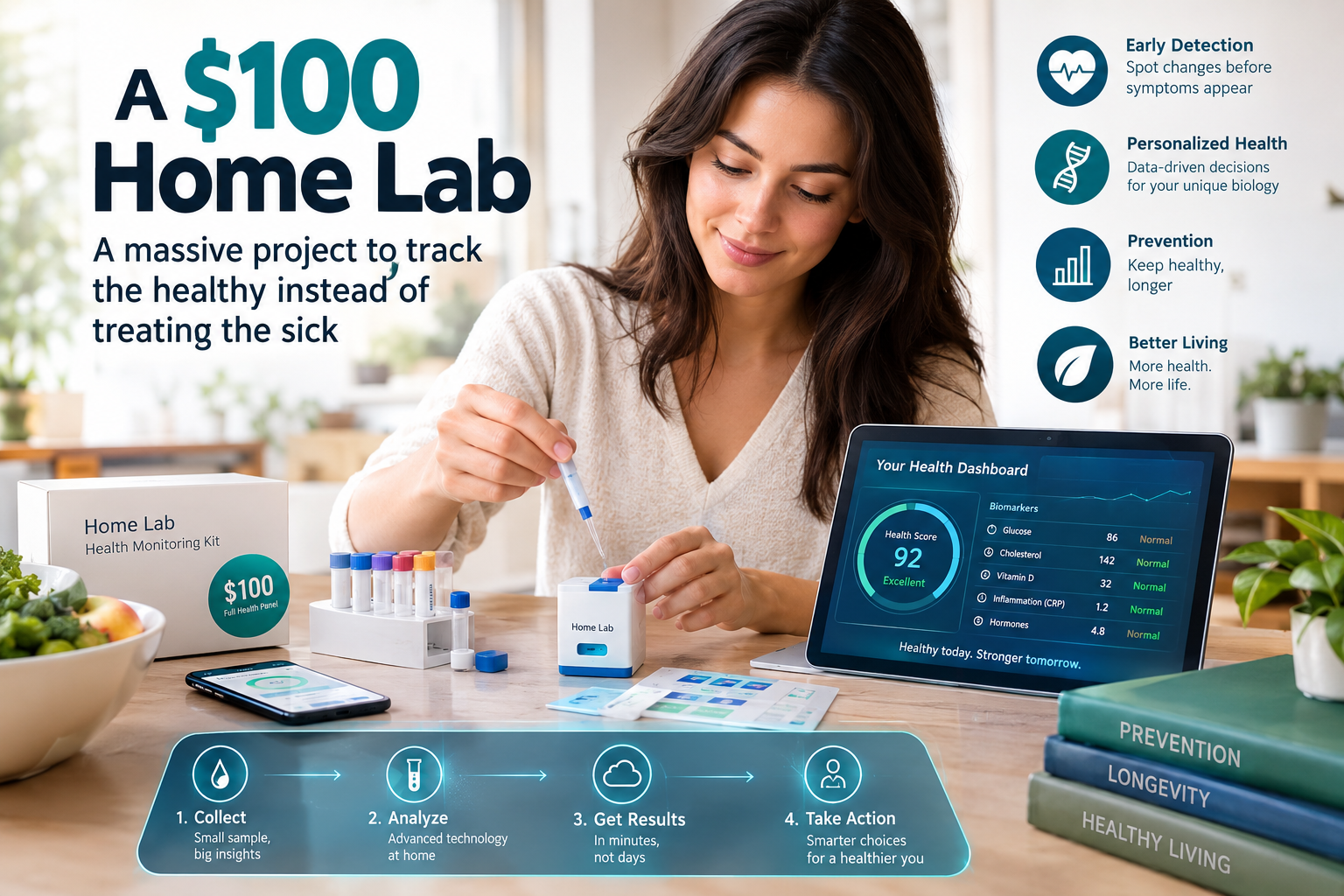
The director of the center for genomics and personalized medicine at Stanford university, professor Michael Snyder, has launched a massive biotechnology project centered around providing a device and a home-based testing kit for only $100 to track health individually and continuously inside every home.
This revolutionary initiative, officially deployed in late 2026 and funded under the prestigious PROSPR grant by the US federal agency ARPA-H to maintain strict scientific accountability, serves as a radical alternative to waiting for an individual to become sick and funneling trillions of dollars into the reactive, traditional “sickcare” ecosystem. This massive project, actively operating within the Stanford medical complex, aims to shrink a highly complex clinical laboratory down to an affordable home-based mail-in kit, effectively converting an individual’s personal physiological metadata into a continuous biological shield that makes legacy annual clinical checkups obsolete.
This localized technological framework utilizes home-based finger-prick blood microsampling coupled with continuous 24/7 wearable sensor data streams. The integrated data is processed to establish an FDA-approved “Intrinsic Capacity” score, creating a real-time health dashboard that allows everyday families to intercept metabolic instability and chronic cellular decay years before terminal symptoms physically break the body.
Understanding the ARPA-H framework and the iIntrinsic capacity” score
To understand how this $100 home protocol fundamentally alters the future of longevity medicine, one must analyze the institutional limitations that previously crippled wellness monitoring. In contemporary hospital networks, clinicians rely on ICD codes to classify and reimburse treatments for specific diseases. However, the existing medical establishment possesses no standardized, quantitative framework to measure healthy wellness. When a person sits inside a doctor’s office, they are evaluated against static, population-wide reference averages rather than their own continuous individual trajectory.
Snyder’s ARPA-H megaproject bridges this structural gap through a validated mathematical score known as intrinsic capacity. Developed originally alongside the World Health Organization, this framework evaluates human health across five distinct functional subdomains: cognition, locomotion (mobility and grip strength), psychological well-being, sensory function, and vitality. Rather than waiting for a single organ to fail, the platform continuously tracks how these five biological networks interact, giving researchers and drug developers a precise, audited metric to prove whether an anti-aging therapy is actually extending a human’s healthy lifespan.
Overcoming the “snapshot diagnosis” with 24/7 wearable baselines
The biological necessity of this decentralized home system is directly reinforced by the widespread adoption of wearable sensors. Legacy clinical assessments rely on a single, isolated blood test taken once a year—a flawed “snapshot diagnosis” that fails to capture real-time physiological stress. Clinical data demonstrates that an individual can experience a sudden, dangerous doubling of an internal liver enzyme or a severe overnight drop in heart rate variability while still technically remaining within the “normal range” of the general population. Legacy medical checkups completely miss these critical personal fluctuations because they lack an individualized baseline.
By tracking biometric baselines 24/7, Snyder’s algorithms can detect acute, subtle deviations from an individual’s unique baseline norm. During clinical trials, this continuous monitoring allowed researchers to presymptomatically identify respiratory viral infections, including COVID-19 and influenza, up to 48 hours before physical symptoms appeared. This early warning window gives patients a critical head start to self-isolate or initiate antiviral treatments like Paxlovid when they are most effective. Furthermore, clinical audits revealed that the primary driver of unexpected vital spikes was workplace and psychological stress, an area where AI models are being trained to separate emotional strain from infectious incubation.
Illustrated example: The delivery fleet analogy
Imagine an industrial logistics company managing a massive fleet of delivery trucks. The entire fleet doesn’t suddenly break down on the exact same day. Instead, one truck might suffer from a failing transmission, another might have worn-out brake pads, and a third might experience engine overheating due to a radiator leak. Personalized ageotypes function exactly like this vehicle maintenance report. Rather than assuming your entire body is breaking down at the same rate, deep molecular tracking tells you exactly which “part” of your biological machinery is wearing out faster, allowing you to service that specific system before a catastrophic breakdown occurs.
Key concept: Intrinsic capacity vs. Epigenetic clocks
Intrinsic capacity is a functional wellness metric composed of five core subdomains established by the World Health Organization: cognition, locomotion, psychological well-being, sensory function, and vitality. While epigenetic methylation clocks (like the Horvath Clock) provide an excellent mathematical surrogate for all-cause mortality, they offer very little actionable data; knowing your biological age score does not tell you which organ to treat. Intrinsic capacity bridges this gap by combining continuous physiological data from wearables with metabolic blood analytes, creating an explainable, quantitative health score that patients can actively manipulate and improve over time.
Understanding organ-specific decay via personalized “ageotypes”
To visualize how different biological systems experience decay, longevity science has discarded the primitive notion that the human body ages uniformly as a single unit. Comprehensive deep-profiling audits-incorporating metabolomics, proteomics, and transcriptomics-demonstrate that individuals possess highly unique, localized aging patterns known as ageotypes. These ageotypes categorize the specific physiological systems that fail first within a given individual, mapping out whether a person is primarily a cardiovascular ager, a metabolic ager, an immune ager, or an oxidative-stress ager.
Identifying an individual’s specific ageotype allows clinicians to move past generic wellness advice like “exercise more” and instead prescribe highly targeted molecular inputs. For example, a metabolic ager may require precise carbohydrate manipulation to eliminate advanced glycation end-products, whereas an immune ager requires specific anti-inflammatory protocols to combat sterile low-grade systemic inflammation.
Exploiting shared metabolic data via AI and the lollo platform
Regarding the immediate execution of this technology, Snyder’s laboratory successfully spun out a specialized multiomics platform called Iollo. When a consumer uses the home microsampling kit, the automated lab measures over 650 discrete metabolic analytes from a single blood droplet. This massive data stream is immediately cross-referenced with thousands of peer-reviewed clinical studies using proprietary artificial intelligence.
Instead of issuing vague health advice, the AI agent generates hyper-specific nutritional and lifestyle recommendations designed to reverse the user’s specific organ-specific ageotype. Clinical tracking shows that individuals who execute these data-driven modifications improve their internal physiological biomarkers approximately 95% of the time. This automated, continuous pipeline locks the human immune system in a homeostatic state, bypassing the convenience of modern ultra-processed dietary hazards and empowering the individual to maintain strict command over their internal rate of biological decay.
Level of evidence: Longitudinal cohort study & FDA-pipeline grade
This clinical profile is based on long-term longitudinal deep-phenotyping datasets, clinical cohort tracking, and wearable sensor research validation conducted at Stanford University’s Center for Genomics and Personalized Medicine up to August 2026. While widespread clinical trials across standard insurance frameworks are still being established, the underlying technology regarding pre-symptomatic viral detection (including COVID-19) and metabolic spiking via Continuous Glucose Monitors (CGMs) is heavily validated by peer-reviewed datasets in high-impact medical journals.
The healthcare matrix: Legacy sickcare vs. The ARPA-H home Longevity framework
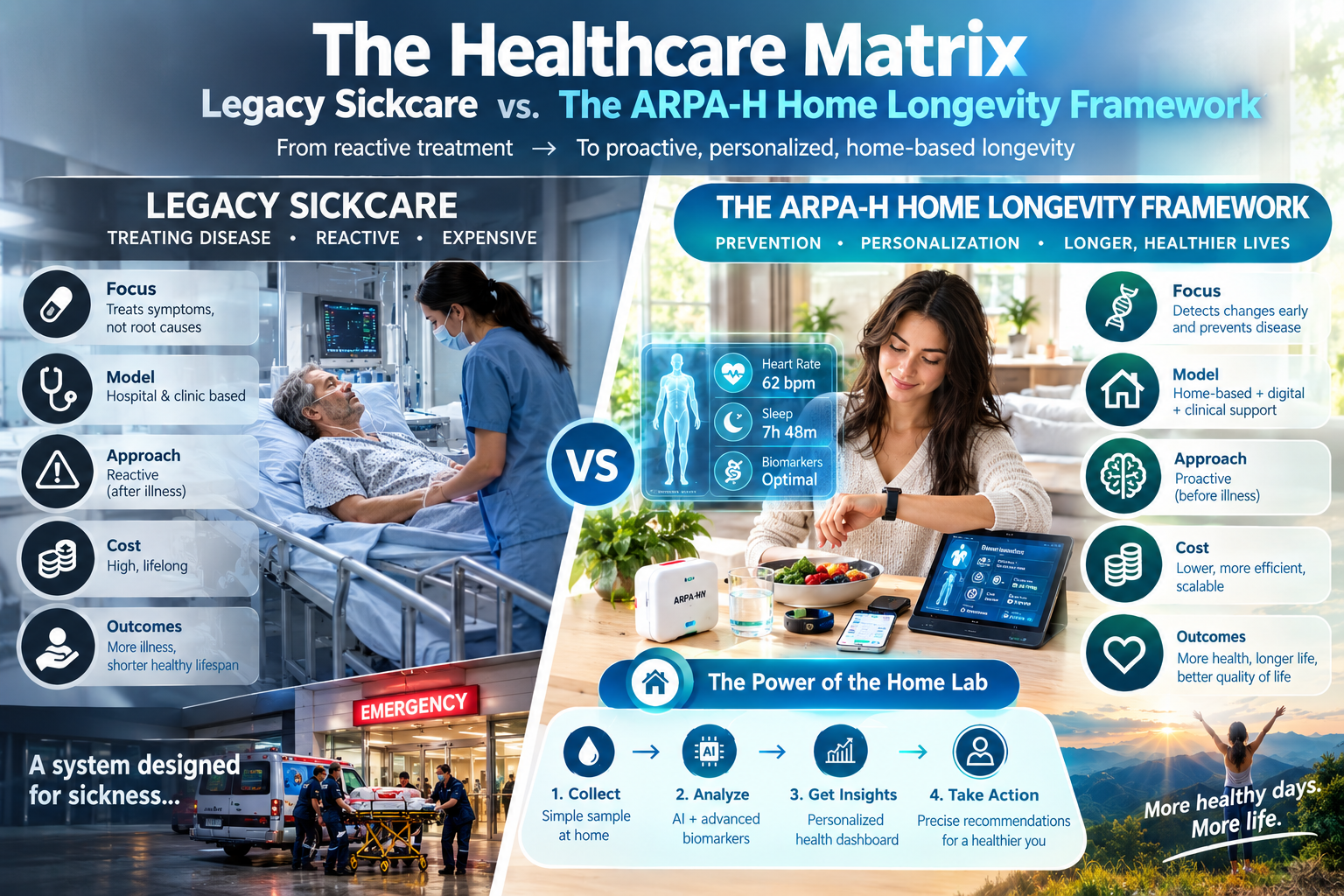
| Longevity Pillar | Legacy Annual Sickcare Check | The ARPA-H Intrinsic Capacity System | Search Engine & Clinical Impact |
| Primary Evaluation Focus | Tracking active, symptomatic diseases for coding | Monitoring continuous, individualized wellness trajectories | High Structural Impact |
| Data Capture Frequency | Single-point “snapshot” blood tests once a year | 24/7 Wearable metrics + Routine blood microsampling | Critical Precision Grade |
| Biometric Customization | Compares individual data to broad population averages | Establishes a unique, personalized biological baseline | High Impact |
| Aging Biomarker Utility | Absent (Focuses purely on standard metabolic disease) | Maps organ-specific “Ageotypes” for targeted repair | Critical Longevity Grade |
| Economic & Testing Cost | High hospital overhead; inconvenient lab visits | $100 decentralized, convenient at-home mail-in kit | High Consumer Disruption |
Frequently Asked Questions (FAQ)
What exactly is Stanford’s $100 home longevity device?
It is a newly developed at-home microsampling kit funded by a massive federal grant. It allows users to collect a tiny drop of blood at home and track over 650 metabolic markers for roughly $100.
What is the ultimate goal of the ARPA-H Intrinsic capacity project?
The goal is to build and achieve FDA approval for a quantitative “wellness score” that measures a person’s functional health state across five areas (cognition, movement, mood, senses, and vitality) before disease happens.
How can a smartwatch predict a viral infection 48 hours before symptoms show?
By monitoring your heart rate, blood oxygen levels, and heart rate variability 24/7 during sleep, AI algorithms can instantly detect micro-shifts from your healthy baseline caused by an incubating virus.
What is an “ageotype” and why is it better than standard age testing?
An ageotype shows exactly how you are aging by identifying your weakest organ systems (e.g., metabolic, immune, or cardiovascular). Standard tests only give a global age number without telling you what to fix.
Why is this home-based model considered a threat to traditional healthcare?
Because the traditional system is incentivized by “sickcare”—profiting from treating illness after it develops. This project decentralizes medicine, keeping people healthy at home and preventing chronic disease onset.
Methodology
The technical metrics and clinical arguments presented in this analysis are sourced from the research portfolios of the Stanford Center for Genomics, validated datasets from international biobanks (such as All of Us and UK Biobank), and published medical literature tracking longitudinal multiomics. All references are cross-checked with active digital health databases up to August 2026.
Disclaimer
This investigative report is compiled exclusively for informational and educational purposes. It does not constitute medical advice, diagnosis, or treatment, and should not replace professional consultation with a certified primary care physician.
Sources
- Primary Scientific Profile: Lifespan Research Institute — Michael Snyder: We Need to Track Health, Not Disease (August 2026).
- Stanford University Medicine: Center for Genomics and Personalized Medicine Technical Repositories on Longitudinal Deep Profiling.
- ARPA-H Project Registry: Executive summaries on the PROSPR Grant for Intrinsic Capacity Home Testing Infrastructure.