
The menopause transition is often discussed in terms of hot flashes, sleep disturbances and changes in hormone levels. But its potential influence may extend much further, shaping aspects of women’s health that become increasingly important as they grow older.
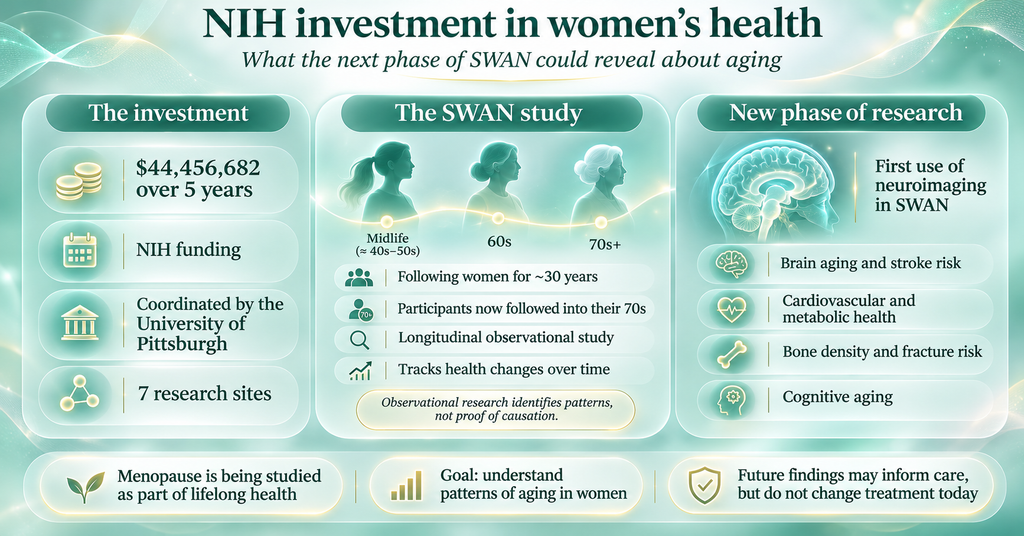
A major new investment from the US National Institutes of Health (NIH) is giving researchers an opportunity to investigate these questions in greater depth. The NIH has awarded $44,456,682 over five years to the Study of Women’s Health Across the Nation (SWAN), a landmark research programme following a diverse group of women through midlife and into their later years.
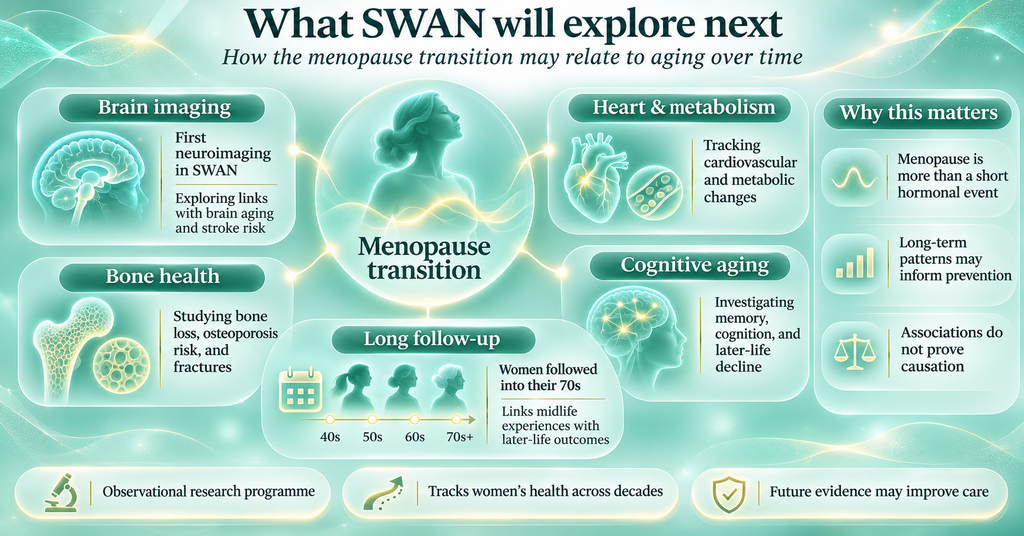
Coordinated by the University of Pittsburgh across seven research sites, SWAN has been examining women’s health for approximately three decades. The new funding will allow researchers to continue following participants into their 70s, exploring how the menopausal transition may influence cardiovascular health, brain aging, bone health, metabolism and cognitive function.
One particularly significant development is the planned introduction of neuroimaging into the study’s research approach. For the first time in SWAN’s history, researchers will use brain imaging to investigate possible relationships between menopause symptoms, changes in brain structure and long-term stroke risk.
Rather than treating menopause as an isolated reproductive milestone, the research aims to understand it as part of a much longer health trajectory.
Key Takeaways
- The NIH has awarded more than $44.4 million over five years to continue the Study of Women’s Health Across the Nation (SWAN).
- The research follows a diverse group of women as they move beyond midlife and into their 70s.
- For the first time, SWAN will incorporate neuroimaging to investigate possible connections between menopause symptoms, brain aging and stroke risk.
- Researchers will also examine cardiovascular and metabolic changes, bone health and cognitive aging.
- The study is designed to improve scientific understanding of women’s health over time; its future findings should not be mistaken for established clinical conclusions.
A landmark study enters a new phase
Launched as a long-term investigation into women’s health during midlife, SWAN has become an important source of evidence on the menopausal transition and its relationship with health later in life.
Its value lies in its longitudinal design. Instead of relying on a single assessment or asking participants to reconstruct their health history years later, researchers follow women over time. This makes it possible to examine how health changes develop, when they occur and how different aspects of women’s lives may be connected.
The new NIH award, totalling $44,456,682 over five years, will support the continuation and expansion of this work across seven research sites. The University of Pittsburgh coordinates the programme, with research teams investigating different dimensions of women’s health.
The decision to extend the study comes at a time when menopause is receiving greater attention in medical research and public health discussions. Despite its universal relevance to women’s aging, many questions remain about why some women experience particular health changes while others do not.
By continuing to follow participants into their 70s, SWAN aims to connect experiences during the menopausal transition with health outcomes much later in life.
1. Brain Aging and stroke risk: A new research direction
One of the most notable developments in this next phase is the introduction of neuroimaging.
Researchers will use brain imaging to investigate possible links between menopause symptoms, structural changes in the brain and long-term stroke risk. This represents a new direction for SWAN, which has not previously incorporated neuroimaging in this way during its 30-year history.
Rebecca Thurston, PhD, a principal investigator at the University of Pittsburgh, is leading research into cardiovascular and brain health within the project.
Her team’s work will help examine whether symptoms experienced during midlife are associated with measurable changes in the brain, and whether those changes may relate to vascular health later on.
This is an important question because the menopausal transition involves more than a decline in reproductive hormones. It is also a period during which women may experience changes in sleep, mood, temperature regulation and other aspects of their health.
However, the existence of these symptoms does not automatically mean that a woman will develop neurological disease. The purpose of the research is to investigate possible associations and identify patterns that may help scientists better understand differences in long-term health.
2. Cardiovascular and Metabolic Health after menopause
Heart and metabolic health are another major focus of the expanded research.
As women move through midlife and beyond, researchers want to understand how the timing and severity of changes in cardiovascular function, blood vessel health and glucose metabolism may influence their later health.
The distinction between timing and severity is particularly relevant. Two women may experience menopause at a similar age but follow very different health trajectories. One may develop metabolic changes relatively early, while another may maintain stable cardiovascular markers for longer.
By tracking participants over an extended period, SWAN aims to build a clearer picture of these differences.
The research could help identify when certain changes tend to emerge and how they relate to the menopausal transition. Over time, this knowledge may contribute to better-informed approaches to cardiovascular risk assessment and preventive care for women.
For longevity research, this is an important area. Cardiovascular health is closely connected to healthy aging, and understanding how women’s risk profiles evolve during and after menopause could help clinicians take a more informed, life-course approach to prevention.
3. Bone Density, Hormonal Changes and Osteoporosis
Bone health is another important part of the SWAN research agenda.
Estrogen plays a role in maintaining bone tissue. As estrogen levels decline during the menopausal transition, women can experience accelerated bone loss, potentially increasing their risk of osteoporosis and fractures later in life.
Yet bone health is influenced by more than hormone levels alone. Age, genetics, nutrition, physical activity and other health factors also contribute to an individual’s risk.
The researchers aim to clarify how hormonal changes during midlife relate to patterns of bone density loss over time. A better understanding of these patterns could eventually help improve the identification of women who may be more vulnerable to fractures as they age.
This is particularly relevant because osteoporosis can remain undetected until a fracture occurs. Research that helps identify risk earlier may support more timely assessment and prevention strategies.
4. Cognitive aging and the risk of Dementia
The relationship between menopause and cognitive health is attracting increasing scientific interest.
Some women report difficulties with memory, concentration or mental clarity during the menopausal transition. These experiences can be concerning, particularly when they occur alongside sleep disruption or changes in mood.
But short-term cognitive symptoms during menopause should not be confused with dementia. They do not, on their own, establish that a woman will develop Alzheimer’s disease or another form of cognitive impairment later in life.
SWAN’s extended follow-up offers an opportunity to investigate a broader question: could hormonal and health changes during midlife be associated with cognitive outcomes decades later?
By following participants into their 70s, researchers hope to better understand how the menopausal transition may relate to later cognitive decline and the development of conditions such as Alzheimer’s disease.
The long-term nature of the study is especially valuable here. Cognitive aging is complex, and understanding it requires attention to multiple factors across different stages of life.
The findings may help researchers distinguish between temporary symptoms experienced during menopause and patterns that could be relevant to long-term brain health.
Why long-term research matters for Women’s Longevity?
The SWAN investment highlights an important shift in how women’s health can be studied.
For many years, menopause was frequently approached as a relatively short period of reproductive change. But its potential relationship with cardiovascular health, bone density, metabolism and cognitive aging raises broader questions about what happens to women’s health over the following decades.
A longitudinal study can help researchers move beyond isolated observations. It allows them to examine how different health markers evolve together and whether certain experiences during midlife are associated with later outcomes.
This does not mean that menopause determines how a woman will age. Women’s health trajectories are shaped by many interacting influences, including genetics, lifestyle, medical history, socioeconomic conditions and access to healthcare.
Rather, SWAN may help clarify where the menopausal transition fits within this wider picture.
For the longevity field, this is particularly relevant. Extending lifespan is only one part of the conversation. Understanding how to preserve cardiovascular function, mobility, bone strength and cognitive health throughout later life is equally important.
A major research investment, and a sign of growing attention
The NIH award also reflects growing recognition that midlife women’s health deserves sustained research attention.
The funding follows advocacy efforts involving APA Services and US Representative Andrea Salinas, who called for continued NIH support for the study. These efforts are part of wider policy discussions around menopause care, midlife health and the psychological and behavioral health needs of women.
The American Psychological Association has also highlighted gaps in research and healthcare provision for women during midlife and menopause, including the need to improve access to appropriate medical and mental health services.
This wider context matters because better research does not automatically translate into better care. Scientific findings must eventually be translated into clinical guidance, healthcare training and services that women can actually access.
The continuation of SWAN provides an opportunity to strengthen the evidence base needed for that progress.
What could the findings mean for the Future of Women’s Healthcare?
The next phase of SWAN is not expected to produce one simple answer about menopause and aging. Its potential contribution is more gradual: a deeper understanding of how women’s health changes over time and which midlife factors may be relevant to later-life outcomes.
In the future, this evidence could help researchers and healthcare professionals develop more informed approaches to monitoring cardiovascular risk, assessing bone health and understanding cognitive changes in older women.
It may also reinforce the importance of looking at women’s health across the lifespan rather than treating menopause as a standalone event.
For now, the most important outcome is the opportunity to continue asking questions that have not yet received enough long-term scientific attention.
Conclusion
The NIH’s $44.4 million investment in SWAN is a significant commitment to understanding women’s health beyond midlife. By continuing to follow participants into their 70s and introducing neuroimaging, researchers will be able to investigate how the menopausal transition may relate to brain aging, cardiovascular health, metabolism, bone density and cognitive outcomes.
The study will not immediately change menopause care, nor can it yet establish that specific symptoms or hormonal changes cause diseases later in life. But it could provide valuable evidence for a more complete understanding of women’s aging.
Ultimately, the message is straightforward: menopause deserves to be studied not only as the end of reproductive life, but also as an important stage in the longer story of women’s health.
Level of Evidence
Longitudinal observational research programme.
SWAN follows participants over time to investigate associations between the menopausal transition and later health outcomes. Its extended follow-up and planned use of neuroimaging may provide valuable insights, but the study’s objectives should not be confused with findings that have already been established. Observational research can identify patterns and associations, but it cannot by itself prove that menopause-related changes directly cause specific conditions.
Frequently Asked Questions
What is the SWAN study?
The Study of Women’s Health Across the Nation (SWAN) is a long-term research programme examining women’s health during midlife and the menopausal transition. It follows a diverse group of women to better understand how health changes over time.
How much funding has SWAN received from the NIH?
The NIH awarded SWAN $44,456,682 over five years to support the continuation and expansion of its research across seven designated sites.
What will the new phase of SWAN investigate?
Researchers will examine brain aging and stroke risk, cardiovascular and metabolic changes, bone health, and cognitive aging. The programme will also introduce neuroimaging to investigate possible relationships between menopause symptoms and structural changes in the brain.
Does menopause increase the risk of Alzheimer’s disease?
The relationship between menopause and later cognitive health is still being investigated. SWAN aims to understand whether hormonal and health changes during midlife are associated with cognitive outcomes in later life. The study does not establish that menopause causes Alzheimer’s disease.
Why is following women into their 70s important?
Long-term follow-up allows researchers to examine whether health patterns observed during midlife are associated with outcomes decades later. It can provide a more complete picture than studies based on a single point in time.
Will the study change menopause treatment?
Not immediately. The research may eventually contribute to better risk assessment and more informed healthcare approaches, but clinical recommendations depend on the findings and their evaluation by the wider scientific and medical community.
Methodology
This article is based on information published by UCLA Health, the University of Pittsburgh and APA Services concerning the NIH award and the next phase of the Study of Women’s Health Across the Nation (SWAN).
The article distinguishes the programme’s research objectives from established clinical findings. Potential relationships between menopause, brain aging, cardiovascular health, bone density and cognitive decline are presented as questions the research aims to investigate, not as proven causal effects.
Disclaimer
This article is for informational and educational purposes only. It does not constitute medical advice, diagnosis or treatment recommendations. Menopause and aging affect women differently, and individual health decisions should be discussed with a qualified healthcare professional.
Sources
- UCLA Health – SWAN Receives $44M from NIH to Understand the Impact of Aging on Women
- University of Pittsburgh – SWAN Receives More Than $44M from NIH
- APA Services – NIH Midlife Women Study
- Study of Women’s Health Across the Nation (SWAN)
- American Psychological Association – Midlife and Menopause Health
Continue exploring longevity
Explore this longevity topic