Key points
- It can participate in the protection and nourishment of the skin thanks to its high oleic acid content.
- Supports skin balance through natural antioxidant compounds.
- Protects against oxidative stress, which is involved in cellular aging.
- Used to strengthen the lipid barrier and preserve the skin’s flexibility.
- Studies suggest an interesting anti-inflammatory and antioxidant activity for skin health.
Moringa oleifera Oil is becoming popular in cosmetics and nutrition for its regular lipid composition and remarkable stability. It has been used for centuries in certain traditional medicines. Today, it is part of a modern approach to skin longevity and lasting health. Rich in monounsaturated fatty acids and antioxidant compounds, this plant-based oil could support cellular balance, particularly at the skin level, which is the first line of defense against external threats. Understanding its action mechanisms allows an informed use as part of a gentle routine focused on cellular vitality and protection against mild inflammation associated with aging.
What is it ?
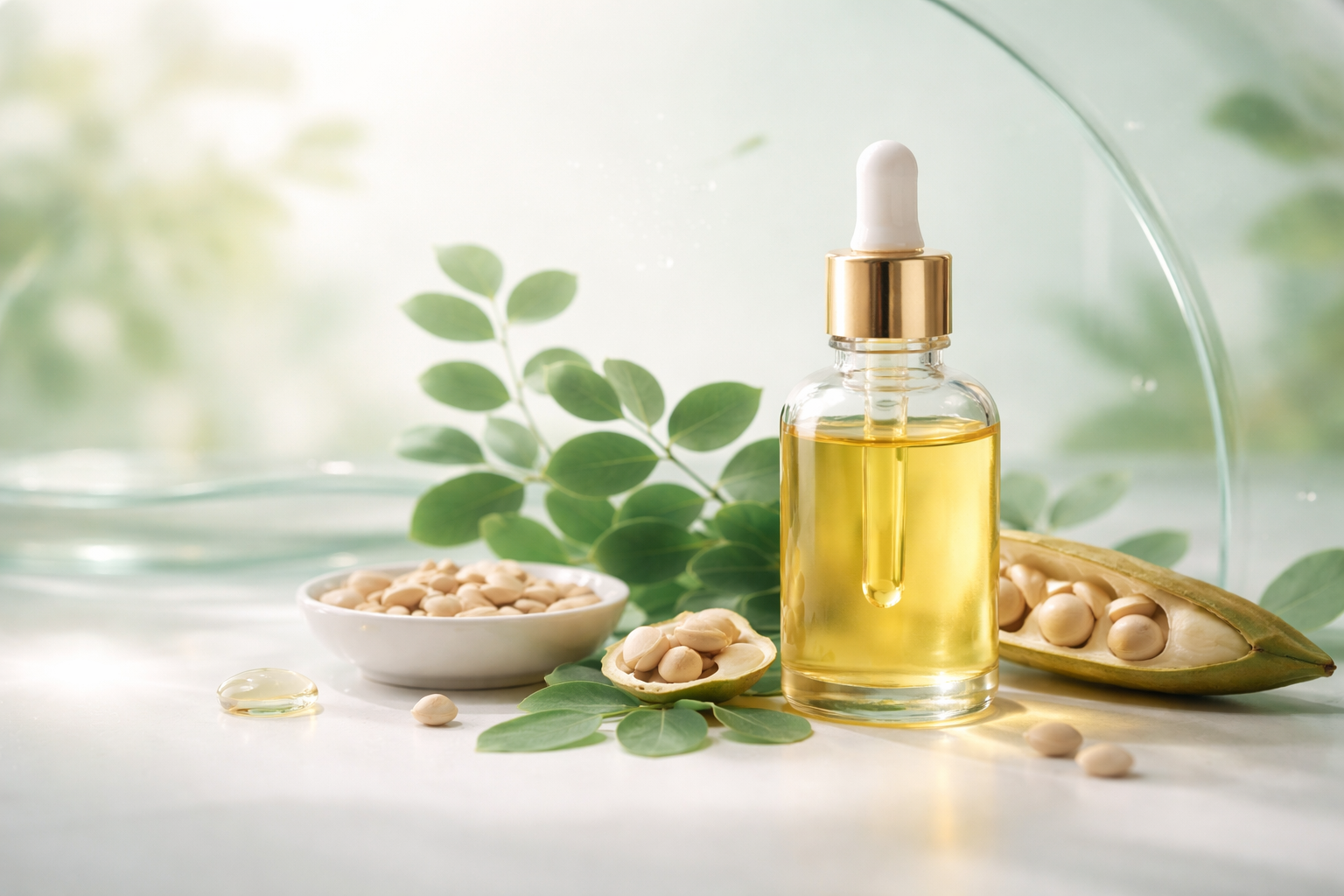
Moringa oleifera seed oil is extracted from the seeds of a tree native to India that is now cultivated in Africa and tropical Asia.
It is valued for its high oleic acid (omega-9) concentration, which can exceed 70%, giving it excellent oxidation stability. It also contains phytosterols, tocopherols (vitamin E), and various phenolic compounds.
Biologically speaking, its lipid composition would enable it to support the skin barrier, limit insensible water loss, and help protect cell membranes against oxidative stress.
Key feature: a rare natural stability among plant-based oils, which makes it an interesting ally in a skin longevity approach.
Did you know ?
Research has shown that moringa oil is more resistant to oxidation than many conventional vegetable oils, due to its high oleic acid and natural antioxidant content.
How does it work? (action mechanisms)
Main action
Moringa oil acts mainly through its oleic acid content, a monounsaturated fatty acid that can strengthen the cohesion of the skin’s lipid barrier. In this sense, it could support membrane fluidity and participate in cell protection against oxidation, which is a process involved in premature aging.
Effects at the skin tissue level
It can : improve flexibility while supporting hydration and soothing symptoms associated with mild inflammation. Its antioxidant components could also participate in fibroblasts’ protection, which are essential cells for the structure of skin flexibility.
What it means in terms of longevity
By supporting the skin barrier and by limiting oxidative stress, moringa oil could help support natural cell repair mechanisms. In a sustainable health approach, preserving the integrity of cell membranes helps maintain cellular balance, vitality, and energy over time.
Study box
2015 – In vitro study on the antioxidant activity of Moringa oleifera oil
A study published in the Journal of Food Science and Technology
https://link.springer.com/article/10.1007/s13197-015-1731-0
Key finding: The oil showed significant antioxidant activity linked to its phenolic compound composition.
Benefits
Support for the skin barrier
The high oleic acid concentration could strengthen the cohesion of lipids in the stratum corneum. It means that this can result in more flexible, comfortable skin that is less prone to dehydration.
Protection against oxidative stress
Naturally present antioxidants could contribute to the neutralization of certain free radicals involved in cellular aging. In a daily routine, this can support skin exposed to environmental aggressors (pollution, UV rays, stress).
Soothing and skin comfort
Data suggest a potential modulating effect on inflammatory processes. This could be interesting for sensitive skin prone to temporary discomfort.
Natural sources
- Moringa oleifera seeds
- Cold-pressed virgin oil
- Standardized lipid extracts
- Natural cosmetic formulations
Dose, form & bioavailability
For skin use, this ingredient is generally used in its pure form or integrated in cosmetic formulas in doses between 5 % and 20 %.
For nutritional use (according to local traditions), it can be ingested in small quantities. Its high oleic acid concentration promotes good skin affinity.
It can be paired with vitamin C, to polyphenols, or other antioxidant-rich oils in a synergistic approach.
A regular use extending for several weeks is often needed to notice visible effects on the skin balance.
Security & precautions
Moringa Oil generally has a favourable profile for skin use. Side effects remain possible for individuals with sensitive skin, especially in cases of allergy to tropical plants. A preliminary test is recommended. In case of dermatological conditions or pregnancy, professional advice is recommended before regular use.
How to integrate it into a longevity routine
When to use it
In the evening, on cleansed skin to support the skin’s natural night time regeneration mechanisms.
How to pair it
Along with this ingredient, it is possible to use : topical vitamin C, antioxidant serums, gentle routine to promote skin barrier function.
Example of a simple routine
Gentle cleansing → antioxidant serum → a few drops of moringa oil → protective cream if necessary.
Who is it particularly interesting for
This ingredient is particularly suited for : dry or mature skin, skin exposed to environmental stress, or people seeking a natural approach to skin vitality.
A plant-based ally for maintaining cellular balance over time?
Moringa oleifera seed oil is part of a soothing approach to skin longevity. It can support the skin’s natural functions thanks to its rich lipid content and antioxidant potential. As it supports the skin barrier and helps to protect against oxidative stress, it also helps preserve cellular vitality and tissue balance. When incorporated into a consistent, physiology-friendly routine, it offers a gentle approach to long-term skin care.
Sources
- Anwar, F., et al. (2007). Moringa oleifera oil: A rich source of oleic acid. Journal of Food Chemistry.
- Rahman, I. M., et al. (2015). Antioxidant properties of Moringa seed oil. Journal of Food Science and Technology.
- Leone, A., et al. (2015). Cultivation, genetic, ethnopharmacology, phytochemistry and pharmacology of Moringa oleifera. International Journal of Molecular Sciences.
- PubMed – Base de données scientifique : https://pubmed.ncbi.nlm.nih.gov/