Key information
- It is an omega-6 fatty acid which contributes to the structure of cell membranes.
- It helps maintain the skin barrier and balance hydration.
- It is associated with better sebum regulation and more harmonious skin.
- Its role in mild inflammation can support skin comfort over time.
- A clinical study suggests that topical application could improve barrier function and reduce insensible water loss.
Linoleic acid is gaining interest in beauty treatments focused on longevity. This fatty acid cannot be synthesized by the human body but plays a key role in skin health. At a time when there is an increasing focus on cellular balance, skin barrier, and mild inflammation, maintaining flexible, resistant, and luminous skin becomes crucial. This article shows how it works, how it can be useful, and how to integrate it consistently into a longevity routine, allows a more scientific precision when referring to skin health.
What is it ?
Linoleic acid is a polyunsaturated fatty acid belonging to the omega-6 family. It is naturally present in many plant-based oils, seeds, and oilseeds.
Biologically, it is a component of cell membrane phospholipids and epidermal ceramides. The latter are essential for the cohesion of cells in the stratum corneum.
Its key feature is that it is essential for the integrity of the skin barrier. A deficiency can be associated with impaired barrier function and increased water loss.
Did you know?
A decrease in linoleic acid levels in sebum has been observed in blemish-prone skin, suggesting a role in skin balance.
How does it work ?
Main Action
Linoleic acid participates in the synthesis of ceramides, which are major components of the skin’s lipid barrier.
By strengthening this structure, it can help limit transepidermal water loss (TEWL) and support the skin’s natural hydration.
Effects at the skin level
Skin
It promotes cell cohesion and contributes to the elasticity of the stratum corneum.
Mild inflammation
It is a precursor to lipid mediators that can modulate certain inflammatory responses, potentially contributing to improved skin comfort.
Sebum balance
An appropriate concentration in sebum is associated with a more fluid and less comedogenic texture.
What it means in terms of longevity
By supporting the barrier function and lipid balance, linoleic acid can promote cellular vitality and skin resilience against external aggressions.
It is therefore part of a sustainable approach to skin health, based on maintaining natural functions of the skin.
Study box
2018 – Randomized clinical study
Effect of topical application of linoleic acid on skin barrier function: significant improvement in hydration and measurable reduction in transepidermal water loss.
Benefits
Support in skin hydration
Linoleic acid contributes to the synthesis of ceramides, which are essential for moisture retention.
In practice, it can help dry or fragile skin, in addition to a skincare routine rich in regenerative active ingredients.
Balance for combination to oily skin
A low level of linoleic acid in sebum is sometimes observed in skin prone to blemishes. When used on the skin, it can help to achieve a more balanced lipid level. Better results are achieved when using plant-based oils.
Support for skin aging
It strengthens the skin barrier and modulates mild inflammation, which helps preserve cellular integrity. In terms of longevity, this means helping the skin maintain its flexibility and vitality over time.
Natural sources
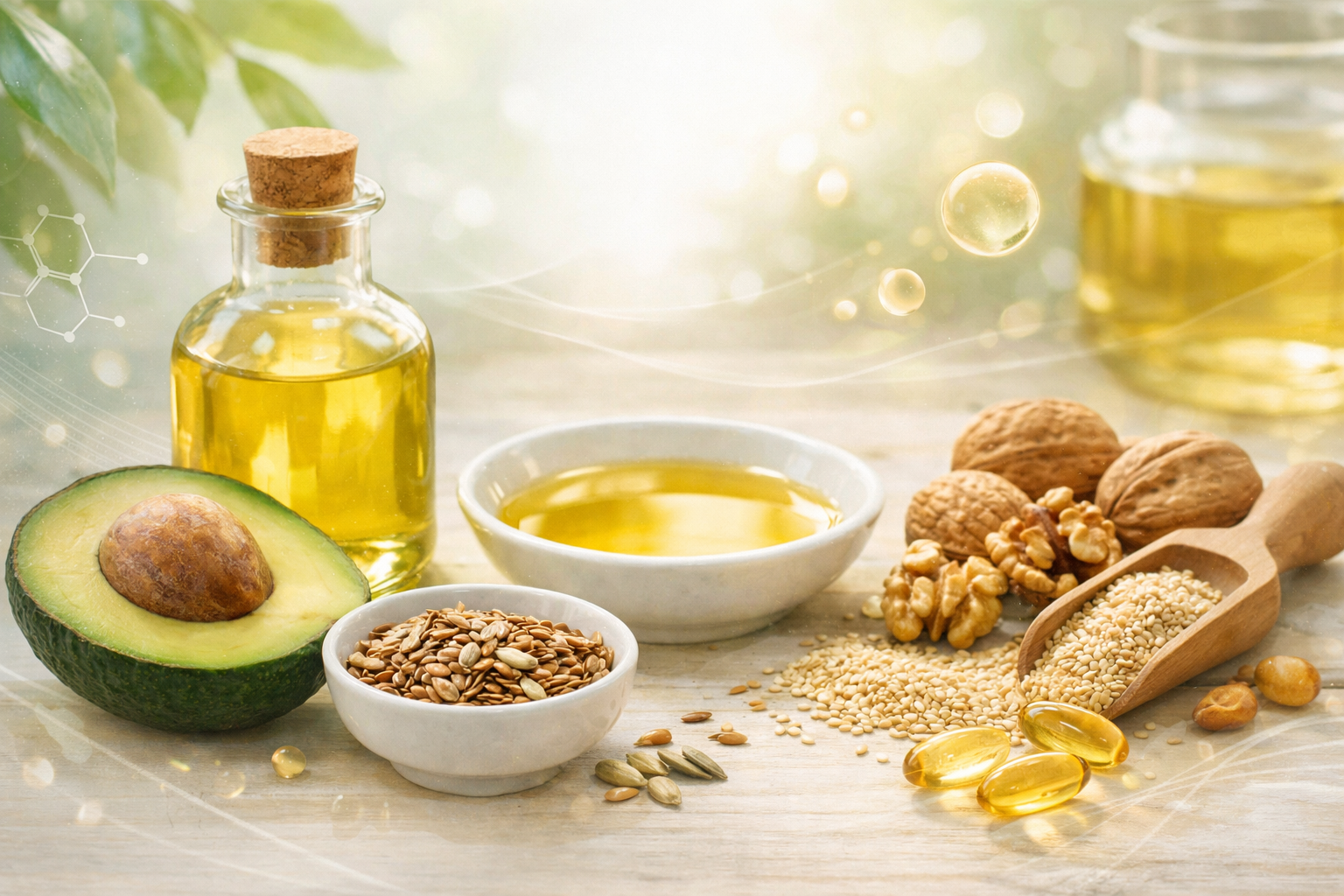
Linoleic acid is present in many natural components such as sunflower oil, safflower oil, grape seed oil, hemp oil, nuts, and seeds.
Dosage, forms & bioavailability
Topical use
Cosmetic formulas generally contain between 0.5% and 10% linoleic acid, depending on the desired results.
Oral use
The recommended intake of omega-6 varies depending on overall nutritional context. A balance of omega-3 is essential.
Possible combinations
It can be used with : ceramides, vitamin E (protection against lipid oxidation), and omega-3 (inflammatory balance).
Length of use
Regular and prolonged use seems more consistent with a sustainable approach to skin health.
Security and precaution
Linoleic acid is generally well tolerated, especially when used on the skin. Side effects are still possible. Vigilance is recommended for sensitive individuals. There is a risk of oxidation of poorly stored oils. Overall nutritional balance is to be considered in case of oral use. Professional advice is recommended in cases of particular skin conditions or specific oral use.
How to incorporate it into a longevity routine
When to use it
Apply to the skin, ideally in the evening, to slightly damp skin.
How to combine it
With active ingredients that support the skin barrier, such as ceramides, niacinamide, and mild antioxidants.
Example of a simple routine
- Gentle cleansing
- Moisturizing serum
- Linoleic acid-rich oil
- Barrier cream.
Pour qui c’est particulièrement intéressant
For dry or dehydrated skin prone to imperfections or exposed to harsh environments. It can also be integrated into gentle anti-aging preventive treatments.
What if lipid balance was the key to long-lasting, radiant skin?
Linoleic acid embodies a soothing vision of skin health. This ingredient supports and helps the skin. By participating in the structure of cell membranes and the cohesion of the epidermal barrier, it can help maintain the skin’s natural balance. From a conscious longevity perspective, it does not provide immediate results, but preserves essential biological functions day after day. Cultivating consistency could be one of the simplest ways to support skin vitality.