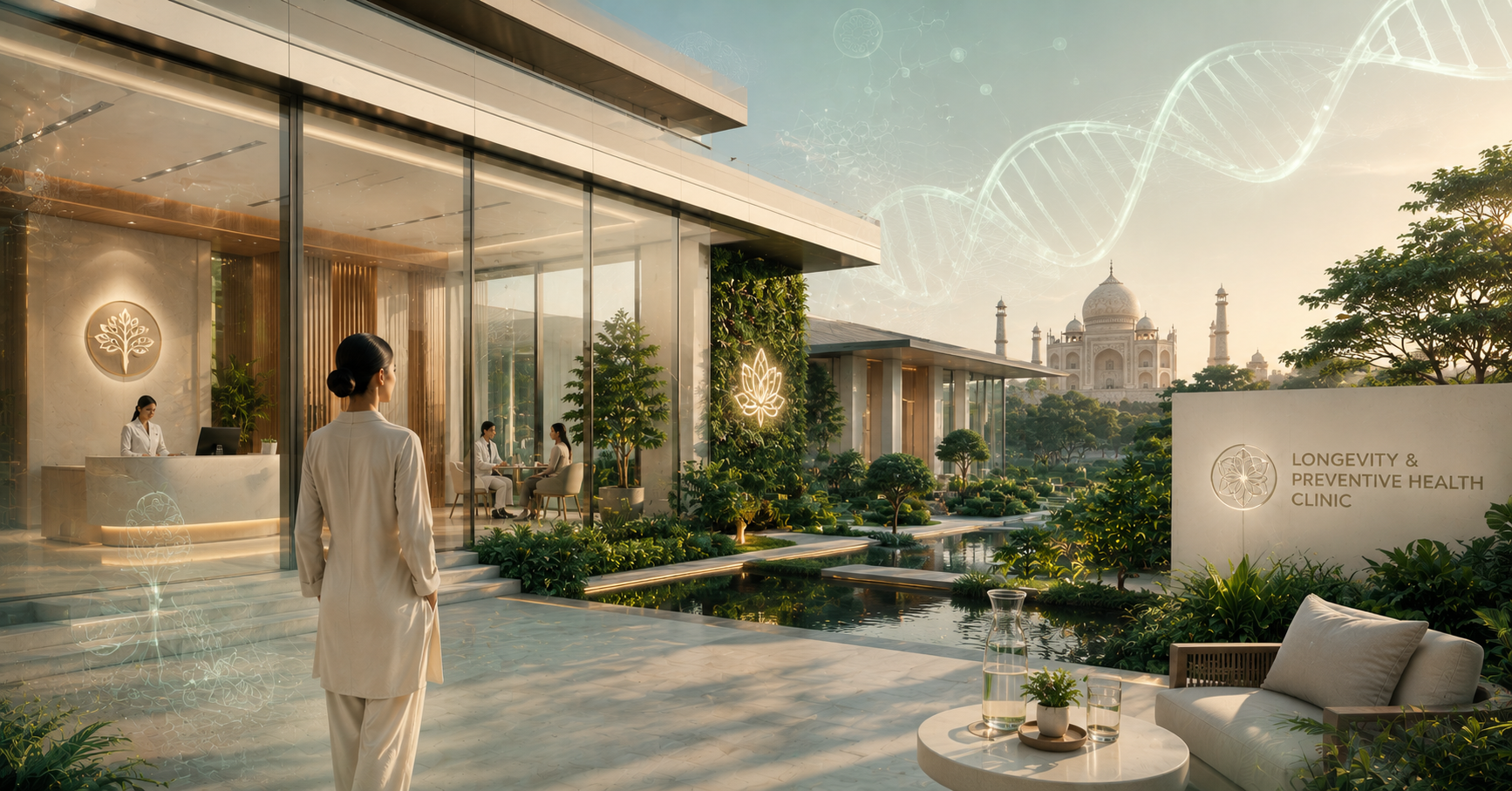
Biological age testing, NAD+, hyperbaric chambers, cryotherapy, peptides: India is seeing a new generation of clinics dedicated to longevity optimization. Here are the most serious ones, their distinctive features, and how to evaluate them.
Alongside its long-established preventive hospitals and its Ayurvedic retreats, India is witnessing the rise of a third ecosystem: dedicated biohacking and longevity clinics, concentrated in Mumbai, Delhi, Bangalore, Gurgaon, and Goa. They combine biological age diagnostics with optimization protocols. The sector is dynamic but largely unregulated, and the line between a medically supervised clinic and a commercial wellness center is particularly blurred. This article details the most reputable addresses by category, their distinctive features, and offers a framework to tell substance from marketing.
A young ecosystem, between the Vedas and connected sensors
Biohacking is taking off in India, from intravenous infusions to cryotherapy. The country blends a 5,000-year Ayurvedic heritage with cutting-edge technology, a combination found nowhere else. The idea of extending life is nothing new in India, since the Vedas and yoga have carried it for millennia; what is new is the arrival of sensors, genetic testing, and protocols imported from Western biohacking circles.
One caveat frames everything that follows. Longevity medicine remains a legitimate medical vertical, yet still an unregulated one. Foundational interventions such as diagnostics, hormone optimization, IV infusions, and hyperbaric oxygen are well established and governed by standard medical frameworks, but some more experimental therapies such as stem cells or exosomes are subject to regulatory limits that vary by country. In India, where the sector is young, this distinction is essential.
Diagnostics: measuring your biological age
Before any serious protocol comes measurement. Indian clinics assess biological age through a multidimensional approach: DNA methylation markers, telomere length, inflammatory profiles such as hs-CRP. Panels often track more than 50 biomarkers, and epigenetic tests of the Horvath clock type analyze DNA to determine internal biological age.
Dr Dangs Lab (Delhi). A reference laboratory for longevity diagnostics in the capital. Its signature is the TruAge test, which measures DNA methylation at more than 900,000 sites to assess biological age, immune aging, inflammation, and the pace of aging, presented as a reference test for longevity planning. It is complemented by a NAD+ profile that evaluates mitochondrial efficiency and age-related decline, and by the myDNA Longevity genetic panel, which analyzes key longevity genes such as APOE, FOXO3, MTHFR, and SOD2. This is the address for anyone who wants a complete, internationally credible diagnostic workup with no attached commercial protocol.
Mapmygenome (Hyderabad). An established genomics player focused on at-home testing. Its approach is multi-omic: it combines whole genome, gut microbiome, and epigenome to offer a 360-degree view. The MapmyEpigenome test targets cellular biological age, while the Ultimate Biohacking journey offers a foundational set of tests for performance and longevity. Analyses are processed in CAP- and NABL-accredited laboratories, a guarantee of clinical reliability. Its distinctive feature is the simplicity of sample collection, an at-home cheek swab.
DNA Labs India. A consumer-friendly, accessible positioning, with a BioAge biological age test that examines eight validated epigenetic markers, including ELOVL2 for brain aging and FHL2 for bone density, and provides a roughly ten-page report with lifestyle recommendations and a post-test consultation. It is the affordable entry point to epigenetic diagnostics in India.
A piece of common sense noted by patients themselves: urban pollution in major cities like Delhi can temporarily skew oxidative stress results, which is why it pays to prioritize insulin sensitivity and inflammation markers over expensive epigenetic kits alone.
Medically led longevity clinics
These are the structures that apply a physician-led medical approach, beyond a single isolated test.
The Anti-Aging Centre, or TAC (Gurugram, Pune, Delhi). The medically led reference of the category, which claims to be India’s first doctor-led personalized longevity program, with more than 160 biomarkers at diagnosis and a stated philosophy of prevention over medication. Its strength is the depth of the entry workup: bloodwork and scans for metabolic health (diabetes, prediabetes, cholesterol, PCOD, thyroid, fatty liver), body composition, cardiovascular risk assessed by EndoPAT, DNA genetic testing, and gut microbiome analysis. On that basis, the clinic designs targeted interventions: fat loss, diabetes control, hormonal balance, gut repair. Its center of gravity is metabolic and gut health rather than aesthetics. It also offers regenerative medicine and hormone optimization treatments, to be evaluated against the level-of-evidence criterion.
The Longevity Centre, or TLC. The most geographically extensive network, with eight claimed centers covering Delhi, Gurgaon, Mumbai, Pune, Nagpur, Goa, Hyderabad, and Bangalore. Its approach is structured around measuring and then reducing biological age, via metabolic markers, hormonal profiles, inflammation levels, and epigenetic data. The journey begins with a thirty-minute consultation with the clinical team, designed around individual biology rather than a template. Its distinctive feature is geographic accessibility: it is the network most likely to have a center in any major Indian city.
Wellfinity (Bangalore). A more specialized profile, centered on functional medicine and peptide therapy. Its claimed distinctive feature is that it does not apply standardized protocols, but instead integrates peptides in a personalized way, adjusting the combination, timing, and sequencing to each person’s physiology. An address for those specifically interested in the peptide approach under the supervision of functional physicians. Peptide therapy remains a field with a shifting regulatory framework, to be approached with discernment.
The right reflex for this category is to verify that programs are genuinely supervised by physicians trained in longevity or functional medicine, and that the journey begins with a structured diagnosis.
Protocol centers: HBOT, cryo, NAD+ and more
This is the most visible category, and the most heterogeneous. These centers offer the machines of biohacking: hyperbaric chamber, whole-body cryotherapy, infusions, photobiomodulation, infrared sauna. Quality and medical supervision vary enormously.
The Biohacker (Mumbai). Presents itself as India’s first biohacking platform, founded by Lalit Dharmani and having attracted investment from actor-entrepreneur Suniel Shetty, which gives it strong media visibility. Its catalog is one of the most complete in the country: NAD+ infusions, IV laser therapy from Germany, peptides, mild hyperbaric oxygen at 90-95% oxygen, infrared ozone sauna, compression boots, red and near-infrared photobiomodulation panels at 630-660 and 810-850 nm, and blood ozone therapy. It also offers prolozone injections for regenerative purposes. Its positioning is clear: performance and recovery, in a full-service center spirit. Several of these protocols, such as ozone, IV laser, and prolozone, have limited evidence and should be approached with full awareness.
Prana HBOT (Mumbai, Surat). The hyperbaric oxygen specialist, which makes oxygen the foundation of its philosophy. Its distinctive feature is its emphasis on medical standards: certified chambers, real-time monitoring, strict safety measures. HBOT is positioned here for recovery, cognitive clarity, and long-term vitality, complemented by cryotherapy, photobiomodulation, and PEMF therapy, pulsed electromagnetic fields. This is the address to favor if HBOT is the primary objective, hyperbaric oxygen therapy falling under established medical frameworks when properly supervised.
The Wellness Co. The accessible-network model of Indian biohacking, with fifteen claimed centers across eight cities: Delhi, Mumbai, Bangalore, Gurgaon, Hyderabad, Ahmedabad, Chennai, and Ludhiana. The catalog includes more than twenty services: IV infusions, whole-body cryotherapy in chambers down to -110°C, photobiomodulation, far-infrared sauna, HBOT, and aesthetic treatments such as HydraFacial. The presence of physiotherapists for certain indications, such as localized cryotherapy, is a notable point. A consumer-facing positioning geared toward athletic recovery, more in a medicalized spa spirit than a longevity clinic in the strict sense.
Reverse Infinity (Goa) and Biowell Health. The former explicitly targets first-time biohackers, athletes, and seekers of an energy reset, with HBOT, photobiomodulation, cryotherapy, and infusions. The latter structures its offering into programs and memberships around cryotherapy, red light, HBOT, and IHHT, intermittent hypoxic-hyperoxic training.
An important warning applies to this category. These centers are often spa environments more than clinical structures, and many of these protocols have variable levels of evidence. They should be approached with discernment, favoring centers that demonstrate genuine medical supervision and safety standards, particularly for hyperbaric oxygen.
The Sogevity framework: 4 criteria to sort through
In a young, unregulated market, knowing how to sort is more useful than a list.
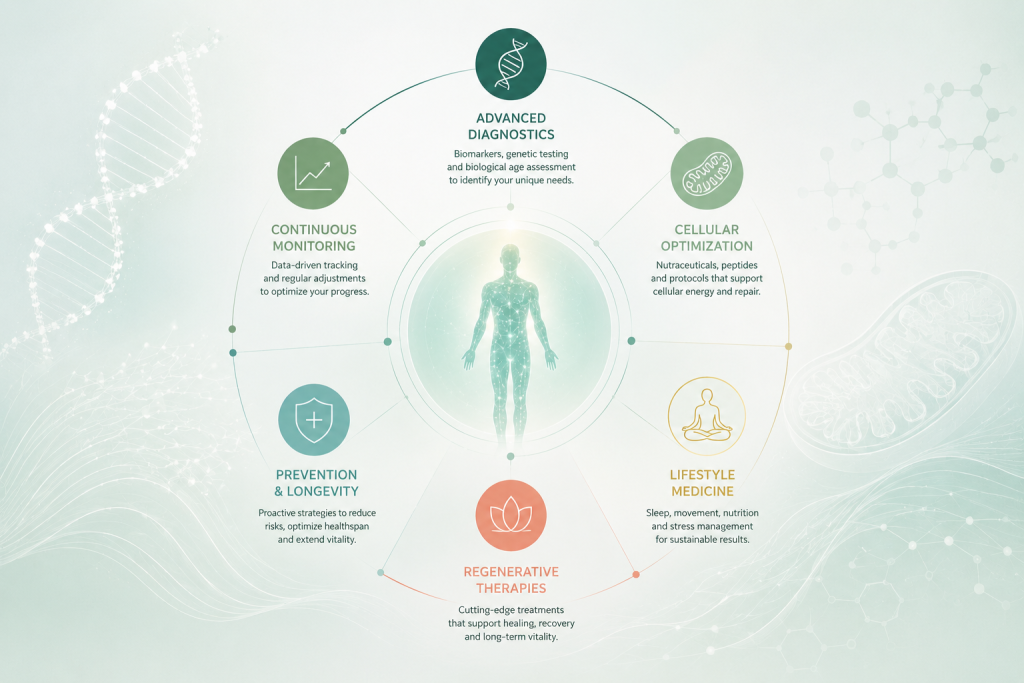
Diagnosis first. A serious approach begins by measuring before proposing a protocol. Be wary of centers that sell infusions without a prior workup.
Medical supervision next. The real question is who is in charge: a physician trained in longevity medicine, or simply a machine operator. The presence of a safety protocol, particularly for HBOT and infusions, is a strong signal.
The level of evidence of the protocols. Diagnostics, hormone optimization, IV infusions, and hyperbaric oxygen fall under established medical frameworks. Stem cells, exosomes, and ozone are experimental, and their aggressive promotion is a caution signal.
Transparency last. Posted prices, protocol sources, laboratory accreditations such as CAP or NABL: serious structures do not hide them.
Key takeaways
India is rapidly building a credible biohacking and longevity ecosystem, driven by solid diagnostic laboratories such as Dr Dangs Lab and Mapmygenome, and by a few serious medically led clinics, TAC chief among them. But it is also a young market full of protocol centers with uneven supervision and a discourse that is sometimes more commercial than medical.
The golden rule remains the same as everywhere in our directory: measure before treating, demand medical supervision, and beware of oversold experimental protocols. The best starting point in India is not an infusion, but a good biological age test interpreted by a physician.
What about you: where would you start, by learning your real biological age, or by testing an optimization protocol directly?
Disclaimer: this article is for informational purposes and does not constitute medical advice. Many of the protocols mentioned have variable or experimental levels of evidence. Consult a healthcare professional before starting any program, particularly for hyperbaric oxygen therapy, infusions, and peptide therapy.
Continue exploring longevity
Explore this longevity topic