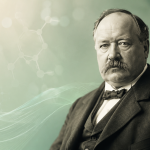
“He was truly fascinating. He cared deeply about observing his patients and engaging with them, always with the goal of improving their care.”
Jacques Leibowitch was a French immunologist and physician, whose research made history because he contributed to HIV/AIDS research. A major figure in clinical virology in France, he helped transform the understanding of the virus and its treatments. His research has transformed HIV from a once-fatal disease into a manageable chronic condition. His influence is not limited to HIV and remains important: it requires reconsidering the way medicine anticipate diseases, prevent them, and supports healthy aging.
Jacques Leibowitch occupied a unique place in the history of contemporary medicine, at the crossroads of clinical research, therapeutic innovation and scientific controvery. Described as a “free spirit”, sometimes stubborn, he established himself in the field of HIV through an approach based on direct observation of patients and the questioning of established protocols.
The portrait that emerges from his work is that of a physician for whom the understanding of living systems cannot be dissociated from clinical reality. He was seen by his colleagues as a brilliant physician, but sometimes difficult to integrate in institutional structures. This tension between scientific creativity and institutional constraints structures his career and his lasting influence on modern medicine.
His career
Jacques Leibowitch’s career was orientated toward work as a physician and researcher trained in immunology and internal medicine at a time when complex viral diseases were beginning to shape clinical research priorities. While first cases of HIV appeared in France in the 1980s, he joined teams mobilized to understand a disease for which there was still no treatment and which largely unknown. He was involved in establishing pioneering working groups on HIV, alongside other physicians committed to the scientific urgency of the time.
This period was a turning point in his carrier, leading him toward research directly based on clinical observations of patients. Very soon, he became known for his ability to relate symptoms, biological data and therapeutic hypotheses, in a context where knowledge was still fragmented. His work contributed to structuring early understanding of HIV and its modes of transmission.
It also participated in studies that helped identify major risks linked to contaminated blood transfusions.
Over the years, he gradually distanced himself from the most rigid institutional frameworks to develop a more autonomous approach to clinical research, focused on experimentation and direct observation. This position brought him both recognition and tensions with some medical institutions, but it also contributed to the evolution of scientific debates around HIV.
His vision of longevity
Jacques Leibowitch’s vision of longevity is rooted in an understanding of immune system as fundamental basis of long-term human health. For him, extending life expectancy means preserving biological functions, which is essential, particularly those of the immune system facing chronic infections. HIV therefore becomes a model for study that allows for a rethinking of medical intervention timelines and the impact of early treatment.
His approach is based on the idea that therapeutic efficiency depends on the moment the disease is treated, before it becomes irreversible. That is why strategies led to earlier care of patients with HIV. In a testimony reported about his work, Jacques Leibowitch is described as a physician for whom research cannot be dissociated from clinical practice and the human realities of patients’ lives.
“He constantly had ideas, new, sometimes contradictory, but always inspired by the concrete reality of patients in medicinal practice.” said Christine Rouzioux, emeritus professor of virology at the University of Paris-Descartes. This ability to link innovation and clinical observation is also part of his scientific identity, often summarized as “genius”, “free spirit”, “dissident”, “charming”, “hot-tempered”, “sensitive”. Christine Rouzioux also added: “He was a great personality, intelligent and creative, but his approach, often blunt, did not allow him any concessions and made the application of his ideas difficult.”
These elements reflect a vision of medicine where confrontation of ideas and clinical experimentation are essential to the evolution of medical practice, especially in the field of longevity and chronic disease management.
His influence and impact
Jacques Leibowitch’s influence is measured both in the evolution of HIV care protocols and in the transformation of medical debates on therapeutic strategies. His research contributed to consolidating the idea that early introduction of antiretroviral treatments could durably modify the stage of the disease. It helped shape clinical practices and contributed to the improvement of patients’ life expectancy.
His positions, sometimes at odds with scientific consensus, generated discussions within the scientific community, but also contributed to opening new perspectives on personalized patient care. In the field of longevity, his legacy lies in the recognition of the importance of early intervention and a more detailed understating of immune mechanisms in the management of chronic disease.
His life for the sake of patients
Jacques Leibowitch left behind a significant legacy, his commitment to his patients was profound. He helped, alongside other researchers to transform the understanding and treatment of HIV/AIDS. His work highlights the fact that clinical observation was key, as well as therapeutic innovation in the evolution of medicine.
By placing the immune system at the center of care strategies, he contributed indirectly to improvements in life expectancy His scientific legacy continues to fuel debates on how to anticipate and treat diseases in the long-term, opening the way to new medical approaches still evolving.