Key Points
- Normalization of follicular keratinization
- Keratolytic activity (reduced corneocyte cohesion)
- Lipophilic penetration into sebaceous follicles
- Sebum regulation & microcomedone reduction
- Modulation of mild inflammatory mediators
- Clinically documented efficacy in mild–moderate acne
- Established dermatological safety profile
Used for over a century in dermatology, salicylic acid holds a special place in skincare. Naturally derived from plant compounds—particularly white willow bark—it is now widely integrated into modern routines designed to support skin balance and clarity.
In a conscious longevity approach, the quality of the skin often reflects the overall state of our cells: renewal, mild inflammation balance, and protection against external aggressions. Salicylic acid does not transform the skin overnight, but it can support its natural regulation mechanisms.
Let’s explore how this active ingredient works, what science says about it, and how to integrate it peacefully into a sustainable routine.
What Is Salicylic Acid?
Salicylic acid is a beta-hydroxy acid (BHA) naturally found in the bark of white willow.
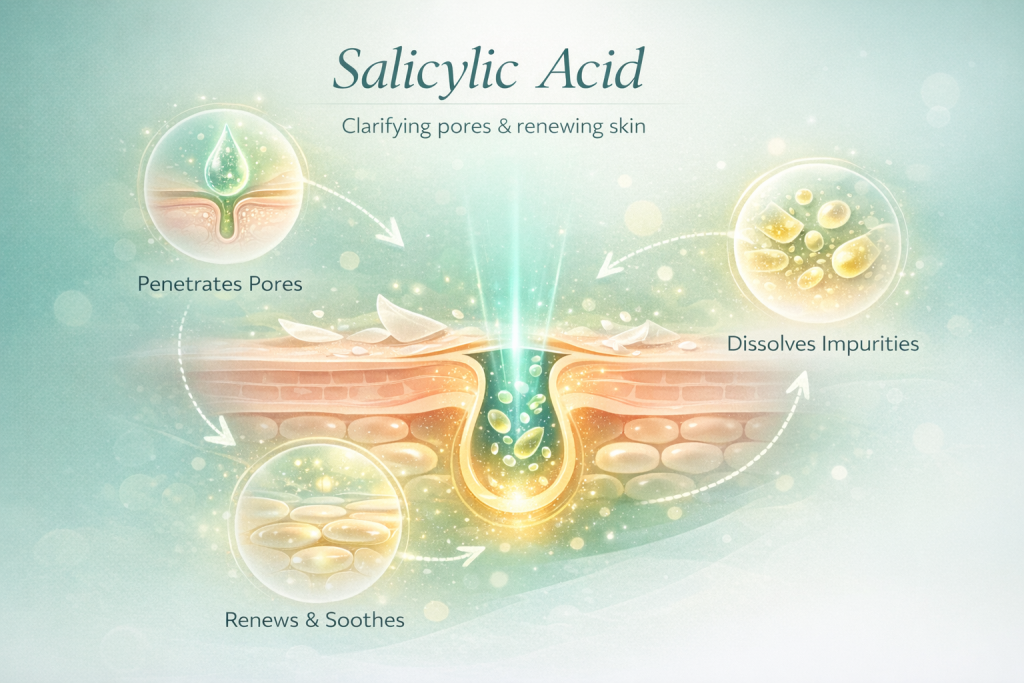
Unlike fruit acids (AHAs), which are water-soluble, salicylic acid is lipid-soluble. This allows it to penetrate pores and act where excess sebum and dead cells accumulate.
In topical application, it is primarily used to support:
- Physiological cell renewal
- Natural desquamation
- Sebum balance
- Complexion clarity
Its key feature lies in its ability to gently exfoliate while respecting the skin barrier when properly dosed.
Did You Know?
Dermatological research has shown that salicylic acid can promote the normalization of keratinization at the hair follicle level, a central mechanism in skin imperfections.
How Does It Work?
Main Action: Gentle Keratolysis
Salicylic acid acts through gentle keratolysis:
- It helps dissolve the bonds between dead skin cells.
- This facilitates their natural elimination.
- It supports smoother, more harmonious cell renewal.
- Thanks to its lipid affinity, it works directly inside pores to help limit the accumulation of sebum and cellular debris.
Effects at the Tissue Level
Skin Texture
- Improves skin smoothness
- Promotes a more even tone
Mild Inflammation
- Helps modulate certain inflammatory mediators
- Can soothe mild redness associated with imperfections
Cellular Balance
- Supports oxygenation and vitality of superficial skin cells
- Encourages a more harmonious renewal cycle
What Does This Mean for Longevity?
From a sustainable health perspective, supporting skin renewal contributes to maintaining functional, balanced skin over time.
It is not about slowing time but about supporting natural mechanisms of cellular regulation that preserve tissue resilience and clarity.
Study spotlight
Published in the Journal of Clinical and Esthetic Dermatology
👉 https://www.ncbi.nlm.nih.gov/pmc/articles/PMC4554394/The authors report that topical salicylic acid can significantly improve mild to moderate acne lesions, with generally good skin tolerance.
The Benefits
Support for Skin Prone to Imperfections
Through its keratolytic and sebum-regulating properties, salicylic acid is associated with a reduction in comedonal lesions and improved pore clarity. With consistent, well-adapted use, this can translate into visibly clearer skin, particularly in sebaceous areas such as the T-zone.
Improvement of Skin Texture
By promoting dead cell elimination:
- The skin surface appears smoother
- The complexion looks more even and radiant
- Mechanical exfoliation becomes less necessary
Supporting Skin Balance
- Helps maintain a stable skin environment
- Fits into a gentle longevity-oriented approach
- Supports preservation of the skin barrier
Natural Sources
- White willow bark
- Meadowsweet
- Certain berries rich in salicylic derivatives
Dosage, Forms & Bioavailability
Common Cosmetic Concentrations:
- 0.5% to 2%
Dermatological Peels:
- Up to 30% (under professional supervision)
Available Forms:
- Lotions
- Serums
- Cleansing gels
- Targeted patches
Potential Synergies
- Niacinamide → supports the skin barrier
- Zinc → helps regulate sebum
- Hyaluronic acid → maintains hydration
A gradual introduction (2–4 times per week at first) is generally preferred to maintain skin balance.
Safety & Precautions
Salicylic acid is generally well tolerated at cosmetic concentrations. Temporary dryness, mild flaking, or increased photosensitivity may occur, especially during the adjustment phase. Daily broad-spectrum sunscreen is advised, and initial use should not be combined with other exfoliants. Medical guidance is recommended in cases of pregnancy, known salicylate allergy, or highly sensitive skin.
How to Integrate It into a Longevity Routine
When to Apply
Preferably in the evening, to support nighttime cell renewal.
What to Pair It With
- Moisturizers rich in ceramides
- Soothing actives
- Gentle antioxidants
Example Routine
- Gentle cleansing
- Salicylic acid serum (2–3 evenings per week)
- Moisturizer
- Sunscreen the following morning
Who May Benefit Most?
Salicylic acid is particularly relevant for combination to oily skin, skin prone to recurring imperfections, and adults seeking improved clarity without aggressive treatments.
A Gentle Approach to Skin Vitality
Salicylic acid does not aim for rapid transformation—but for gradual, intelligent support.
By supporting cell renewal and balancing mild inflammation, it contributes to the functional quality of the skin. In a conscious longevity approach, consistency and moderation take precedence over intensity. Integrated with discernment, this active ingredient can help preserve skin clarity as much as texture and vitality.
Sources
Kligman, A. M., & Mills, O. H. (1972). Acne cosmetica. Archives of Dermatology.
Tanghetti, E. (2013). The role of inflammation in acne pathogenesis. Journal of Clinical and Aesthetic Dermatology.
https://www.ncbi.nlm.nih.gov/pmc/articles/PMC4554394/
Arif, T. (2015). Salicylic acid as a peeling agent. Clinical, Cosmetic and Investigational Dermatology.
Continue exploring longevity
Explore this longevity topic