
Key takeaways
- The gut microbiome influences digestion, immune function, metabolism, and the integrity of the intestinal barrier. Its relationship with aging is complex and varies from person to person.
- Age-related changes in gut bacteria may contribute to inflammaging, the persistent, low-grade inflammation associated with several chronic conditions.
- Short-chain fatty acids, produced when gut microbes ferment dietary fiber, help support intestinal health and regulate immune responses.
- Research has linked microbiome changes to frailty, metabolic disorders, cardiovascular disease, and neurodegenerative conditions, but it remains difficult to establish whether these changes cause disease or result from it.
- A varied, fiber-rich diet and healthy lifestyle habits can support gut health. However, no microbiome profile, probiotic, or intervention has been proven to extend human lifespan.
Why is the Gut Microbiome becoming a focus of longevity research?
Healthy aging is often discussed in terms of cardiovascular fitness, muscle strength, metabolic health, and the prevention of chronic disease. Increasingly, researchers are also looking at a system that is less visible but closely connected to all of these processes: the gut microbiome.
This ecosystem comprises bacteria, fungi, viruses, and other microorganisms living in the digestive tract. Together, they help break down components of food, produce biologically active compounds, support immune function, and maintain the intestinal barrier. Their influence extends beyond digestion, with potential consequences for inflammation, metabolism, and communication between the gut and other organs.
As people grow older, both the gut microbiome and the body itself change. Diets may become less varied, medications can alter microbial communities, physical activity may decline, and the immune system undergoes age-related changes. These factors can interact, making it difficult to determine which microbial changes are part of normal aging and which are associated with poorer health.
That distinction is central to longevity research. A microbiome associated with a long life is not necessarily the reason someone lives longer. Researchers must establish whether particular microbial communities actively support health, reflect an individual’s existing health status, or result from a combination of genetic, environmental, and lifestyle factors.
The emerging picture is not one of a single ideal microbiome, but of a dynamic ecosystem whose relationship with the body may influence how people age.
How does the Gut Microbiome change with age?
The idea that gut bacteria simply become less diverse as people age is too straightforward to capture what researchers observe.
Some studies have found lower levels of certain beneficial microorganisms in older adults, particularly those experiencing frailty or chronic disease. Other research has reported greater microbial diversity among some of the oldest and healthiest individuals. A systematic review of human studies on aging and longevity found that microbial diversity and functional capacity could be higher in older adults, particularly in the oldest age groups, although the results varied across populations.
The apparent contradiction makes sense when age is considered alongside health status. An older person living independently, maintaining a varied diet, and remaining physically active may have a different microbial profile from someone of the same age experiencing frailty, repeated hospitalizations, or several chronic conditions.
Researchers have examined bacteria such as Faecalibacterium prausnitzii, Roseburia intestinalis, and Eubacterium rectale, which are associated with the production of short-chain fatty acids. These compounds help maintain intestinal health and participate in immune regulation. Lower levels of some of these bacteria have been reported in certain older or less healthy populations, but the pattern is not universal.
Other microorganisms, including Akkermansia muciniphila, have attracted interest because of their relationship with the mucus layer that protects the intestinal lining. Some studies of exceptionally long-lived populations have found higher relative abundance of Akkermansia and other specific bacteria. Yet findings differ across regions, diets, and study designs.
This is why researchers are increasingly interested in what microbial communities do, rather than simply which species are present. Two people can have different bacterial compositions but still possess microbial communities that perform similar functions.
A healthy microbiome may therefore be better understood through its functional capacity, resilience, and relationship with its host than through a universal list of bacteria that everyone should aim to have.
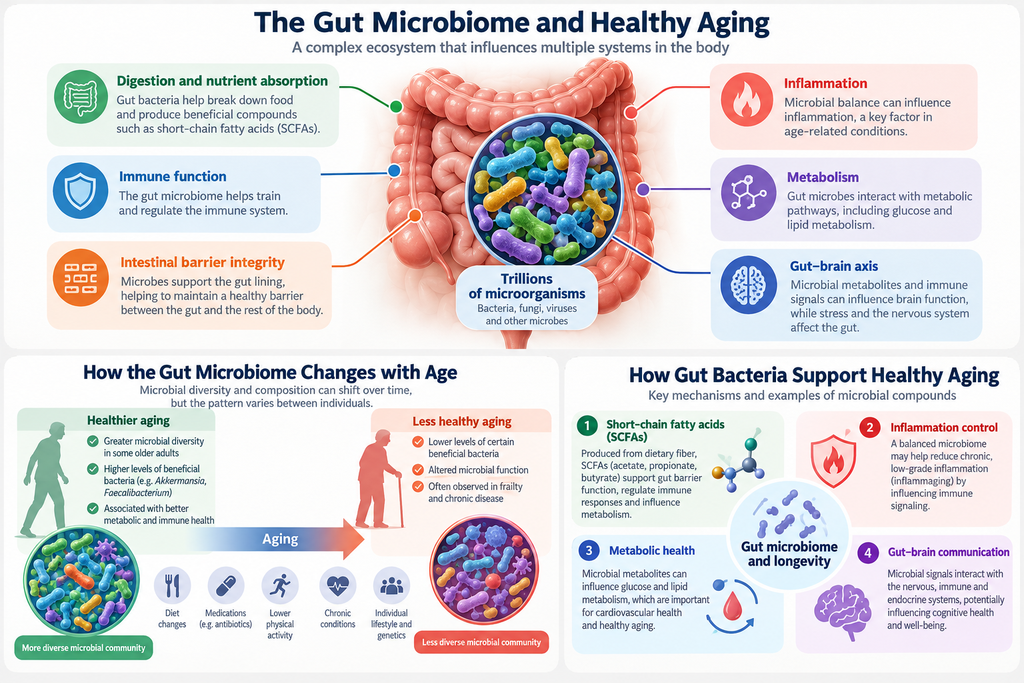
The Gut–Inflammation connection: Understanding inflammaging
One of the most important concepts linking the microbiome to longevity is inflammaging, a term used to describe the chronic, low-grade inflammation that often accompanies aging.
Unlike the acute inflammation that helps the body respond to an injury or infection, inflammaging can persist over time. It is associated with changes in immune regulation and is implicated in several age-related conditions, including cardiovascular disease, metabolic disorders, and frailty.
The gut may contribute to this process through several interconnected mechanisms.
Under normal conditions, the intestinal barrier helps separate the contents of the gut from the rest of the body. The intestinal lining, mucus layer, immune cells, and microbial community work together to regulate what crosses this boundary. With age, changes in the intestinal barrier and immune function may increase susceptibility to disruption.
If microbial products cross the barrier more readily, they can activate immune pathways outside the gut and potentially contribute to systemic inflammation. At the same time, inflammation can alter the intestinal environment, affecting which microorganisms thrive. This creates the possibility of a feedback loop in which microbial imbalance and immune dysfunction reinforce one another.
However, the relationship is not straightforward. Diet, medications, illness, and reduced mobility can affect both inflammation and the microbiome, making it difficult to isolate the contribution of gut bacteria in human studies.
Understanding this relationship could eventually help researchers identify ways to preserve immune balance and intestinal function as people age. For now, it remains an active area of investigation rather than a basis for claiming that microbiome manipulation can reverse biological aging.
Why short-chain fatty acids matter?
Some of the most interesting connections between gut bacteria and health involve compounds produced when microorganisms process food.
Short-chain fatty acids (SCFAs), including acetate, propionate, and butyrate, are generated when gut microbes ferment certain dietary fibers and other fermentable substrates. They are among the best-studied microbial metabolites in research on intestinal health and inflammation.
Butyrate, in particular, serves as an important energy source for cells lining the colon. SCFAs also participate in signaling pathways that influence mucus production, intestinal barrier function, and immune activity. Their effects depend on the compound, its concentration, the tissues involved, and the health context.
This is one reason dietary fiber matters. Humans cannot digest all the carbohydrates found in plant foods, but some of these components can be used by gut microorganisms. Eating a variety of fiber-containing foods provides different substrates for microbial fermentation, potentially supporting a broader range of microbial functions.
Legumes, whole grains, vegetables, fruits, nuts, and seeds can all contribute to fiber intake. The goal is not to feed one supposedly perfect bacterium, but to establish a dietary pattern that supports digestion, metabolic health, and a functioning intestinal ecosystem.
Scientists are also investigating whether differences in SCFA production help explain why some older adults maintain better intestinal and immune function than others.
It is important, however, not to assume that more SCFAs are always better. Their effects can vary according to the molecule, the dose, and the biological context. Experimental research has even found that SCFAs can promote neuroinflammation in a mouse model of Parkinson’s disease under certain conditions. Such findings highlight the complexity of microbial signaling and cannot be directly translated into recommendations for humans.
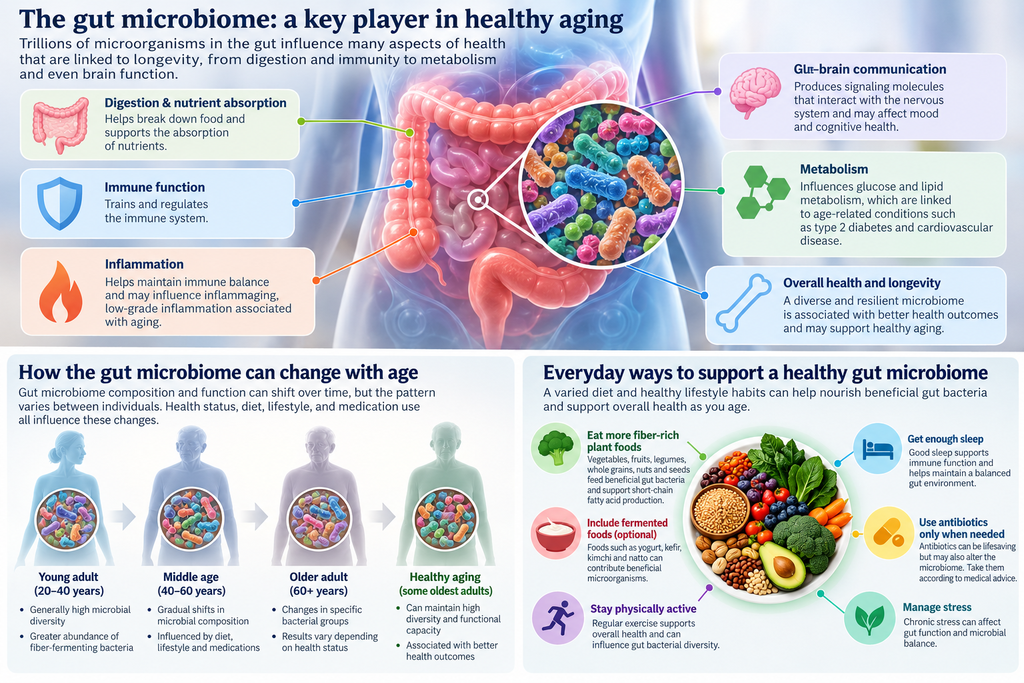
What does the Gut Microbiome have to do with age-related diseases?
The gut microbiome has been associated with a wide range of conditions that become more common with age, including type 2 diabetes, obesity, cardiovascular disease, immune dysfunction, and neurodegenerative disorders.
These connections are biologically plausible because gut microorganisms interact with several systems involved in long-term health. Their metabolites can influence glucose and lipid metabolism, intestinal barrier function, and immune signaling. Changes in these processes may, in turn, affect the risk or progression of chronic disease.
Yet association does not necessarily mean causation.
For example, a person with type 2 diabetes may have a different gut microbiome because of changes in diet, medication, metabolism, or intestinal function. The microbial differences could also influence metabolic pathways, or both processes may occur together. A single comparison between people with and without diabetes cannot fully disentangle these possibilities.
Similar questions arise in research on Alzheimer’s and Parkinson’s diseases. Studies have identified differences in gut microbial composition in some affected populations, and researchers are investigating how microbial metabolites and immune signals might interact with the nervous system. But these findings do not establish that an altered microbiome causes neurodegeneration or that changing it will prevent cognitive decline.
The same caution applies to cardiovascular disease and frailty. Microbial patterns may eventually help identify health risks or reveal new therapeutic targets, but they are not currently a substitute for established clinical assessments.
For longevity science, the value of this research lies in understanding the biological connections between systems that have traditionally been studied separately.
The Gut–Brain axis: A two-way conversation
The relationship between the gut and the brain has become another important area of microbiome research.
Known as the gut–brain axis, this network of communication involves neural, immune, endocrine, and metabolic pathways. The vagus nerve provides one route for signaling, while hormones, immune mediators, and microbial metabolites provide others.
Gut microorganisms can produce or modify compounds that influence these pathways. Their activity may affect intestinal immune responses and, indirectly, processes relevant to brain function. Conversely, stress and changes in nervous system signaling can influence gut movement, secretions, and the intestinal environment.
Researchers have reported differences in gut microbial composition in people with certain neurological conditions. Animal studies have also provided evidence that microbial changes can influence neurological and immune processes. However, translating these findings into effective treatments for human cognitive decline or neurodegenerative disease remains challenging.
The gut–brain axis is therefore a promising research framework, not proof that a healthy microbiome guarantees a healthy brain.
For healthy aging, this distinction matters. Supporting gut health may form part of a broader approach to well-being, but cognitive health also depends on cardiovascular function, sleep, physical activity, social engagement, and many other factors.
Can we support the Gut Microbiome as we age?
Although researchers have not identified a universal microbiome signature of longevity, several everyday habits can support gut health.
Diet is one of the most practical starting points. A varied eating pattern that includes fiber-rich plant foods provides substrates for microbial fermentation and helps support normal bowel function. Legumes, vegetables, fruits, whole grains, nuts, and seeds are useful options, with gradual increases in fiber often making dietary changes easier to tolerate.
Fermented foods such as yogurt, kefir, kimchi, and natto can also be included according to personal preference and tolerance. However, fermented foods are not interchangeable, and not all contain the same microorganisms or produce the same effects. A fermented food does not automatically qualify as a probiotic with a demonstrated clinical benefit.
Physical activity, adequate sleep, and avoiding unnecessary antibiotic use may also support overall health and influence the gut environment. Antibiotics can be essential and sometimes lifesaving, but they can also alter microbial communities. They should be taken according to appropriate medical advice rather than avoided when genuinely needed.
Probiotics and prebiotics are receiving growing attention, but their effects depend on the specific product, strain, dose, and intended outcome. Probiotics are live microorganisms that provide a health benefit when administered in adequate amounts. Prebiotics are substrates selectively used by host microorganisms that confer a health benefit. Evidence for one strain or formulation cannot automatically be applied to another.
For older adults, the most useful approach is likely to be one that considers the whole person: nutritional needs, existing medical conditions, medications, activity levels, and digestive tolerance. There is currently no established probiotic regimen that has been shown to extend human lifespan.
Is personalized microbiome testing the future of longevity?
As microbiome science advances, commercial testing has made it easier for consumers to obtain reports describing the bacteria found in their stool. Some services use these results to recommend dietary changes, supplements, or personalized wellness programs.
The idea is appealing. If the microbiome influences health, knowing its composition might appear to offer a precise roadmap for improving it.
But interpreting these tests is more complicated than identifying the presence or absence of particular bacteria. Results can vary with diet, medications, sample collection, laboratory methods, and the reference populations used. Moreover, the same microbial finding may have different implications for different individuals.
Researchers have yet to establish a single microbial profile that reliably distinguishes healthy aging from unhealthy aging across populations. A result showing a lower relative abundance of a particular bacterium does not, by itself, establish a deficiency, predict disease, or indicate that a supplement is needed.
Microbiome testing may become more useful as research identifies reproducible links between microbial functions and clinically meaningful outcomes. Future approaches could combine microbial composition with metabolomics, clinical information, dietary patterns, and longitudinal health data to produce more informative assessments.
For now, consumers should be cautious about tests that promise to calculate biological age, diagnose complex conditions, or prescribe a supplement routine based solely on a stool sample. The clinical value of any test depends on whether it provides reliable information that can guide decisions and improve outcomes.
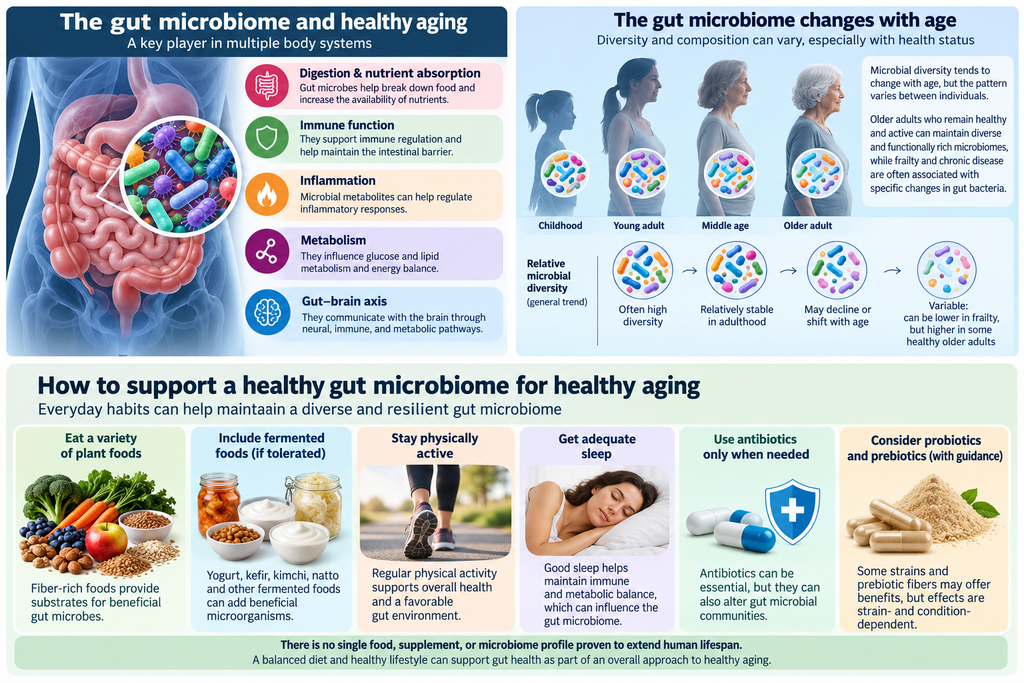
What this means for longevity?
The gut microbiome offers researchers a new way to investigate the connections between nutrition, immune function, metabolism, and aging. Rather than acting as an isolated system, it participates in a network of interactions that may help explain why some people maintain their health and independence longer than others.
Several questions remain unanswered. Scientists need better longitudinal studies to determine which microbial changes occur before declining health, rather than as a consequence of disease, medication, or lifestyle changes. Controlled clinical trials must also establish whether interventions that alter the microbiome lead to meaningful improvements in healthspan.
This distinction between biological plausibility and demonstrated benefit is particularly important in the longevity field, where early findings can quickly become commercial promises.
For now, the most practical message is not to chase a particular bacterium or attempt to engineer a perfect microbiome. It is to support overall gut and metabolic health through a varied diet, regular physical activity, sufficient sleep, and appropriate medical care.
The microbiome may eventually help clinicians develop more personalized strategies for healthy aging. But longevity is unlikely to depend on one microbial signature or supplement. The real opportunity lies in understanding how the gut interacts with the rest of the body—and how those relationships might be supported throughout life.
Discover more insights into the science of longevity, preventive health, and the biology of healthy aging on Sogevity.
Level of evidence
Overall assessment: A rapidly developing field with promising biological evidence, but limited proof of lifespan extension in humans.
Research supports the role of the gut microbiome in digestion, intestinal barrier function, immune regulation, and the production of biologically active metabolites. Human observational studies have linked microbiome patterns with aging, frailty, and age-related diseases. Experimental studies provide additional evidence for possible mechanisms, but animal findings cannot automatically be applied to humans.
Evidence for microbiome-targeted interventions is still developing. Some probiotic and synbiotic trials have reported improvements in selected outcomes, but results vary across products, populations, and study designs. No microbiome-based intervention has been established as a reliable way to extend human lifespan.
FAQ
Does the gut microbiome change as we age?
Yes. The composition and function of the gut microbiome can change with age, but the pattern varies between individuals. Diet, medications, physical activity, health status, and living environment all influence these changes. There is no single microbial profile that defines healthy aging for everyone.
Can gut bacteria influence longevity?
Gut microorganisms produce metabolites and interact with immune and metabolic pathways that may influence health as people age. Observational studies have identified microbial patterns associated with healthy aging and exceptional longevity, but they do not prove that these bacteria cause longer life.
What is inflammaging, and how is the gut involved?
Inflammaging refers to persistent, low-grade inflammation associated with aging. Changes in gut microbial activity and intestinal barrier function may contribute to immune activation, while inflammation can also alter the microbiome. The relationship is complex and appears to work in both directions.
Are probiotics good for healthy aging?
Some probiotic strains have shown benefits for specific health outcomes, but effects are strain- and condition-dependent. Evidence is not strong enough to recommend one probiotic for longevity or to conclude that probiotics generally slow human aging.
What foods support a healthy gut microbiome?
Fiber-rich foods such as legumes, vegetables, fruits, whole grains, nuts, and seeds provide substrates that gut microbes can ferment. Fermented foods may also be included in a varied diet. Individual tolerance and nutritional needs matter, and no single food guarantees a healthy microbiome.
Can a microbiome test tell me how fast I am aging?
Not reliably. Commercial microbiome tests can describe aspects of microbial composition, but there is no universally validated gut microbiome test that can determine an individual’s rate of aging or predict lifespan. Clinical interpretation remains limited by variability in testing methods and the incomplete understanding of what different microbial profiles mean.
Methodology
This article draws on the News-Medical overview of gut microbiome changes and aging, alongside peer-reviewed reviews and research on microbial diversity, inflammaging, short-chain fatty acids, the gut–brain axis, and microbiome-targeted interventions. Particular attention was paid to the distinction between human observational findings, mechanistic research, and clinical intervention evidence. Associations are not presented as proof of causation, and findings from animal models are identified as preliminary when discussed.
Disclaimer
This article is for informational and educational purposes only. It does not constitute medical advice or replace professional diagnosis or treatment. Readers should consult a qualified healthcare professional before starting supplements or making significant dietary changes, particularly if they have a medical condition or take medication.
Sources
- The Gut Microbiome, Aging, and Longevity: A Systematic Review. Nutrients, 2020.
- The Human Gut Microbiome and Aging. Gut Microbes, 2024.
- Healthy and Unhealthy Aging and the Human Microbiome. Annual Review of Medicine, 2025.
Continue exploring longevity
Explore this longevity topic