Introduction
Piercing dermal implants, often called dermal anchor piercings, represent a modern form of body modification where jewelry is placed beneath the surface of the skin rather than passing through it. Visually subtle yet expressive, they are increasingly chosen for their minimalist and architectural appearance.
Beyond style, piercing dermal implants interact directly with the skin’s biology. The skin is not just a covering. It is an immune organ, a sensory interface, and a critical barrier protecting internal balance. Any intervention that crosses this barrier deserves thoughtful consideration.
From a longevity perspective, the question is not whether dermal implants are right or wrong. It is how they are performed, how the body responds, and how healing and inflammation are managed over time. In this article, we explore piercing dermal implants through the lens of skin health, recovery, and conscious self-expression.
What piercing dermal implants really are
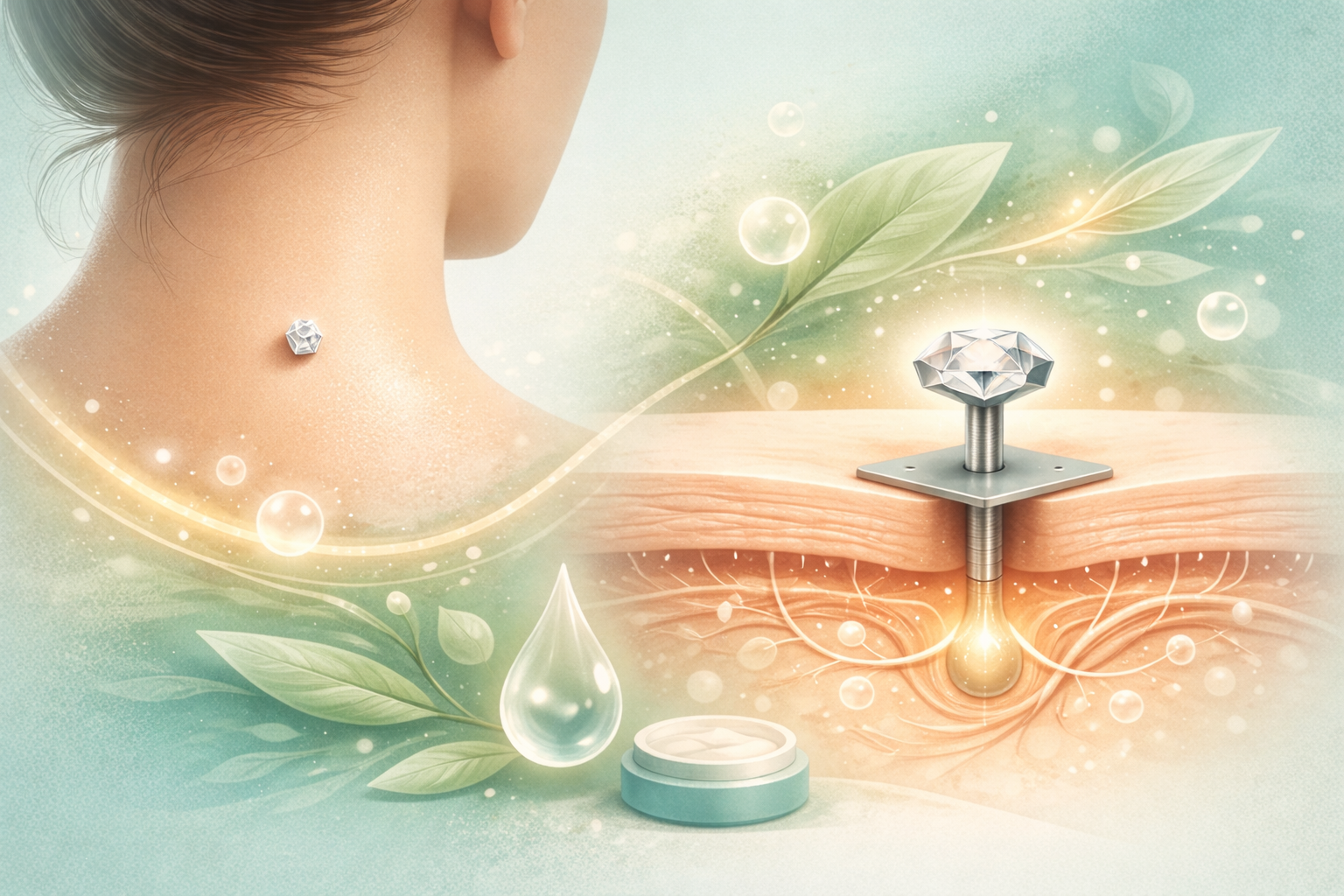
Piercing dermal implants involve placing a small anchor beneath the skin, usually made of biocompatible materials such as titanium. A decorative top is then attached, sitting flush with the skin’s surface. Unlike traditional piercings, there is only one visible exit point.
The procedure creates a controlled micro-injury. The body responds by initiating inflammation, immune signaling, and tissue repair. When performed correctly and cared for properly, the skin integrates the implant through a process similar to wound healing around a foreign but tolerated object.
Material choice matters. Medical-grade titanium is widely used because it minimizes allergic reactions and supports tissue compatibility.
Healing, inflammation, and immune response
Healing is the most critical phase for piercing dermal implants. Initial inflammation is normal and necessary, but prolonged redness, swelling, or discomfort can signal excessive immune activation or mechanical stress.
Skin healing depends on circulation, sleep quality, nutrition, and local care. Zinc, vitamin C, and adequate protein intake support collagen formation and tissue repair. At the same time, excessive friction, pressure, or movement around the implant can disrupt integration.
From a biological standpoint, calm healing is more effective than aggressive intervention. Gentle cleansing, minimal manipulation, and patience allow the skin to adapt and stabilize.
The skin heals best when it is not rushed.
Long-term considerations for skin longevity
Over time, piercing dermal implants may be well tolerated, but they are not entirely passive. The skin continues to remodel itself, and changes in weight, muscle tension, or inflammation can affect how the implant sits.
Chronic stress can indirectly influence outcomes. Elevated cortisol impacts skin barrier function and slows repair processes, increasing the risk of irritation or rejection.
Regular observation is essential. Signs such as persistent tenderness, migration, or changes in skin texture deserve early attention. Conscious longevity favors prevention over correction.
Body modification and conscious choice
At Sogevity, we frame body modifications as intentional decisions rather than impulsive acts. Piercing dermal implants can be a form of personal expression that coexists with health when approached responsibly.
Choosing experienced professionals, high-quality materials, and giving the body time to recover are not aesthetic constraints. They are expressions of respect for biology.
Conclusion
Piercing dermal implants sit at the intersection of art and physiology. They are neither trivial nor dangerous by default. Their impact depends on awareness, technique, and care.
When skin health, immune balance, and recovery are prioritized, body art can remain aligned with long-term well-being. Longevity, even in self-expression, is about harmony between intention and biology.
Sogevity. The longevity experience
Live longer. Live better.