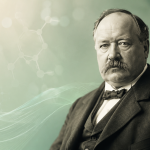
A founding figure of modern microbiology, Louis Pasteur remains one of the most influential scientists in the history of health. Known for his work on microorganisms, vaccination, and the prevention of infectious diseases, he profoundly transformed modern medicine. His legacy is essential to the history of human longevity, as his discoveries helped drastically reduce mortality and opened the way to a new era of scientific prevention.
Louis Pasteur never claimed to work specifically on longevity in the modern sense of the term. Yet few scientists have had such a direct impact on human life expectancy. Behind the image of the rigorous researcher stands a figure driven by a simple but radical conviction: understanding the invisible causes of disease can permanently change the destiny of societies. His method relied on observation, experimental rigor, and a deep belief in scientific progress. When he stated that “chance favors only the prepared mind,” he was not only speaking about science, but about a vision of the future in which knowledge becomes a tool for human transformation.
The journey
Louis Pasteur’s career began far from medicine. Trained as a chemist, he first focused on the phenomena of fermentation. What initially seemed like a highly technical subject would eventually transform the understanding of life itself. By demonstrating that fermentation was not purely a chemical process but depended on living organisms, he opened a major turning point in scientific thinking. This discovery gradually led him toward microbiology.
From the 1860s onward, his research took on a new dimension. He demonstrated that certain microorganisms were responsible for diseases, an idea that was still widely contested at the time. This moment marked his entry onto the global scientific stage. His work on silkworm diseases, followed by his research on vaccination against anthrax and finally rabies, firmly established his reputation. Pasteur did not move forward as a traditional physician, but as a researcher obsessed with the invisible mechanisms that govern health.
His vision of longevity
Although Louis Pasteur never used the word longevity, his vision comes remarkably close to it. He did not aim to extend life by correcting the body after disease had appeared, but rather by preventing disease from emerging in the first place. His approach was based on a simple idea: understanding biological causes makes it possible to act before deterioration begins. This marked a profound break with nineteenth century medicine, which was still largely focused on observing symptoms.
When he declared that “in the fields of observation, chance favors only the prepared mind,” he highlighted a key principle that resonates strongly with modern longevity science: knowledge comes before intervention. His vision also redefined the relationship between science and society. He believed that research should have a direct impact on human life. Vaccination, which he developed and defended with remarkable determination, was not only a medical innovation. It became a tool for collective protection.
This logic already anticipates today’s major debates on prevention, personalized medicine, and public health. For Pasteur, extending life was not an individual objective but a collective challenge. His thinking introduced the idea that the future of longevity depends as much on prevention as on treatment.
His influence and impact
Louis Pasteur’s influence extends far beyond microbiology. He helped transform the way health is understood on a global scale. By proving that invisible microorganisms could cause deadly diseases, he forced medicine to adopt a completely new paradigm. His impact on longevity is immense, even if it is often indirect. The dramatic decline in mortality linked to infections throughout the twentieth century rests largely on the foundations he established.
His legacy is also intellectual. Pasteur represents a new type of scientist, one who does not simply explain the world but seeks to transform it. His work continues to shape the way prevention, vaccination, and public health are approached today. It also continues to spark debates, particularly about the role of science in public decision making and the importance of collective prevention in modern societies.
A scientific legacy that still shapes modern longevity
Louis Pasteur does not belong to the modern longevity movement, yet he remains one of its strongest foundations. By transforming the understanding of disease, he enabled life expectancy to enter an unprecedented phase of growth. His legacy reminds us of a fundamental idea: longevity did not begin with the most recent technologies, but with the discoveries that made it possible to prevent premature death. At a time when medicine is now trying to slow aging itself, one question remains open: will the next scientific revolution be as radical as the one initiated by Pasteur?
Continue exploring longevity
Explore this longevity topic