Science-based longevity from the world’s longest-living communities.
Introduction
In certain parts of the world, people regularly live to 100 — with energy, clarity, and joy. These regions, called Blue Zones, share one secret: longevity is not genetic luck but a conscious way of living. From Okinawa to Sardinia, their habits reveal a universal blueprint for vitality, purpose, and health.
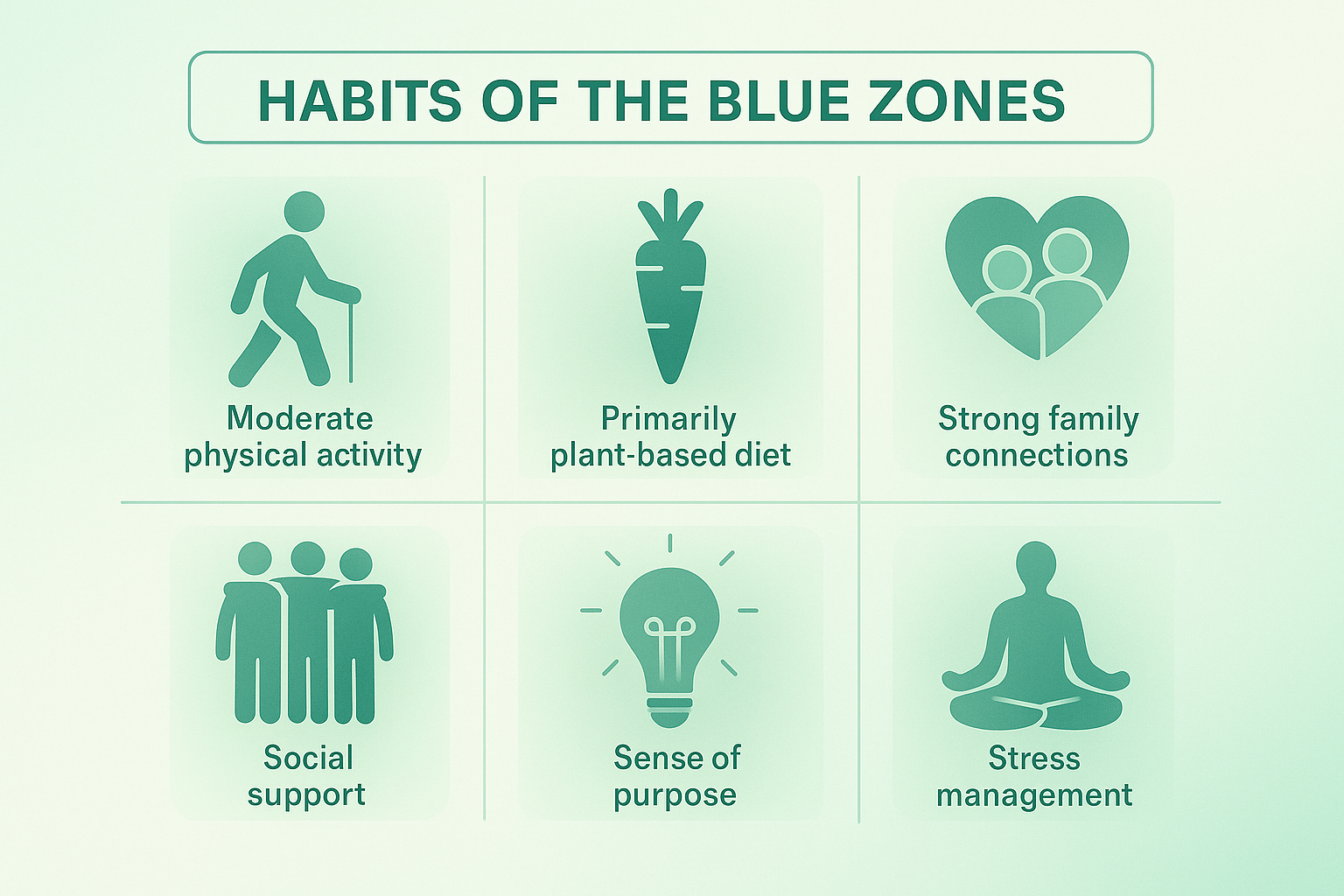
We translate these lessons into daily practices for modern life. Here are the 7 key habits of the Blue Zones — and how you can apply them starting today.
1. Eat with moderation and proximity
Food as daily medicine
Blue Zone diets are mostly plant-based — rich in beans, greens, grains, and nuts. The Okinawan principle of “Hara Hachi Bu” means “eat until you’re 80% full.” This mindful moderation supports cellular health and longevity (Food & Nutrition Journal, 2023).
What you can apply:
Fill half your plate with colorful plantscook simply and locally, eat slowly, and stop before you’re full. Mindful eating beats calorie counting every time.
2. Move naturally
Longevity through gentle, constant motion
In the Blue Zones, no one “works out” — they live actively. Walking, gardening, climbing stairs, cooking — these small movements accumulate throughout the day. Studies show that frequent low-intensity activity outperforms short, intense workouts followed by long periods of sitting (NCBI, 2022).
What you can apply:
Take the stairs, walk after meals, stretch between calls, or tidy up your space — all movement counts.
3. Cultivate purpose and direction
The “why” behind long life
Okinawans call it Ikigai — a reason to get up in the morning. In Nicoya, it’s the Plan de Vida. People with a clear sense of purpose have a 30% lower risk of premature death (JAMA, 2019).
What you can apply:
Write down what truly motivates you, revisit your goals regularly, and align your daily choices with your long-term vision.
4. Manage stress and recover deeply
Rest is an act of longevity
Centenarians from Ikaria and Sardinia build rest into their days — afternoon naps, prayer, laughter, gratitude. Chronic stress shortens telomeres, accelerating cellular aging. Mindfulness and breathing practices can reverse that trend (PNAS, 2013).
What you can apply:
Take 5–10 minutes for slow breathing (inhale 4s, exhale 6s), unplug before bed, or write down three things you’re grateful for each night.
5. Build strong social bonds
Connection is biology
Blue Zone inhabitants nurture lifelong friendships and deep family ties. Loneliness increases mortality risk, while belonging lowers inflammation. Harvard’s 80-year study found that meaningful relationships are the strongest predictor of happiness and longevity (Harvard Study of Adult Development, 2023).
What you can apply:
Share meals without screens, express gratitude, join a community — connection heals at the molecular level.
6. Stay close to nature
The environment as a biological ally
People in the Blue Zones live with nature, not apart from it. Daily exposure to sunlight, fresh air, and green spaces regulates hormones, improves sleep, and lowers stress (PMC, 2018).
What you can apply:
Spend 20 minutes outdoors each morning, bring plants into your home, walk barefoot on grass when possible.
7. Observe, adjust, and stay curious
Awareness is longevity
Blue Zone living is not about rules — it’s about attention. Today, technology can support this awareness through sleep, heart rate, and recovery tracking (VerywellMind, 2024).
What you can apply:
Track one or two wellness markers, reflect weekly on what gives you energy, and adjust with kindness, not rigidity.
Conclusion
Longevity doesn’t belong to a place — it’s a mindset. The Blue Zones remind us that living long is less about control and more about coherence: eating well, moving often, connecting deeply, and living with meaning. These aren’t secrets — they’re habits available to all of us, starting now.
Sogevity . The Longevity Experience
Live longer. Live better.
Continue exploring longevity
Explore this longevity topic