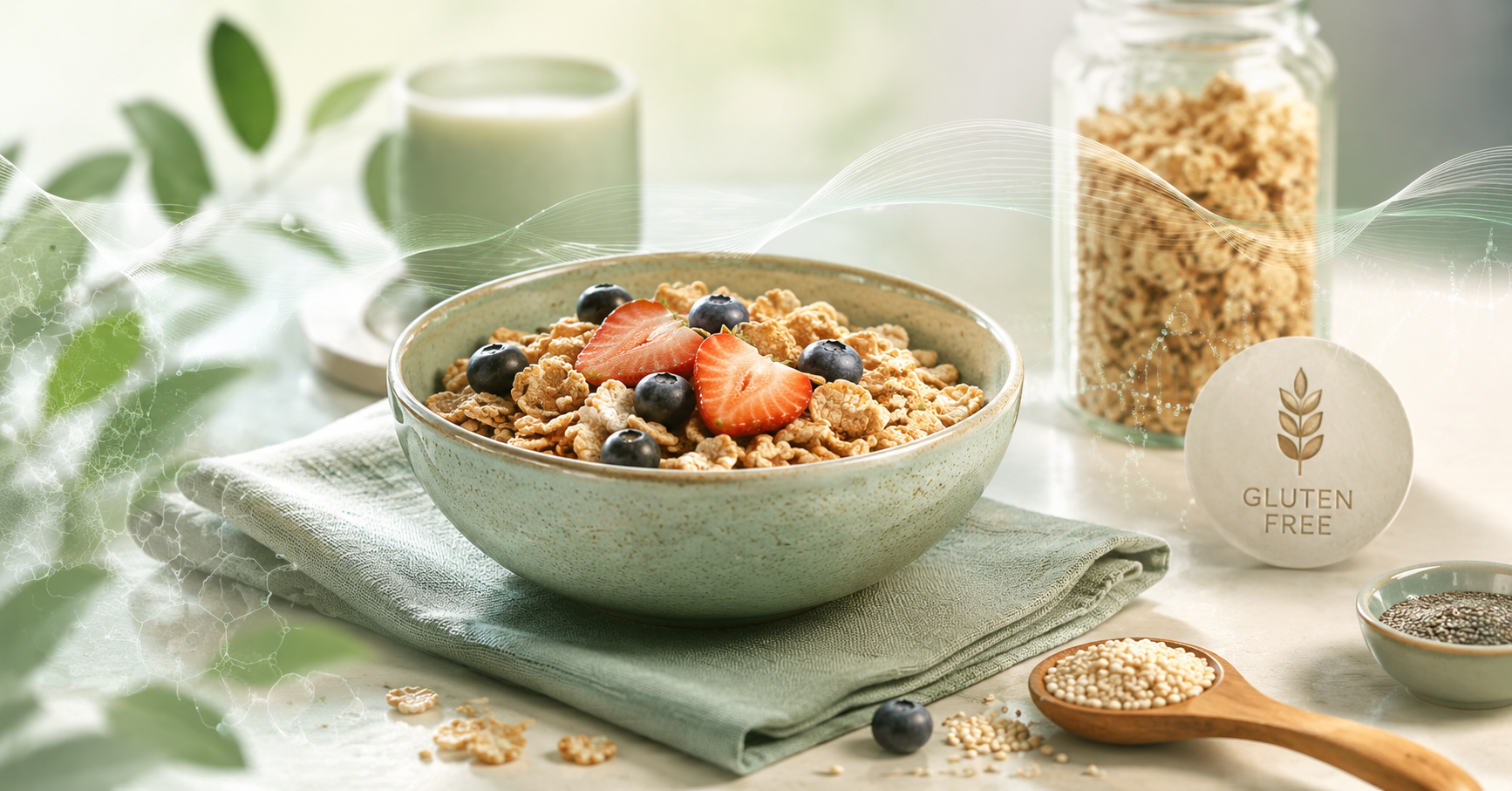
Cereals are often the foundation of breakfast and many everyday meals. For people with celiac disease or gluten sensitivity, a simple bowl of cereal can become complicated. The term gluten free cereal refers to all gluten-free cereals, whether naturally free of gluten or processed in controlled environments. In practice, it is not just about “avoiding wheat.” It is about understanding which foods are truly safe, how to include them in meals, and where common mistakes occur (processed foods, cross-contamination, industrial sauces, etc.).
What cereal does not have gluten?
Not all cereals contain gluten. Some are naturally safe, while others must be avoided.
Naturally gluten-free cereals (real-world examples)
Here are the main gluten free cereal options used in everyday diets: rice (basmati, brown, wild rice), corn (corn flakes, polenta, tortillas), quinoa (protein-rich, used in bowls), buckwheat (naturally gluten-free despite its name), millet (often used in porridges), amaranth (nutrient-dense pseudo-grain).
Practical breakfast example
A typical safe breakfast could be quinoa flakes + plant-based milk + berries + nuts. Or a more classic option: certified gluten-free corn flakes + milk + banana.
Key point often overlooked
A cereal may be naturally gluten-free but become unsafe if processed in facilities handling wheat. This is why “certified gluten free” labeling matters as much as the ingredient itself.
What meat has no gluten?
Many people assume gluten is present in meat. In reality, the issue is not the meat itself, but how it is prepared.
Naturally gluten-free meats
All fresh meats are naturally gluten-free: chicken, beef, pork, lamb, turkey, duck, game meat. A grilled steak prepared at home contains no gluten.
Where gluten actually appears
Gluten is mostly found in processed meat products such as industrial nuggets, sausages with additives, processed deli meats, breaded cutlets, and industrial marinades.
Practical example
Plain grilled chicken breast = gluten-free. Breaded chicken breast = often contains gluten (wheat-based coating).
Simple rule
Whenever meat is “prepared” or “processed,” always check the label. Gluten is rarely in the meat itself but often in the coating, sauce, or additives.
Which beer can celiacs drink?
Regular beer is usually a problem for people with celiac disease because it is made from barley or wheat, both sources of gluten.
Beers to avoid
Standard lager, IPA beers, wheat beer, and non-certified craft beers usually contain gluten.
Safe alternatives
People with celiac disease can choose certified gluten-free beers (sorghum, millet, rice-based), gluten-removed beers (variable safety), or craft gluten-free beers made from quinoa or buckwheat.
Real-world example
Sorghum-based beer is naturally gluten-free. Gluten-removed barley beer may still contain trace gluten and is not always safe for strict celiacs.
Important note
For strict celiac disease, only certified gluten-free beers are considered fully safe.
Gluten free cereal in everyday life: how to actually eat better
Beyond lists, the real challenge is building simple and consistent meals.
Realistic gluten-free breakfasts
Gluten-free muesli + yogurt + fruit, millet porridge + cinnamon + apple, gluten-free corn flakes + plant-based milk.
Lunch and dinner ideas
Quinoa + grilled vegetables + olive oil, brown rice + plain chicken + sautéed vegetables, buckwheat galettes + eggs + cheese.
Common mistakes
Relying on ultra-processed products, overusing packaged gluten-free foods, and ignoring variety in natural gluten-free grains.
Conclusion
Gluten free cereal is not just a substitute for wheat—it represents a wider range of naturally different, often more digestible grains. Rice, quinoa, buckwheat, and millet allow for a balanced gluten-free diet, provided attention is paid to processing and cross-contamination. The same logic applies to meat and beverages: gluten is rarely found in raw foods, but mostly introduced during processing. Understanding this distinction fundamentally changes everyday eating habits.
Continue exploring longevity
Explore this longevity topic