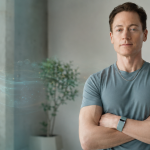
In the aisles of Hypersanté Paris 2026, we met David Bernard, founder and president of Bioledtherapy. Based in Lille, France, he has dedicated his energy for over ten years to one conviction: photobiomodulation is a serious, documented technology that is still far too little known. He regularly participates in international congresses of the WALT (World Association for Photobiomodulation Therapy) and supports the SFPBM (Société Francophone de Photobiomodulation), closely following exchanges between clinicians and researchers from around the world. A meeting with a founder who wants to democratize therapeutic light.
A technology in the shadows despite 5,000 studies
What is photobiomodulation, exactly? It is the stimulation of cells by precise wavelengths of light—mainly red and near-infrared—to activate natural biological mechanisms. There is nothing new on a scientific level: more than 700 human clinical trials and over 5,000 published studies document its effects. In France, the Valenciennes public hospital has integrated the Bioledtherapy Body Boost Bed cabin into its care protocols, primarily in the oncology department. Bioledtherapy was also present at the Gustave Roussy photobiomodulation seminar in Villejuif in 2024, a sign of growing medical legitimacy.
However, David Bernard laments that the technology remains almost invisible to the general public. In his view, the challenge is twofold: making photobiomodulation more visible and making it economically accessible. In France, nearly 20% of the population suffers from chronic pain, sleep disorders, or persistent fatigue. These are precisely the people this technology can help.
But accessibility does not mean simplicity. He insists on a point that many ignore:
Photobiomodulation is not just about exposing your body to red light. You must verify the wavelengths, control the irradiance, and respect precise parameters. Bioledtherapy was built on this requirement for rigor: offering reliable, documented devices used in medical and paramedical contexts, with support adapted to each profile and use case.
Mitochondria: the energy plants that light can restart
To understand why photobiomodulation can impact longevity, one must understand mitochondria. These organelles, present by the billions in our cells, are the body’s energy factories. Their role: to produce ATP (adenosine triphosphate), the molecule that fuels every cellular function, from muscle contraction to cognition.
David Bernard uses an analogy everyone understands:
Look at children. They are full of ATP, which is why they are constantly moving. With age, we lose ATP, we lose energy. It’s like a battery that gradually discharges. The idea is to support this energy capacity.
The mechanism is well-established in scientific literature. When red (600-700 nm) and near-infrared (800-1,000 nm) wavelengths penetrate tissues, they activate a key mitochondrial enzyme: cytochrome c oxidase. This activation triggers a biochemical cascade: increased ATP production, release of nitric oxide promoting vasodilation and tissue oxygenation, and modulation of the NF-kB factor involved in regulating inflammatory processes.
The result is systemic: better blood circulation, better-oxygenated brain and muscles, and reduced inflammation. Chronic inflammation—what researchers now call “inflammaging“—is today identified as one of the primary drivers of accelerated aging. This is where the link to longevity becomes obvious.

What light does to the body: effects observed session after session?
How does this translate into practice? David Bernard describes a two-stage process that Bioledtherapy users regularly observe.
In the first stage, starting from the first or second session, the body relaxes deeply. “Very often, people crash into sleep the night of the session. Not a sleep of exhaustion: a restorative sleep.” This effect is significant: it is the nervous system releasing accumulated chronic tension. Users of the Body Boost Bed cabin, where the session lasts about 25 minutes, overwhelmingly report this deep relaxation from the very first sessions.
Then, from the third or fourth session, energy begins to return. This boost is not superficial: it allows one to resume physical activity, improve their diet, and regain a capacity for action they thought was lost.
This is where David Bernard places the true role of photobiomodulation: not as an isolated miracle solution, but as a catalyst. “PBM allows people who don’t have the energy to cross the threshold to take action. They gain energy, and suddenly they start exercising again, they have a little energy to eat better.” Light does not substitute for a healthy lifestyle. It opens the window.

Fibromyalgia, long Covid, neurodegenerative diseases: applications beyond wellness
Bioledtherapy addresses a wide audience, but David Bernard has a particular focus on people in medical limbo: those with fibromyalgia, patients suffering from myalgic encephalomyelitis (chronic fatigue syndrome), and those affected by long Covid. For these populations, whose mitochondrial activity is often severely compromised, photobiomodulation can represent practical help where conventional medicine reaches its limits.
But it is on neurological applications that David Bernard expresses the most enthusiasm. Protocols using helmets that emit 810-nanometer light, combined with precise stimulation frequencies—including 40 Hz corresponding to cerebral gamma waves and 10 Hz to alpha waves—show documented results in scientific literature regarding Alzheimer’s and Parkinson’s. A pilot study conducted by Dr. Linda Chao (UCSF, 2019) on dementia patients showed, after 12 weeks of cerebral photobiomodulation at 810 nm and 40 Hz, an average improvement of 4.8 points on the ADAS-cog cognitive scale and a measurable increase in cerebral blood flow via MRI. Meanwhile, a clinical study from the University of Sydney on Parkinson’s patients observed significant improvements in mobility, cognition, and balance after 12 weeks of treatment, with benefits maintained for up to a year with home use.
It’s science-based, as they say. We have literature today showing that it works.
These results remain mostly exploratory and do not yet constitute an established clinical standard. But they open a perspective that global research is beginning to take very seriously, with larger-scale trials currently underway.
His advice for aging better
When asked for his single piece of advice for living longer and healthier, he smiles before answering:
Do photobiomodulation, obviously. But he immediately tempers this. “PBM doesn’t do everything. If, in parallel, you continue to drink two liters of coke a day, you are feeding the inflammation.”
Light is a powerful lever, not an absolution. Its role is to give those who lack it the energy needed to get moving again, regain control of their lifestyle, and build lasting habits. This is perhaps the deepest philosophy guiding Bioledtherapy: longevity cannot be delegated. It is built, one step at a time. Light can help take that first step.
Continue exploring longevity
Explore this longevity topic