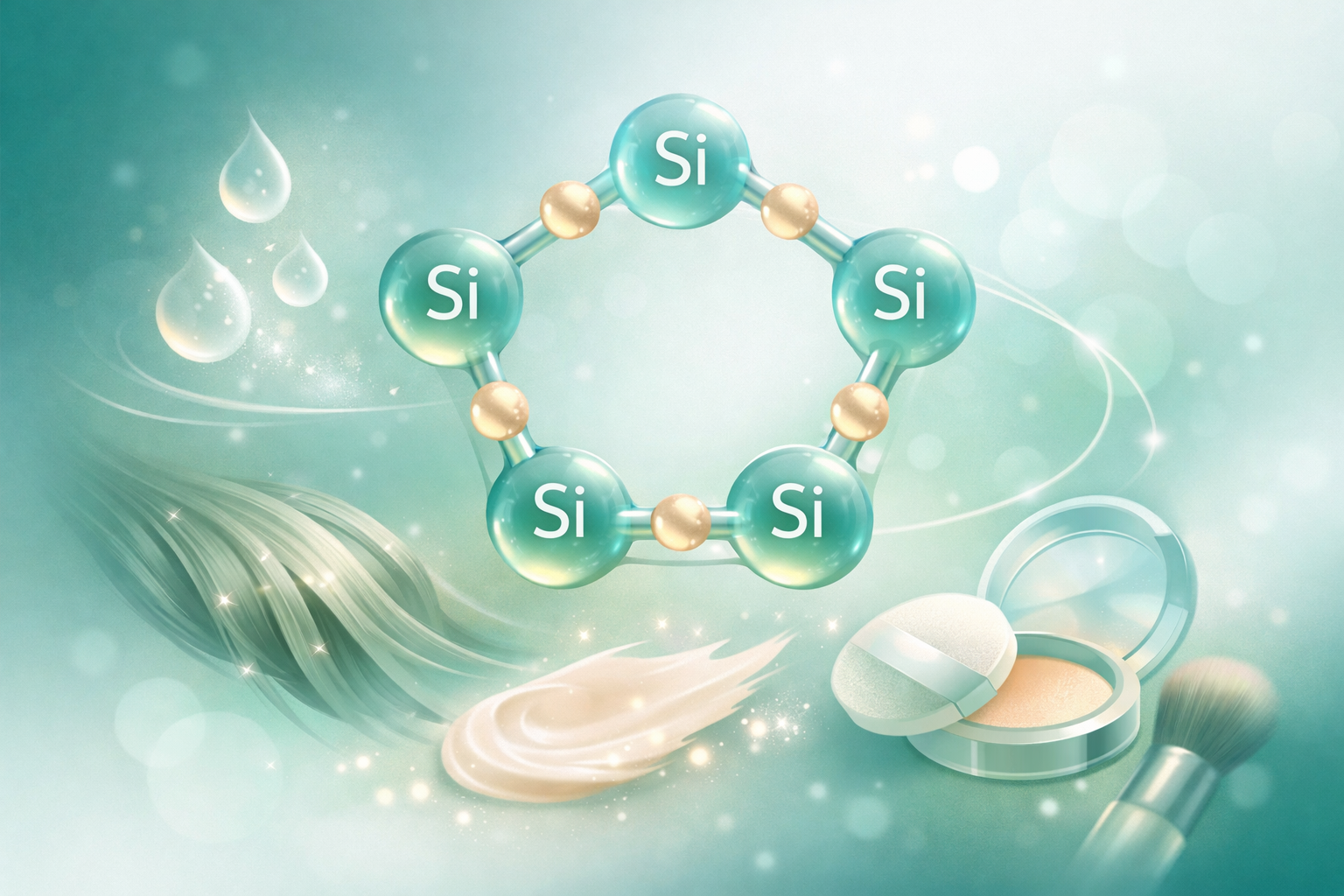
Key benefit: facilitates the application of skincare while leaving a silky, smooth feeling on the skin
Main mechanism: a lightweight silicone film that improves glide and retains superficial hydration
Role in skin longevity: supports comfort and skin barrier without clogging pores
Practical application: found in serums, creams, and fast-absorbing products
Point from a study: lightweight silicones such as cyclopentasiloxane are well-tolerated and do not disrupt the skin’s natural barrier function.
Cyclopentasiloxane is a volatile silicone widely used in cosmetics to improve texture and product application. It is appreciated for its ability to leave a soft, non-greasy, silky feeling on the skin, making it a frequent choice in hydrating or soothing skincare routines. From a perspective of skin longevity, it contributes to immediate comfort while supporting superficial hydration, which may help maintain supple and balanced skin over time. Here, you will discover how this compound works, its nuanced benefits, forms of use, and tips for integrating it into a gentle, sustainable routine.
What is it?
Cyclopentasiloxane is a cyclic silicone derived from silicon, commonly used in cosmetic formulations. It belongs to the family of volatile silicones, characterized by their evaporation after application. Biologically, it does not penetrate deeply into the skin but forms a light film on the surface, helping to distribute other ingredients and enhancing the product’s sensory experience. Its key feature is its fluid, non-greasy texture, leaving the skin soft without a heavy film.
Did you know?
Volatile silicones like cyclopentasiloxane evaporate after application, reducing heaviness while improving the dispersion of beneficial ingredients.
How does it work? (mechanisms of action)
Main action
Cyclopentasiloxane primarily acts by forming a light film on the skin’s surface. This film helps smooth texture, facilitates product glide during application, and may contribute to slowing superficial water evaporation, supporting a feeling of hydration. Its volatility means it gradually evaporates after fulfilling its sensory role.
Tissue-level effects
- Skin: improves sensory experience, makes application more pleasant, leaves a soft, non-greasy feel.
- Skin barrier: does not alter natural barrier function when used at appropriate concentrations in well-formulated products.
- Superficial hydration: may help retain moisture on the skin surface without forming a thick occlusive film.
What this means for longevity
Cyclopentasiloxane can support daily skin comfort and make products more enjoyable to use, encouraging regular care. In a longevity approach, this means promoting sustainable, comfortable, and well-tolerated skincare habits, rather than offering miraculous effects.
Study highlight
2020 — Review on silicones in cosmetics — Volatile silicones like cyclopentasiloxane are well-tolerated and non-comedogenic in tested cosmetic formulations, while improving product texture and sensory perception.
Benefits
Improved texture and application
Cyclopentasiloxane is often added to skincare to facilitate application, leaving a smooth and gliding sensation. This may encourage consistent use, a key factor in effective skincare routines.
Practical use: common in serums, lightweight fluids, and makeup primers for improved product spread.
Non-greasy, silky finish
Unlike heavier agents, it provides light surface hydration without leaving a greasy film. Particularly suitable for combination to oily skin or those preferring a light feel.
Practical use: in light moisturizers or day products for a velvety finish.
Compatible with many active ingredients
Cyclopentasiloxane is often used as a carrier for other actives, as it does not interfere with their main functions when well-formulated.
Practical use: combined with gentle antioxidants, hyaluronic acid, or peptides for enhanced sensory experience.
Natural sources
Cyclopentasiloxane is not a natural ingredient; it is synthetic and belongs to the silicone family. It is not found in foods or plant sources.
Dosage, forms & bioavailability
Cyclopentasiloxane is typically used in cosmetics at low percentages depending on the formulation (often a few percent). Its function is not absorption but improving texture and sensory feel. Available in various product types (creams, serums, dry oils) and works well with humectants like hyaluronic acid or antioxidants.
Cyclopentasiloxane is considered well-tolerated for most skin types when used in balanced cosmetic formulations. Very sensitive individuals may rarely experience irritation. It is not comedogenic when properly formulated. As with all skincare products, a patch test is recommended for reactive skin.
How to integrate it into a longevity routine
When to use
Cyclopentasiloxane is applied during the skincare routine, typically morning and/or evening according to personal preference.
What to pair it with
Pairs well with hydrating agents (hyaluronic acid), gentle antioxidants, and peptides, depending on skin needs.
Simple routine example
- Morning: gentle cleanser → hydrating serum with cyclopentasiloxane → light cream
- Evening: makeup removal → active serum → comfortable night cream
Who it is particularly useful for
This ingredient is ideal for those who prefer a light feel, a pleasant application experience, and products that encourage regular use, especially for normal to combination skin.
Could sensory experience support a sustainable routine?
Cyclopentasiloxane is not a “miracle” ingredient for skin longevity, but it can enhance the comfort of daily skincare. In a gentle, mindful approach, an ingredient that makes routines pleasant can improve consistency in care, often overlooked in maintaining balanced skin over time. By choosing thoughtfully formulated products with this component, one can foster a calm, enjoyable skincare experience that supports sustainable, conscious habits.
Sources
Toxicological and cosmetic use data published by independent safety committees
2020 Scientific review on silicones in cosmetics