
Carpet beetle bites are frequently misunderstood. Small red bumps, itching, mild burning sensations often lead people to suspect bed bugs or mosquitoes. Yet in many cases, there are no actual bites involved.
Carpet beetles do not bite humans. The skin reaction usually comes from contact with the tiny bristle-like hairs of their larvae. These microscopic hairs can trigger an allergic response when they touch the skin. What appears to be a bite is often a form of allergic contact dermatitis.
Understanding the biological mechanism behind these reactions helps reduce anxiety and guide practical action. From a longevity perspective, indoor environmental health plays a subtle but important role in reducing chronic inflammation and supporting overall well-being. A calmer environment often means a calmer immune response.
What really causes carpet beetle “bites”
Adult carpet beetles primarily feed on pollen and are not aggressive toward humans. The issue arises during the larval stage. Larvae often develop in natural fibers such as wool, carpets, upholstery, stored clothing, and even dust accumulations.
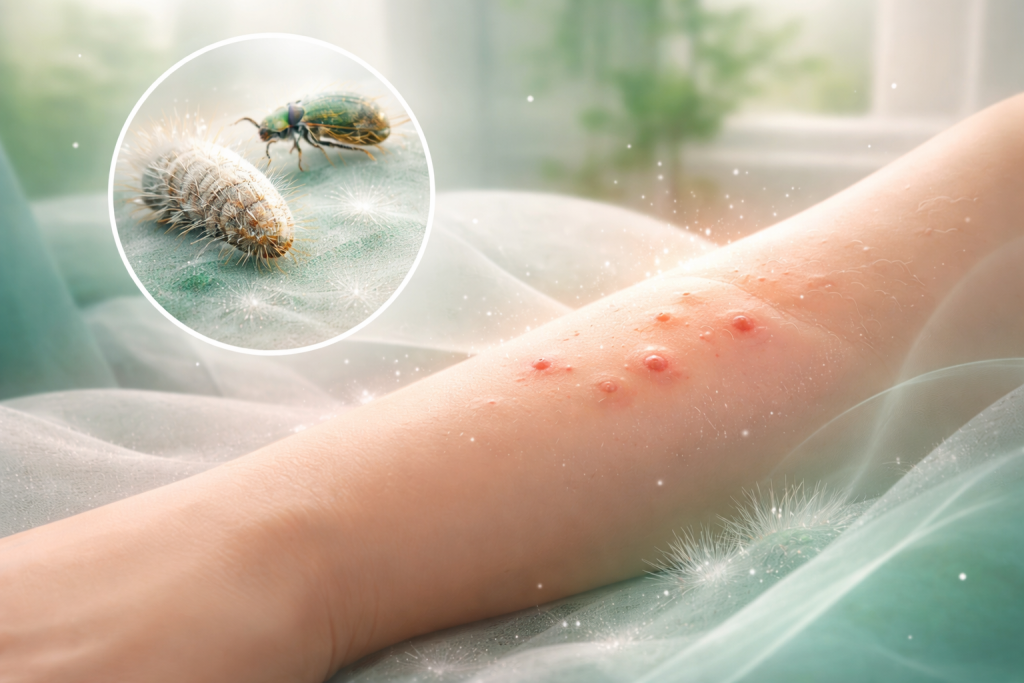
Their bodies are covered with defensive hairs. When these hairs detach and come into contact with the skin, the immune system may recognize them as irritants. This activates inflammatory pathways, leading to redness, itching, and mild swelling.
Common symptoms include:
Small red or pink bumps
Itching that may intensify at night
Localized rash on exposed skin areas
Occasional mild burning sensation
Unlike bed bug bites, these reactions do not typically appear in straight lines or clusters following a feeding pattern. They are often linked to contact with infested fabrics.
Why the skin reacts this way
The skin is an immune organ. When it detects a foreign particle, immune cells release histamine and other inflammatory mediators. This response increases blood flow to the area and stimulates nerve endings, creating redness and itching.
Some individuals are more sensitive than others. People with existing allergies, asthma, or sensitive skin may experience stronger reactions.
Stress, sleep deprivation, and systemic inflammation can also amplify the immune response. When the body is already under physiological strain, even minor irritants may trigger a more noticeable reaction.
Skin health reflects internal balance.
What to do if you notice symptoms
The first step is identifying and removing the source.
Vacuum carpets, baseboards, mattresses, and closets thoroughly
Wash affected clothing and linens at high temperatures
Store natural fiber garments in sealed containers
Inspect dark, undisturbed areas where larvae may develop
To calm the skin:
Apply a cool compress
Use a soothing cream or mild topical antihistamine if necessary
Avoid scratching to prevent secondary irritation
If symptoms persist or worsen, a healthcare professional can confirm the diagnosis and recommend appropriate treatment.
Prevention and indoor environmental balance
Maintaining a clean, well-ventilated home reduces exposure to indoor irritants. Dust accumulation, humidity imbalance, and neglected textiles create favorable conditions for larvae development.
Practical preventive measures include:
Regular vacuuming with a HEPA filter
Maintaining moderate indoor humidity
Frequent airing of rooms and closets
Periodic inspection of stored fabrics
From a conscious longevity perspective, minimizing chronic low-grade immune activation matters. Reducing environmental triggers supports not only skin health but also overall inflammatory balance.
A healthy environment supports a resilient body.
Conclusion
Carpet beetle bites are typically allergic skin reactions caused by larval hairs, not true insect bites. Understanding this distinction helps you respond calmly and effectively.
By addressing the source and supporting skin recovery, you reduce unnecessary inflammation and restore comfort. Environmental hygiene is part of a broader longevity strategy. Small daily actions inside the home can quietly influence long-term well-being.
At Sogevity, we believe health begins with awareness. Even the smallest irritant deserves a thoughtful response.
Sogevity. The longevity experience
Live longer. live better.