Where preventive medicine outpaces disease by decades
In 1900, life expectancy in the United States hovered around 47 years. Today, it exceeds 77 years, but a lesser-known statistic troubles researchers: of those gained decades, an increasing portion is spent in poor health. It is precisely this gap between lifespan and healthspan that a whole generation of American clinics is now seeking to close.
The country has become the most advanced laboratory for this type of medicine. What was confidential biohacking a decade ago has now settled into university hospitals and diagnostic centers, to the point that longevity medicine is now a mandatory requirement in the curriculum of certain medical schools. The king metric has changed: we no longer just measure cholesterol or blood pressure, but biological age—the actual rate at which the body is aging—using epigenetic clocks like DunedinPACE.
What makes these clinics interesting is not just their technology, but their integration of biology and behavior. They help patients understand inflammation profiles, mitochondrial health, and hormonal rhythms. However, between a clinic attached to a medical school and a center that mostly sells vitamin IV drips, the word “longevity” covers very unequal realities. Here is a reasoned mapping of the American players that matter, ranked by their medical seriousness.
Comparative table of longevity clinics
| Clinic | City(ies) | Specialty | Profile | Approximate Price |
| Fountain Life | Naples, NY, Dallas, LA | AI Diagnostics, Full Body Imaging | Data-driven | ~$25,000 / year |
| Human Longevity Inc. | San Diego, SF | Whole Genome Sequencing, Prevention | Science-backed | ~$25,000+ / year |
| Biograph | San Francisco, NY | 1,000+ Data Points | Data-driven | N/A |
| Next Health | National Network | Hormones, IV, Wellness | Accessible | ~$300 – $800 / month |
| Healthy Longevity Clinic | NY, Miami, LA | Functional Assessment | Regional | $750 – $10,000 |
| Weill Cornell | New York | University Prevention | Academic | Upon Request |
| Stanford | Palo Alto | Research, Training, 7 Pillars | Academic | Educational Program |
The “Data-Driven” leaders: Knowing everything before symptoms appear
The dominant American model relies on a simple and radical idea: accumulating a massive amount of data on a healthy body to detect risks years before they turn into a disease. Annual subscriptions replace occasional consultations here.
Fountain Life

Co-founded by entrepreneur Peter Diamandis (founder of the XPRIZE Foundation) and motivational speaker Tony Robbins, Fountain Life has become a benchmark in the US market. Its approach is centered on early detection: full-body and brain MRI, genomics, cardiovascular imaging, DEXA scans, VO2 max testing, and epigenetic tests, all interpreted by AI to paint a complete picture of a member’s health.
The clinic operates in Naples, New York, and Dallas, with “Estate Longevity Centers” planned for Los Angeles and the Caribbean. A medical publication relayed by the NIH characterizes these establishments as high-cost clinics, and the model remains primarily diagnostic. It is a powerful entry point for anyone wanting an exhaustive map of their body, provided they accept the price tag.
Human Longevity Inc.
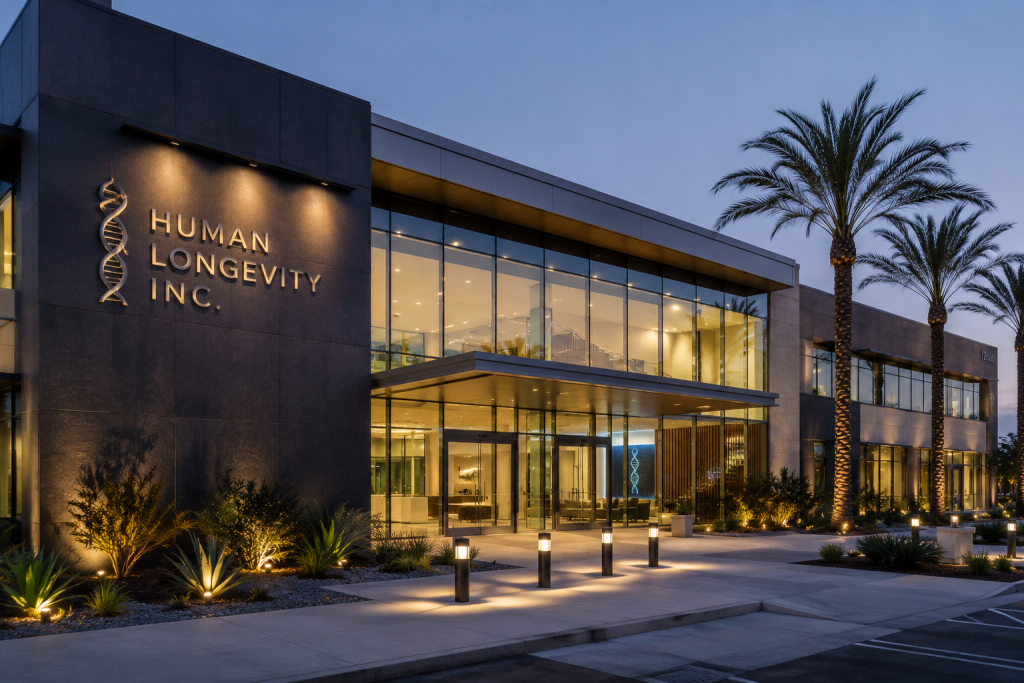
If one clinic embodies the scientific validation of American longevity, this is it. Human Longevity Inc. was founded in 2013 within the orbit of Craig Venter, one of the pioneers of human genome sequencing. Based in San Diego and San Francisco, the clinic makes whole-genome sequencing the cornerstone of its strategies, whether dealing with peptides, hormones, or targeted prevention.
Where others stack machines, Human Longevity starts with the patient’s DNA to understand their individual risks. This is the most scientifically credible approach, driven by a genomic legacy that is hard to match.
Biograph
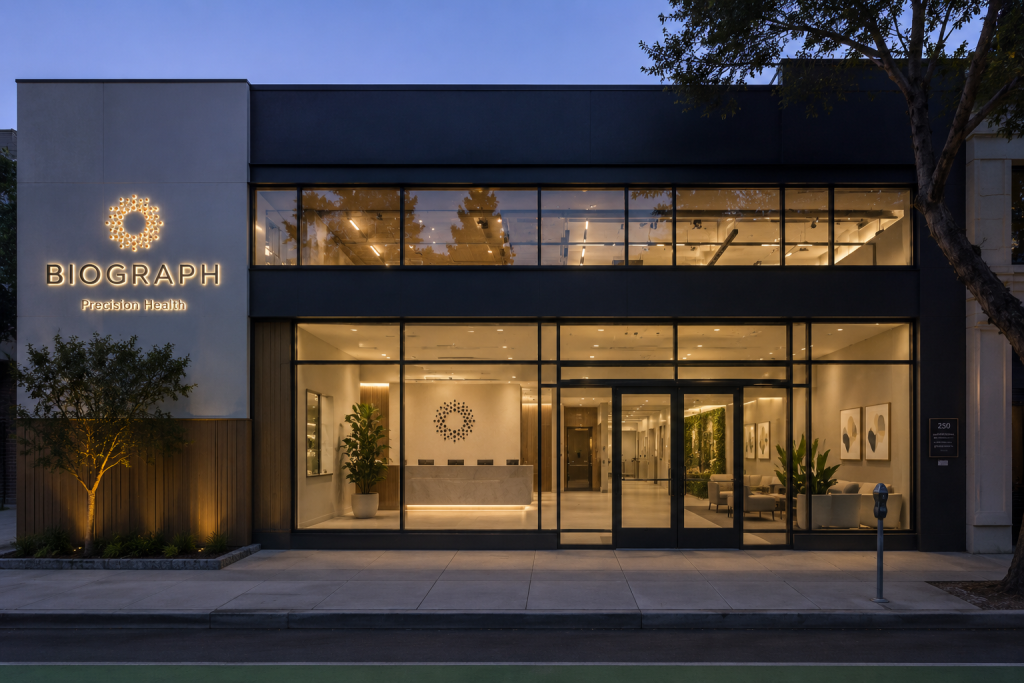
A newcomer with clear ambitions, Biograph launched in the San Francisco Bay Area with an evidence-based precision medicine approach. The clinic collects over 1,000 data points through roughly thirty assessments, with a second location planned for New York. A player to watch, whose promise relies on the depth of data rather than a hotel-style luxury experience.
The accessible model: Longevity as a lifestyle
Next Health
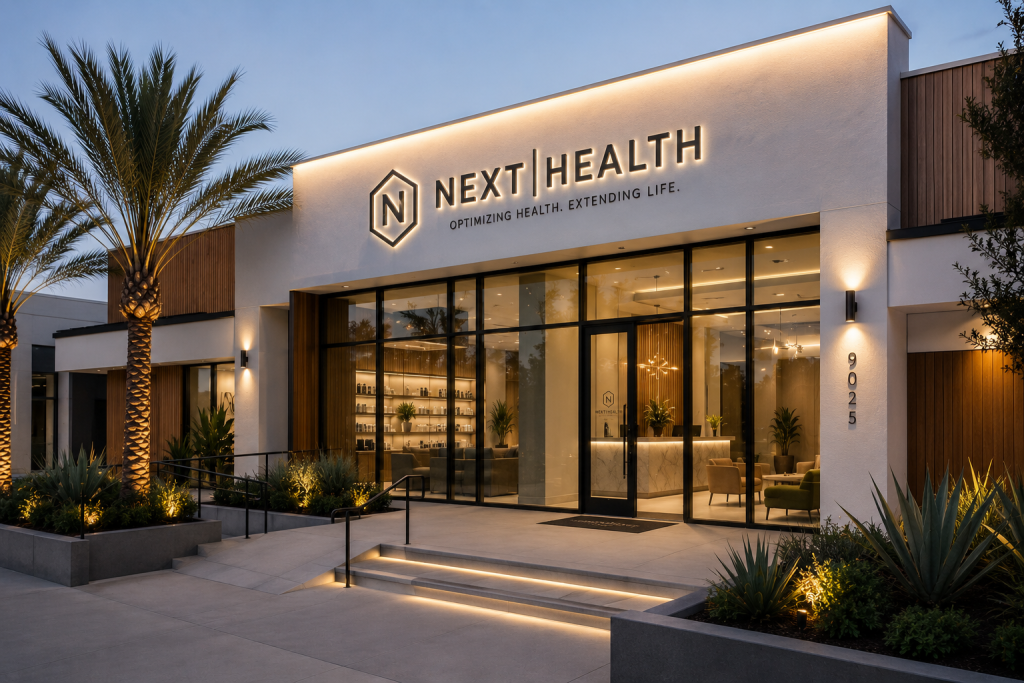
Founded in 2016 in Los Angeles, Next Health’s mission is to democratize health optimization. The network combines hormone therapy, wellness technologies, IV drips, and advanced medical services in spaces designed to feel like social hubs as much as clinics. The model relies on tiered memberships and rapid nationwide expansion.
In October 2025, the brand reached a new milestone in credibility by launching a scientific advisory board gathering figures from functional, preventive, and longevity medicine—including Dr. Mark Hyman and Dr. Dale Bredesen—under the leadership of its founder, Dr. Darshan Shah, to advance its “Medicine 4.0” model. This is the most accessible profile in this selection, ideal for a first approach.
Regional clinics and functional medicine
Smaller and anchored in specific cities, these structures complete the country’s coverage. They often fall under functional medicine, which looks for the root cause rather than just treating the symptom.
- Healthy Longevity Clinic: Operates in New York, Miami, and Los Angeles. It offers pricing transparency with initial assessments starting around $750, and customized programs ranging from $3,000 to $10,000 depending on their duration.
- LifeSpan Medicine (Los Angeles): A functional medicine practice focused on prevention and longevity, built around its Platinum Program and Comprehensive Program, blending cutting-edge diagnostics and integrative therapies.
- NY 360 Wellness Medicine (New York): Focuses on hormone therapy, fatigue, weight management, and gut health, with physician-led plans operating under a “Medicine 3.0” framework.
- Longevity Medical Clinic (Kirkland, Washington): One of the oldest of its kind. Founded by Dr. Jerry Mixon, it has practiced a functional approach to aging for over twenty years, focusing on prevention, hormonal balance, nutrition, and lifestyle.
The academic seal of approval: When universities embrace longevity
This is the most reassuring segment, and the one most rankings forget. When a major medical institution creates its own longevity program, it sends a powerful signal.
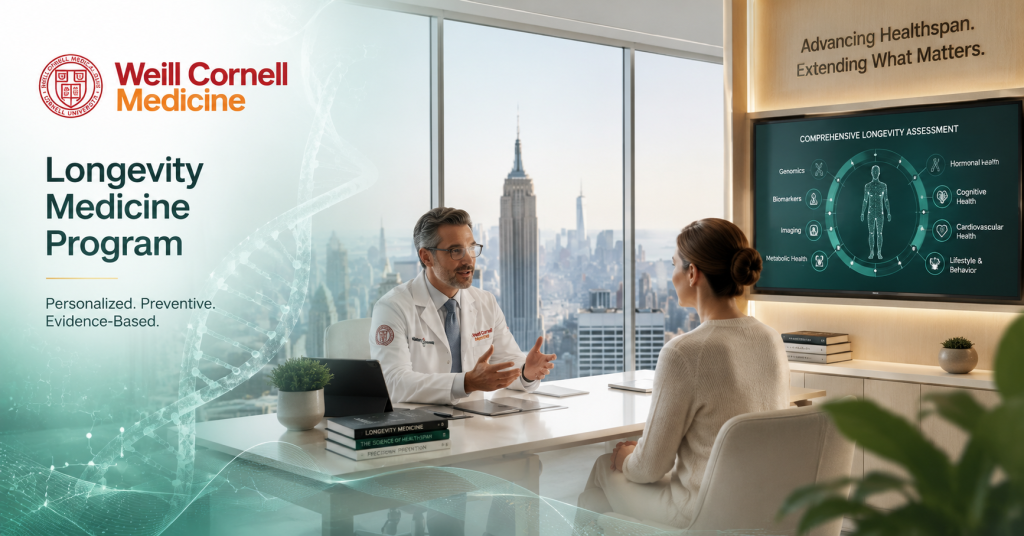
- Weill Cornell: Longevity Medicine Program: Weill Cornell Medicine opened a longevity medicine program in a brand-new facility in the heart of Midtown Manhattan, at 575 Lexington Avenue. The offering consists of personalized, science-backed preventive and longevity care, bearing the seal of approval of a major American medical institution. For anyone wanting the rigor of a hospital center over a private club experience, this is a top reference.
- Stanford: Longevity & Lifestyle Medicine: Stanford embodies the research and training side rather than a consumer-facing clinic, but its authority is firmly established. The Stanford Lifestyle Medicine Program promotes healthy aging through an educational approach structured around seven scientific pillars, and Stanford Medicine funds longevity research fellowships backed by the National Institute on Aging.
Major institutions like the Cleveland Clinic, Mayo Clinic, Kaiser Permanente, and Mount Sinai are now joining the longevity medicine movement. This is a clear sign that proactive prevention is definitively leaving the fringes to join the core of the healthcare system.
Diagnostic glossary: How to read the machines?
Behind the technical vocabulary, a few tools pop up in almost all of these clinics. Understanding what they measure helps distinguish a serious check-up from a marketing pitch.
- Full-Body MRI: Produces a detailed image of the organs without ionizing radiation. Its value in longevity is spotting silent abnormalities, from tumors to aneurysms, long before any symptoms appear.
- Whole Genome Sequencing: Reads virtually all of a person’s DNA. It reveals genetic predispositions and allows for individualized prevention rather than applying general population averages.
- VO2 Max Test: Measures, during exertion on a treadmill or stationary bike while wearing a mask, the maximum amount of oxygen the body can use. It is one of the best known predictors of all-cause mortality.
- DEXA Scan: Precisely quantifies fat mass, muscle mass, and bone density. It serves as a baseline to track body composition changes over time.
- Epigenetic Clocks: Estimate biological age by reading the chemical markers placed on DNA. They answer the question: how fast are you actually aging?
The takeaway
The American longevity market is the most mature in the world, but also one of the most unequal. The hierarchy of credibility is straightforward: academic and hospital institutions (Weill Cornell, Stanford, Mayo) alongside data-science-backed leaders (Human Longevity, Fountain Life) form the solid foundation; lifestyle networks like Next Health democratize access; regional clinics cover local territories.
A good rule of thumb for guidance: a clinic that primarily promotes IV drips, hormones, and aesthetic treatments without a structured diagnostic roadmap falls more under commercial wellness than preventive medicine. Real longevity medicine always begins by measuring before it treats.
And you, if you could get a complete map of your biological age today, would you really want to read it?
Continue exploring longevity
Explore this longevity topic