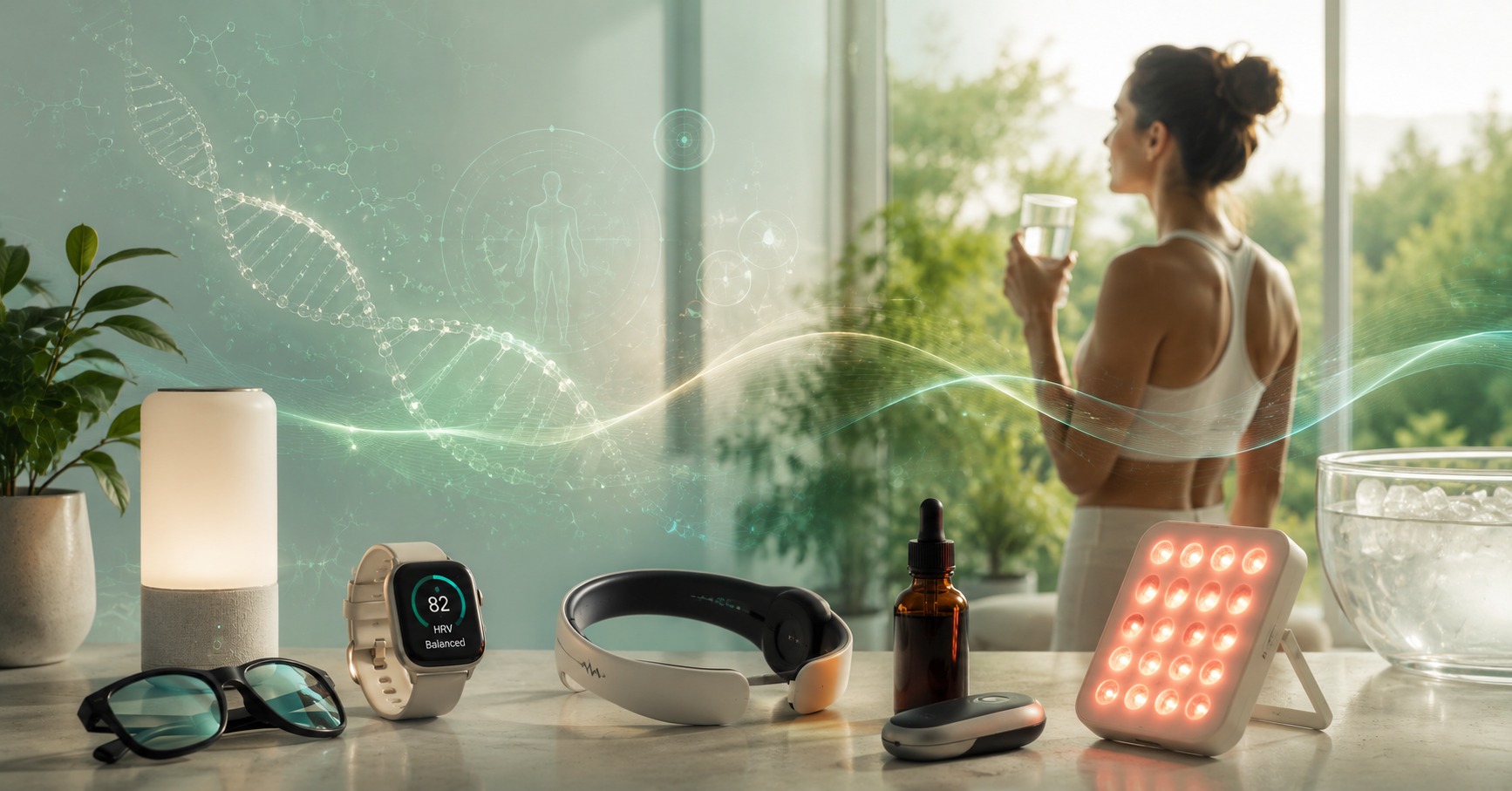
Beyond Standard Trackers: CGMs, Neurofeedback, Vagal Stimulation, and Circadian Rhythms
Mainstream wearables, such as smartwatches and tracking rings, are already well-documented. This article focuses on a different category: specialized, lesser-known devices that move beyond passive tracking to actively influence specific biological parameters. Some monitor rare or previously inaccessible data, such as real-time glucose, brainwave activity, or circadian variability. Others deliver active stimulation to the nervous or muscular systems.
The following eight technologies represent this evolving ecosystem. Each is analyzed based on its documented benefits and real-world limitations.
Preliminary Note: The utility of a device is determined not by its price tag, but by the quality of the feedback loop it creates. A device that generates data without triggering actionable lifestyle adjustments serves no biological purpose.
Top 1: Continuous Glucose Monitor (CGM)
- Category: Metabolism & Nutrition; Level: Intermediate
A CGM is a wearable sensor typically applied to the back of the upper arm that measures interstitial glucose levels in real time, every few minutes, without the need for fingerprick blood samples. Originally developed for diabetes management, it is increasingly used by healthy individuals to evaluate how diet, sleep, stress, and physical activity impact blood sugar regulation.
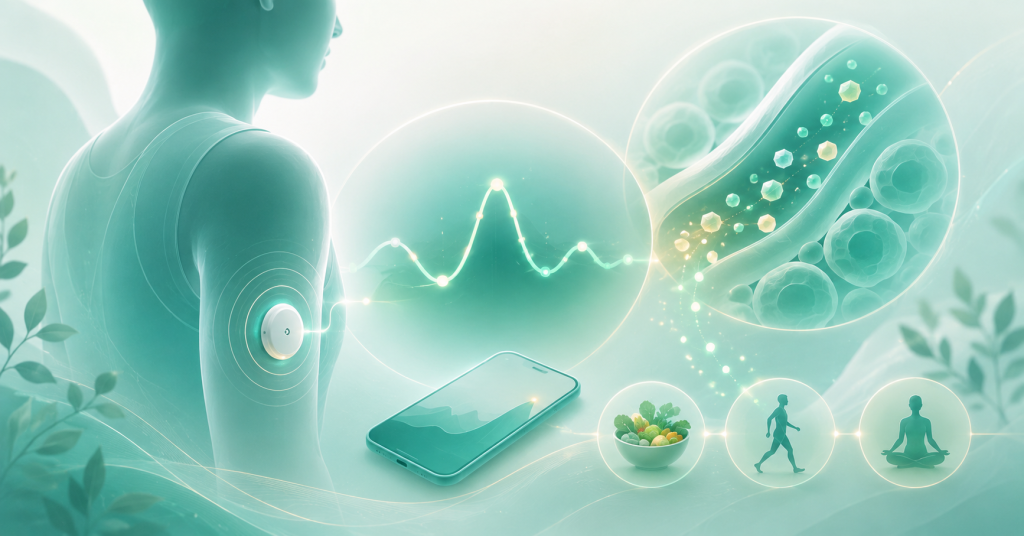
A CGM primarily reveals individual glycemic responses. Certain foods widely considered healthy can trigger sharp glucose spikes in one individual while remaining completely flat in another. Metabolic responses to carbohydrates are highly individualized; two people consuming the exact same meal can exhibit radically different glucose curves.
Documented benefits
- Identification of specific foods that trigger personal blood sugar spikes.
- Clear visualization of how acute stress, alcohol consumption, and sleep deprivation negatively affect glucose baseline stability.
- Improvement of insulin sensitivity by optimizing meal timing and composition.
- Data-driven refinement of intermittent fasting windows.
Limitations and practical considerations
- The physical sensor remains visible on the skin and may cause mild discomfort or skin irritation for some users.
- The technology requires ongoing structural costs, usually via monthly or bi-weekly sensor subscriptions.
- Improper framing of the data can induce nutritional anxiety; macro-trends over several weeks are far more clinically relevant than isolated daily fluctuations.
- Continuous long-term use is rarely necessary for healthy individuals; a 2-to-4-week baseline audit conducted once or twice a year is generally sufficient to optimize dietary habits.
Representative models
- Dexcom G7 / Abbott FreeStyle Libre 3: Medical-grade industry benchmarks backed by rigorous clinical validation.
- Levels, NutriSense, Ultrahuman M1: Wellness-focused software platforms that pair medical hardware with integrated nutritional analytics and coaching.
- Target Profile: Individuals seeking to optimize sustained energy levels, refine nutritional habits, or manage weight using objective metabolic data.
Top 2: Vibroacoustic Nervous System Stimulator : Apollo Neuro
- Category: Nervous System & Stress Management; Level: Beginner to Intermediate
The Apollo Neuro is an active device worn on the wrist or ankle that delivers low-frequency, gentle tactile vibrations. These specific vibration patterns are designed to stimulate the vagus nerve and signal the parasympathetic nervous system—the “rest and digest” branch of the autonomic nervous system. The primary goal is to lower perceived stress, improve Heart Rate Variability (HRV), and accelerate physical recovery. Unlike passive trackers, the Apollo delivers an active physical stimulus rather than merely recording biometrics.

Documented benefits
- A pilot study published in Frontiers in Psychiatry observed improvements in HRV metrics alongside reductions in subjective, self-reported stress.
- User cohorts have reported measurable improvements in focus, situational relaxation, and sleep onset transition.
- The device operates silently and discretely, allowing for use during work, travel, or intense cognitive tasks.
Limitations and practical considerations
- The volume of independent, peer-reviewed replication studies remains limited; much of the existing research has been conducted or funded directly by the manufacturer.
- Efficacy varies heavily by individual; a portion of users report noticing no perceptible physiological or psychological shift.
- The retail price (approximately $349) is relatively high for a tactile intervention whose independent scientific consensus is still developing.
- Target Profile: Professionals managing chronic occupational stress, individuals prioritizing post-training recovery, or meditation practitioners seeking structural autonomic support.
Top 3: EEG Headsets & Neurofeedback : Muse, Sens.ai
- Category: Cognitive Performance & Meditation; Level: Intermediate to Advanced
Consumer electroencephalogram (EEG) headsets measure the brain’s electrical activity and translate it into real-time auditory or visual feedback. When combined with structured neurofeedback protocols, these devices train users to intentionally enter specific brainwave frequencies: alpha waves for relaxed focus, theta waves for creative processing, or delta waves for deep sleep states.
Neurofeedback stands out as one of the few cognitive tools with a substantial historical scientific framework for specific applications, particularly stress reduction and attention management, though consumer-grade execution yields variable results.
Documented benefits
- Clinical neurofeedback literature (utilized in therapeutic settings since the 1970s), notably meta-analyses by Arns et al., demonstrates clear efficacy in addressing symptoms of ADHD, anxiety, and attentional deficits.
- Devices like the Muse headset provide reliable real-time biofeedback during mindfulness exercises, helping beginners identify and sustain meditative states.
- Advanced systems like Sens.ai combine EEG tracking, transcranial photobiomodulation (tPBM / light therapy), and heart rate variability (HRV) training into a single consumer unit.
Limitations and practical considerations
- Consumer-grade headsets utilize a limited array of sensors (typically 4 to 7 channels) compared to clinical setups (32 to 256 channels), resulting in significantly lower spatial resolution.
- The learning curve is steep; achieving measurable cognitive adjustments through neurofeedback requires consistent, disciplined practice over several weeks or months.
- Premium, multi-modal systems like Sens.ai carry substantial retail costs (frequently exceeding $2,000), limiting access to a niche market.
Representative Models
- Muse S (Gen 2): An accessible entry point heavily optimized for guided meditation and sleep hygiene.
- Sens.ai: A high-end, multi-modal system combining EEG, tPBM, and HRV training for advanced cognitive optimization.
- Target Profile: Dedicated meditation practitioners, individuals aiming to improve sustained attention spans, or professionals looking to quantify cognitive states.
Top 4: Circadian light management eyewear
- Category: Sleep & Biological Rhythms; Level: Beginner
Exposure to artificial blue light (specifically wavelengths between 450 and 490 nm) emitted by digital screens suppresses the natural secretion of melatonin, delaying sleep onset. Blue-blocking glasses filter these wavelengths in the evening, allowing the body to initiate its natural circadian progression toward sleep. This category is split into two opposing, complementary interventions: evening blue-blocking eyewear (using amber or red lenses) and morning blue-enrichment eyewear (used to anchor the circadian clock).

Documented benefits
- Randomized controlled trials indicate that wearing high-quality amber or red lenses 2 to 3 hours before bed significantly enhances subjective sleep quality and sleep efficiency.
- Bright blue light exposure within the first hour of waking—whether from natural sunlight or specialized therapeutic lenses—strengthens the circadian rhythm, boosts morning alertness, and improves evening melatonin expression.
- This protocol is widely endorsed by chronobiologists to mitigate the “social jetlag” induced by modern screen exposure.
Limitations and practical considerations
- Efficacy depends entirely on behavioral compliance; the tool is inexpensive, but consistency is the primary point of failure.
- Ambient room brightness is just as critical as wavelength; blue-blocking glasses cannot fully counteract an excessively bright home environment.
- The retail market is saturated with low-quality clear lenses that offer insufficient filtration of the critical 450–490 nm spectrum; consumers must verify third-party spectral reports.
Representative models
- Ra Optics / BLUblox (Bon Charge): Validated evening eyewear options offering precise spectral filtration with amber or dark red lenses.
- Luminette 3: Clinically validated light-therapy glasses designed for morning use to treat seasonal affective disorder (SAD) and circadian phase delays.
- Target Profile: Anyone regularly exposed to screens or artificial lighting after sunset. This intervention offers one of the highest cost-to-benefit ratios in sleep optimization.
Top 5: WHOOP 5.0 : Recovery and athletic strain tracker
- Category: Physical Performance & Recovery; Level: Intermediate
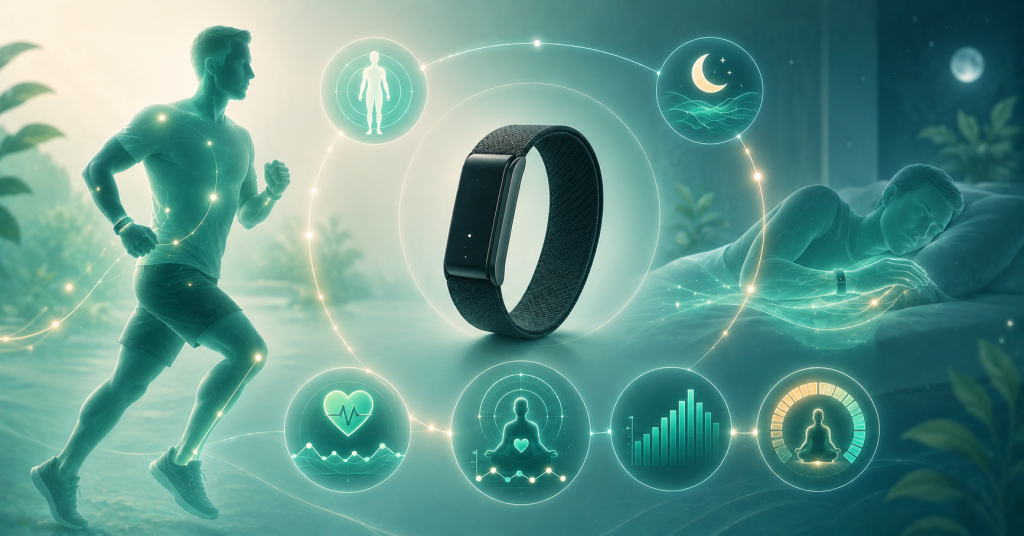
The WHOOP is a screenless wristband designed to continuously track HRV, resting heart rate, respiratory rate, skin temperature, and sleep architecture. Its core philosophy diverges sharply from standard smartwatches: it deliberately avoids real-time on-device notifications, focusing entirely on cumulative physiological strain and long-term recovery metrics. Its primary strength lies in its highly granular sleep and recovery algorithms; its primary limitation is its mandatory subscription business model, which lacks a one-time purchase option.
Documented benefits
- Continuous nocturnal HRV tracking is validated across independent literature (including data aggregates in Nature Digital Medicine) as a reliable marker of autonomic nervous system status and systemic recovery.
- The proprietary “Strain” metric correlates reliably with objective biomarkers of systemic fatigue in competitive athletes.
- The platform is widely adopted within professional sports leagues (including the NFL and NBA) to adjust training volumes and prevent overtraining syndrome.
- Continuous baseline monitoring allows for the early detection of acute illness via sudden deviations in respiratory rate or sleeping heart rate.
Limitations and practical considerations
- The ongoing monthly subscription fee (approximately $30/month) results in a high total cost of ownership over time.
- The complete absence of a built-in screen appeals to users seeking to reduce digital distractions, but may frustrate those requiring immediate, on-device metrics during activities.
- Daytime HRV measurements are inherently noisy due to movement and posture; the system’s most accurate and actionable data is harvested exclusively during deep sleep.
- Target Profile: Competitive athletes, individuals undergoing high-volume physical training, or professionals seeking to systematically balance physiological exertion with rest.
Top 6: RingConn Gen 2 : Subscription-free smart ring
- Category: Passive Tracking & Sleep Monitoring; Level: Beginner
The RingConn Gen 2 serves as a prominent alternative to the Oura Ring, built around a key commercial distinction: it requires no ongoing monthly subscription fees to access user data. The hardware provides continuous tracking of HRV, sleep stages, resting heart rate, blood oxygen saturation (SpO2), and skin temperature variations, while introducing advanced algorithmic screening for sleep apnea. It features a 10-day battery life, outperforming most competitors in the smart ring form factor.
Key characteristics
- Comprehensive tracking of nocturnal HRV, SpO2, heart rate, skin temperature, and detailed sleep phase metrics.
- Integrated sleep apnea screening, a biometric feature that remains uncommon in the consumer ring segment.
- A 10-day battery lifespan, significantly reducing charging frequency compared to major competitors.
- Unrestricted, full access to historical data and software features without a paywall.
Limitations and practical considerations
- The software ecosystem and app interface are younger than competitors like Oura, offering fewer native integrations with third-party fitness software or healthcare platforms.
- Independent testing data indicates that while highly competitive, its tracking accuracy on certain active metrics slightly trails the Oura Ring Gen 4.
- The aesthetic design, while ultra-thin, may not match the premium visual finish of high-end jewelry alternatives.
- Target Profile: Users seeking a low-profile, comprehensive health tracker without committing to a recurring monthly subscription model.
Top 7: Pison Perform : Objective cognitive performance tracker
- Category: Cognitive Performance; Level: Advanced
The Pison Perform is a wrist-worn wearable that utilizes electroneurography (ENG) sensors to detect neural signals at the wrist. Unlike traditional fitness trackers that infer fatigue indirectly through heart rate changes, the Pison directly measures central nervous system output. It aims to provide objective, real-time metrics on cognitive performance, including reaction time, decision-making agility, and overall neurological readiness. It is one of the very few consumer-accessible devices explicitly targeting neurological focus over physical fitness.

Documented benefits
- Developed from neurological research into neural-machine interfaces, this technology was initially deployed in high-consequence military and elite athletic testing environments.
- By monitoring peripheral nerve signals directly, it sidesteps the lagging metrics common to cardiovascular tracking (like HRV or pulse ox).
- App-based testing protocols help users identify cognitive “flow states” and systematically map out periods of decision fatigue.
Limitations and practical considerations
- As an emerging commercial technology, the volume of independent peer-reviewed literature validating its consumer application remains limited.
- The interface and data metrics are highly technical, optimized for professional or high-performance environments rather than general lifestyle tracking.
- The hardware carries a premium price tag and suffers from constrained retail availability.
- Target Profile: Elite athletes, corporate executives experiencing heavy cognitive loads, or professionals operating in high-consequence environments requiring objective verification of mental sharpness.
Top 8: Eight Sleep Pod : Active thermoregulating mattress cover
- Category: Sleep Optimization; Level: Intermediate
The Eight Sleep Pod is an active, water-cooled mattress cover rather than a body-worn device. It dynamically regulates bed surface temperature across dual zones (allowing independent settings for both the left and right sides of the bed), tracks nocturnal biometrics (heart rate, respiratory rate, sleep stages), and automatically adjusts its temperature profiles in real time based on the user’s current sleep stage.

Documented benefits
- Thermoregulation during sleep is a thoroughly established mechanism in sleep science; a gradual cooling of core body temperature is biologically required to trigger sleep onset and sustain slow-wave (deep) sleep.
- Internal manufacturer data and independent user cohorts report an average increase of 30% to 34% in deep sleep duration alongside reductions in nighttime awakenings.
- The technology is heavily utilized by high-performance athletes to accelerate physical recovery overnight.
Limitations and practical considerations
- The upfront hardware investment is exceptionally high ($2,000 to $3,000 depending on sizing), and utilizing the automated temperature adjustment algorithms requires an ongoing annual software subscription.
- The vast majority of published statistical performance benefits originate from internal corporate studies; independent clinical replication trials remain sparse.
- An active mattress cover cannot resolve poor sleep quality caused by serious underlying clinical conditions, such as obstructive sleep apnea or untreated chronic anxiety; these issues must be addressed medically first.
- Target Profile: Individuals who have already optimized their basic behavioral sleep hygiene (darkness, routine, caffeine limits) and view thermal disruption as their remaining sleep barrier.
Implementation strategy: The “Stack” framework
Experienced biohackers rarely deploy all eight technologies simultaneously. Instead, they build a structured, progressive “stack” based on specific physiological priorities.
Phase 1 : Foundational integration (Entry Points)
- A smart ring (e.g., Oura Ring Gen 4 or RingConn Gen 2) for low-friction, passive tracking of baseline sleep metrics and nocturnal HRV trends.
- Circadian eyewear to establish basic melatonin regulation at a minimal financial investment.
Phase 2 : Metabolic and autonomic deep dives
- A 2-to-4-week CGM audit to cleanly map out personal carbohydrate tolerances and eliminate blood sugar volatility.
- A training-centric wearable (e.g., WHOOP 5.0) to mathematically pace training loads alongside recovery metrics.
Phase 3 : Specialized optimization
- An EEG neurofeedback headset to systematically train specific cognitive states, requiring a dedicated, long-term training schedule.
- An active micro-climate system (e.g., Eight Sleep Pod) if automated thermal management is required to extend deep sleep windows.
- Targeted neurological devices (e.g., Apollo Neuro or Pison Perform) for acute stress mitigation or objective cognitive readiness monitoring.
General scientific caution on wearable analytics
Data compiled by Stanford Medicine in their Wearable Accuracy Study highlights an accelerating psychological phenomenon: orthosomnia. This is defined as a clinical preoccupation or anxiety surrounding achieving perfect wearable sleep scores, which ironically increases nocturnal cortisol production and diminishes actual sleep quality.
Across all biohacking modalities, objective data must be viewed as a directional compass rather than an absolute judge. Long-term baseline trends over several weeks carry far more diagnostic validity than an isolated, poor daily metric. If tracking data begins to induce psychological stress, temporary technology fasts are highly recommended and often yield measurable health benefits.
Sources and references
- Rock Health Research — Data aggregates on consumer wearable adoption metrics.
- Nature Digital Medicine — Validation studies surrounding continuous HRV metrics via optical sensors.
- Frontiers in Psychiatry — Clinical evaluations of vibroacoustic stimulation on autonomic nervous system balance.
- Sensors (MDPI) — Comparative accuracy reports of consumer smart rings against polysomnography (PSG) baselines.
- Stanford Medicine — Wearable Accuracy Study (Dr. Zakia Rahman) examining the physiological impacts of health data tracking.
- Journal of Neuroregulation — Arns et al., meta-analyses confirming long-term clinical outcomes of neurofeedback training.
Continue exploring longevity
Explore this longevity topic