Key information
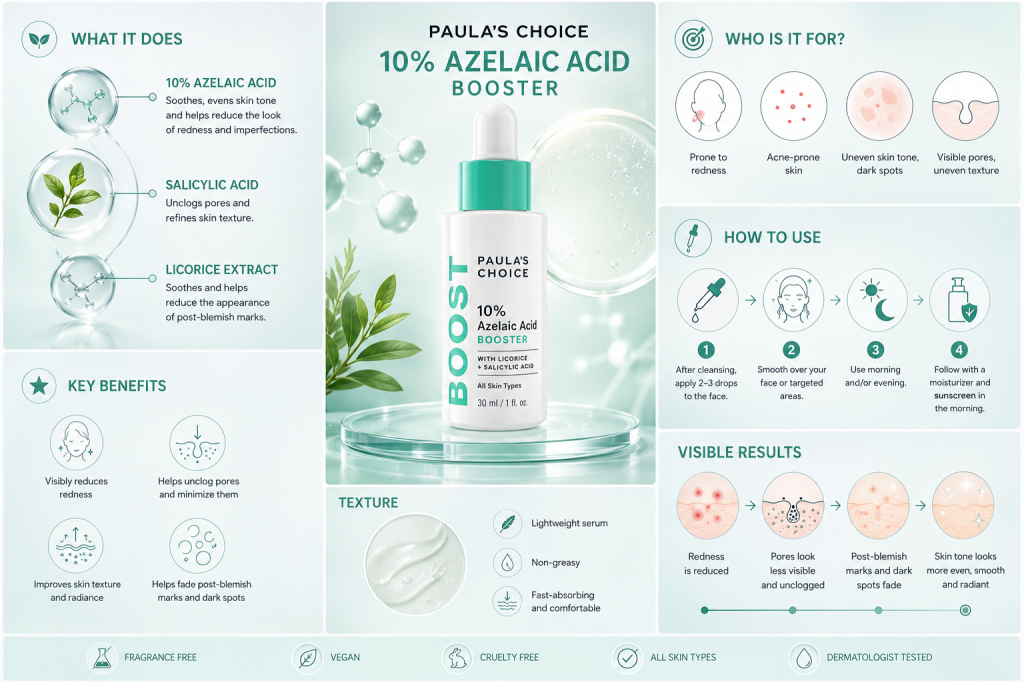
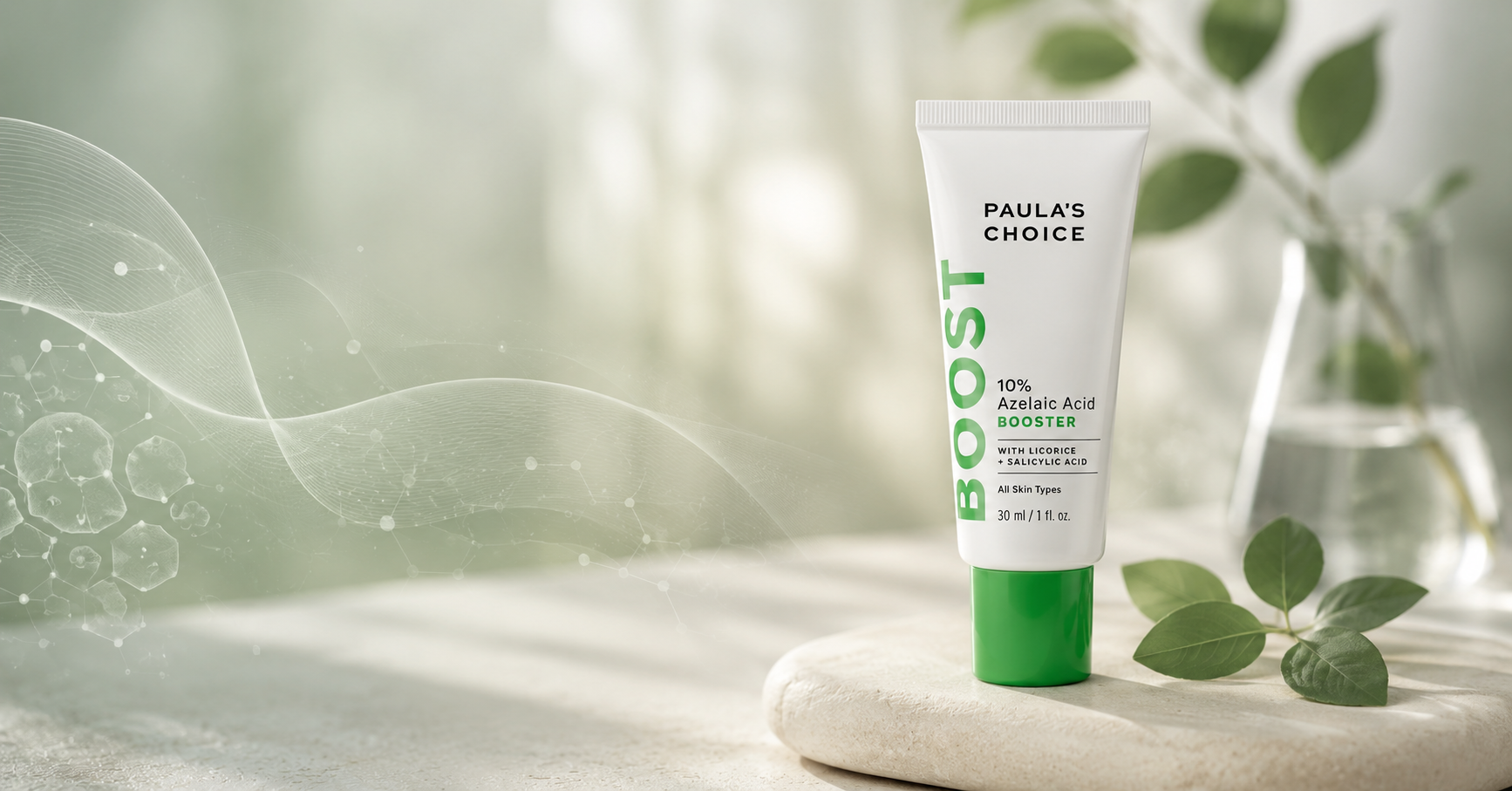
Paula’s Choice 10% Azelaic Acid Booster combines azelaic acid with salicylic acid and soothing ingredients.
It is primarily used to help reduce post-acne marks, redness, uneven texture, and mild inflammatory breakouts.
Azelaic acid is recognized for its anti-inflammatory and pigment-balancing properties.
Unlike harsher exfoliating acids, it is often considered easier to tolerate for sensitive or reactive skin.
Research published in dermatology journals has explored azelaic acid for inflammatory acne, post-inflammatory hyperpigmentation, and redness-related skin concerns.
The formula is designed to support clearer-looking skin without relying on aggressive exfoliation.
In skincare, some ingredients become popular very quickly because of social media trends, but only a few continue to remain relevant years later. Azelaic acid belongs to that smaller category of ingredients that have maintained scientific and dermatological interest over time.
Unlike ingredients that focus only on exfoliation or oil control, azelaic acid is studied for several mechanisms at once. Researchers have explored its role in inflammation regulation, pigmentation balance, and skin clarity, which explains why it is frequently recommended for people dealing with both breakouts and visible redness.
Among over-the-counter products containing this ingredient, Paula’s Choice 10% Azelaic Acid Booster has become one of the best-known formulations for combination, sensitive, and acne-prone skin.
Rather than functioning like an aggressive peel, the formula aims to support gradual skin improvement while limiting excessive irritation.
In this article, we explore what azelaic acid actually is, how Paula’s Choice formulated this product, the potential benefits associated with it, and the practical considerations involved in adding it to a realistic skincare routine.
What is azelaic acid?
Azelaic acid is a naturally occurring dicarboxylic acid found in grains such as wheat, rye, and barley.
In dermatology, it has been studied for decades because of its ability to interact with several biological pathways involved in acne and skin inflammation.
One reason azelaic acid is considered unique is that it does not rely exclusively on aggressive exfoliation.
Instead, research suggests it may help:
- reduce inflammatory activity associated with breakouts;
- support more balanced skin cell turnover;
- limit excess pigment production linked to post-acne marks;
- improve the appearance of uneven skin texture.
This broader mechanism partly explains why azelaic acid is often recommended for people who experience both blemishes and skin sensitivity simultaneously.
Within cosmetic skincare, concentrations around 10% are commonly used in non-prescription formulations designed to target visible redness, post-inflammatory discoloration, and mild acne-related concerns.
Did you know?
Azelaic acid is frequently used in dermatology because it is often better tolerated than stronger exfoliating acids or high-strength retinoids, especially for people with redness-prone skin.
How Does It Work?
Primary mechanism of action
Azelaic acid interacts with several pathways involved in inflammation and pigmentation.
Researchers have studied its ability to help reduce the proliferation of certain acne-associated bacteria while also calming inflammatory activity around blemishes.
At the same time, azelaic acid may help regulate abnormal keratinization — the process where dead skin cells accumulate and contribute to clogged pores.
Another important mechanism involves pigmentation.
Studies suggest azelaic acid may help reduce excessive melanin production involved in post-inflammatory hyperpigmentation. This is particularly relevant for people left with persistent red or brown marks after breakouts heal.
Unlike strong resurfacing treatments, azelaic acid generally works progressively over time rather than producing immediate dramatic changes.
Effects at the skin level
At the visible skin level, mechanisms associated with azelaic acid may contribute to:
- reducing the appearance of inflammatory blemishes
- calming visible redness
- improving uneven skin tone
- refining rough texture
- helping skin appear more balanced overall.
Paula’s Choice combines azelaic acid with salicylic acid (BHA), which adds additional pore-clearing support.
This combination may help target both inflammation and congestion simultaneously.
What this could mean for long-term skin health
From a skin health perspective, azelaic acid is interesting because it addresses multiple concerns without relying entirely on harsh exfoliation.
Repeated irritation can sometimes weaken the skin barrier over time, especially when strong acids, peels, and retinoids are layered excessively.
Azelaic acid is often viewed as a more balanced alternative because its anti-inflammatory properties may help improve skin clarity while remaining relatively gentle.
Rather than aiming for rapid resurfacing, the goal is usually gradual stabilization of:
- redness
- uneven pigmentation
- recurring inflammatory blemishes
- rough texture.
This slower but more sustainable approach is one reason why azelaic acid continues to remain relevant in evidence-based skincare discussions.
Study Spotlight
2016 – Journal of Clinical and Aesthetic Dermatology
Clinical reviews discussed azelaic acid’s role in helping improve inflammatory acne and post-inflammatory hyperpigmentation while maintaining a relatively favorable tolerability profile compared to more aggressive topical treatments.
Benefits associated with paula’s choice azelaic acid booster
Supporting Redness-Prone Skin
One of the most discussed benefits of azelaic acid is its ability to visibly reduce redness over time.
People with reactive skin often experience redness:
- around the nose
- across the cheeks
- after cleansing
- after inflammatory breakouts
- after environmental stressors.
Because azelaic acid has anti-inflammatory properties, some users notice that the skin gradually appears calmer and less reactive with consistent use.
This effect is usually progressive rather than immediate.
Supporting post-acne mark recovery
After acne lesions heal, many people are left with lingering marks that persist much longer than the blemish itself.
These marks may appear:
- red
- brown
- uneven in tone.
Azelaic acid is frequently studied for post-inflammatory hyperpigmentation because of its interaction with melanin-related pathways.
Over time, regular use may help these marks appear less visible, particularly when combined with daily sunscreen.
Supporting skin texture and clarity
The inclusion of salicylic acid in the Paula’s Choice formula adds mild exfoliating support.
This may help improve:
- congested pores
- small bumps
- rough texture
- visible unevenness.
Importantly, the formula attempts to balance these effects with soothing ingredients to reduce excessive dryness.
Texture and formulation science
The product has a lightweight cream-gel texture with a soft silicone-like finish.
In practical terms:
- it spreads easily
- layers well under moisturizer and sunscreen
- usually does not leave a heavy greasy residue.
Some users appreciate the smoother skin feel created by the texture, while others may prefer more traditional cream formulations.
From a formulation standpoint, the texture helps distribute active ingredients evenly while maintaining cosmetic elegance for daily use.
Natural origins & ingredient context
Azelaic acid itself naturally occurs in grains and is also produced through biochemical processes associated with lipid metabolism.
Within skincare, it is valued because it combines several properties at once:
- anti-inflammatory support
- pigment-balancing activity
- mild keratin-regulating effects.
Paula’s Choice positions this booster within a broader philosophy focused on evidence-based skincare and ingredient transparency.
Dosage, texture & frequency of use
The Paula’s Choice booster contains 10% azelaic acid.
This concentration is commonly used in cosmetic formulations targeting visible redness and uneven skin tone.
For beginners, gradual introduction is usually recommended.
A realistic approach may include:
- using the product 2–3 evenings per week initially
- increasing frequency progressively
- monitoring irritation levels carefully.
The product is generally applied after cleansing and before moisturizer.
Only a small amount is necessary.
Using excessive quantities does not accelerate results and may instead increase irritation.
Potential supportive combinations sometimes discussed include:
- niacinamide
- ceramide-rich moisturizers
- hyaluronic acid
- sunscreen.
Safety & precautions
Azelaic acid is generally considered relatively well tolerated compared to stronger exfoliating treatments.
However, mild side effects may still occur, especially during the first weeks:
- tingling
- dryness
- temporary irritation
- mild flaking.
Additional caution may be appropriate:
- for extremely sensitive skin
- when combining multiple active ingredients
- alongside strong retinoids or exfoliating acids
- when the skin barrier is already compromised.
As with most active skincare ingredients, consistent sunscreen use remains important, especially when targeting pigmentation concerns.
How to integrate it into a skincare routine
When to apply it
Many users prefer applying azelaic acid in the evening, especially during the introduction phase.
This makes it easier to observe how the skin responds.
However, morning use is also possible when paired with sunscreen.
What to combine it with
Within a balanced skincare routine, azelaic acid is often paired with:
- barrier-supportive moisturizers
- gentle cleansers
- niacinamide
- hydrating serums
- daily SPF protection.
Overloading the skin with too many strong actives simultaneously may increase irritation and reduce overall tolerance.
A Simple Skin-Barrier-Focused Routine
A realistic and sustainable routine may include:
- a non-stripping cleanser
- targeted active ingredients used progressively
- consistent hydration
- daily UV protection
- avoiding unnecessary over-exfoliation.
Within this context, azelaic acid works best as a long-term supportive ingredient rather than a quick-fix solution.
Who might find it particularly interesting?
Current interest surrounding azelaic acid may be especially relevant for:
- people with redness-prone skin
- individuals dealing with post-acne marks
- combination or acne-prone skin types
- users looking for alternatives to harsher exfoliating routines
- people interested in maintaining a stronger skin barrier while still targeting blemishes.
Could a gentle active help improve skin balance over time?
Paula’s Choice Azelaic Acid Booster is not positioned as an overnight transformation product.
Its interest comes from a more balanced approach to skin improvement.
Rather than aggressively resurfacing the skin, the formula focuses on gradually supporting:
- calmer-looking skin
- more even tone
- reduced visible redness
- smoother texture.
At SOGEVITY, skin health is viewed as part of a broader long-term wellness philosophy. Barrier integrity, inflammation balance, recovery, sleep quality, nutrition, and stress management all influence how the skin behaves over time.
Within that larger perspective, azelaic acid represents a thoughtful example of modern skincare moving toward sustainable skin support rather than excessive correction.
Sources
- Draelos, Z. D. (2016). Azelaic Acid in the Treatment of Acne and Hyperpigmentation. Journal of Clinical and Aesthetic Dermatology.
- Thiboutot, D., et al. (2009). New insights into the management of acne: an update from the Global Alliance to Improve Outcomes in Acne Group. Journal of the American Academy of Dermatology.
- Webster, G. F. (2000). Combination azelaic acid therapy in dermatology. Cutis.
- PubChem – Azelaic Acid.
- Paula’s Choice official ingredient and formulation information.