The field of longevity and regenerative medicine is no longer just about healing; it’s about anticipating. At the forefront of this revolution, biotech startup Acorn Biolabs introduces a fascinating approach: leveraging our own cells to support future therapeutic possibilities . But instead of heavy, invasive procedures, the company has uncovered an incredibly rich resource right at the root of our hair.
We spoke with Dave Elliott to understand how banking your cells today can fundamentally transform your health capital for tomorrow.

The hair follicle: An accessible goldmine
When people think of stem cells, they often picture complex surgeries or painful extractions. Acorn Biolabs takes the exact opposite approach by tapping into a resource that is as simple as it is underestimated. Dave explains why the hair follicle is a game-changer.
Sogevity: Acorn Biolabs positions hair follicle-derived stem cells as a gateway to personalised regenerative medicine. What makes these cells particularly valuable compared to other forms of cell banking?
Dave Elliott: What makes hair follicles so valuable in regenerative medicine is twofold: they’re biologically rich, and they’re easily accessible.
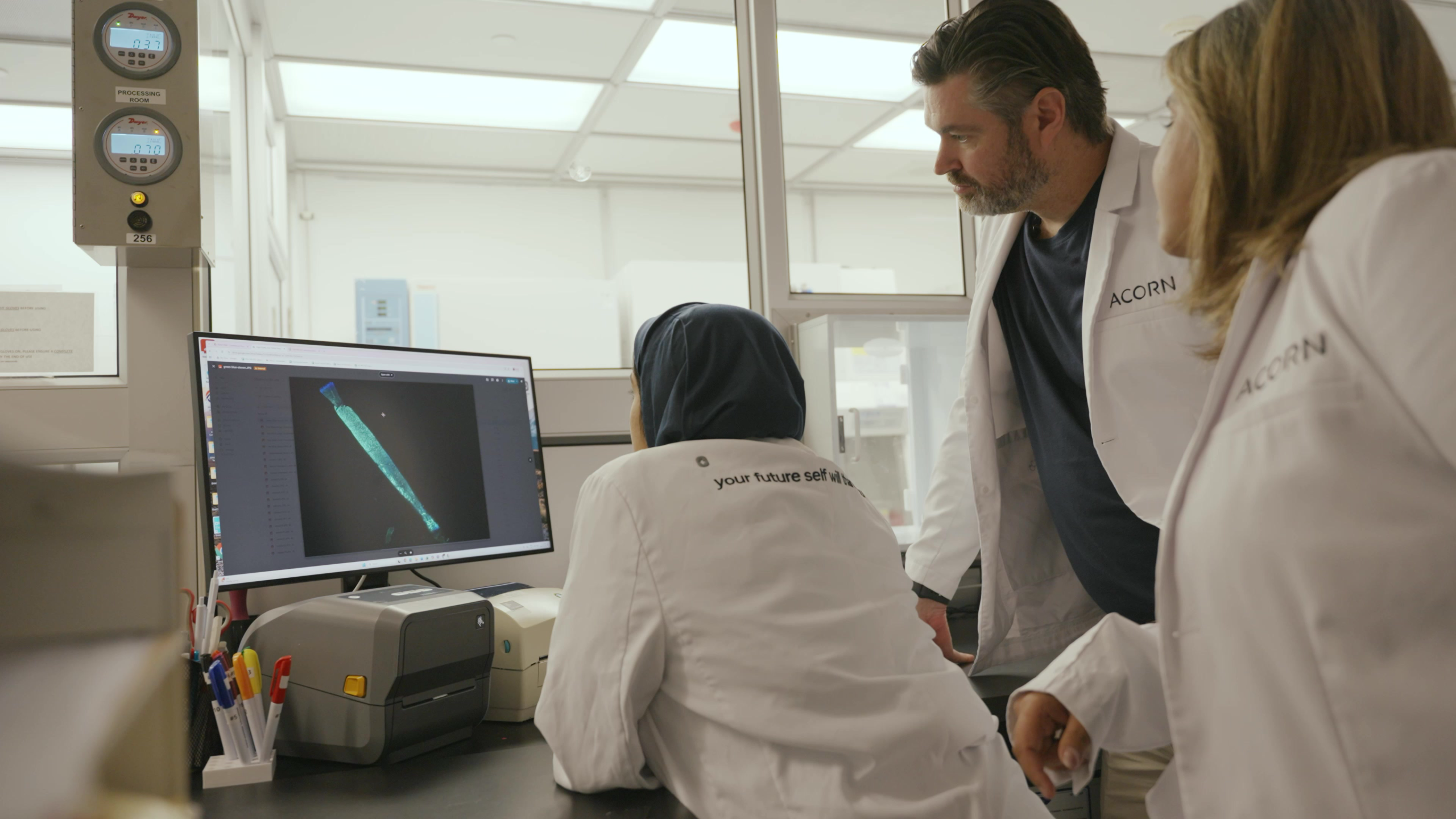
Most people are surprised to learn that a simple plucked hair follicle contains valuable regenerative cell populations, collected non-invasively in just minutes.
At Acorn, accessibility matters. If regenerative medicine is going to become part of mainstream health and longevity, preservation needs to be approachable, not invasive or intimidating.
What also makes this exciting is flexibility. One collection today creates future options. Right now, our focus is on personalized regenerative applications in skin and hair, but the broader regenerative medicine landscape is evolving quickly.
The time factor: Why capitalize on your youth?
In the world of biohacking and longevity, timing is everything. While science is advancing by leaps and bounds, our biological clock keeps ticking. Dave highlights the critical concept of acting at your “biological peak.”
Sogevity: You often mention the importance of preserving cells “at your best.” Why could banking younger, healthier cells today become increasingly important as regenerative and longevity therapies evolve over the next decade?
Dave Elliott: As we age, so do our cells. They’re affected by inflammation, stress, environmental exposure, and, of course, time.
If future medicine increasingly relies on your own biology, then the quality of what you preserve matters.
The question is simple: if future medicine could use your own cells, would you rather be working with the version from your thirties or your sixties?
For us, cell banking is about preserving optionality. Not predicting one exact future therapy, but making a thoughtful decision today that may create better options tomorrow.

Aesthetics and longevity: The era of ultra-personalization
Beyond long-term research, Acorn is already offering concrete applications today, particularly through personalized secretome therapies. We are moving away from standardized treatments and stepping directly into the era of tailor-made medicine.
Sogevity: Acorn is already developing applications for skin rejuvenation and hair regeneration through personalised secretome therapies. How do you see patient-specific regenerative treatments changing the future of aesthetic and longevity medicine?
Dave Elliott: Personalization is becoming the expectation, not the exception.
Aesthetic medicine has historically relied on relatively standardized products and protocols. Regenerative medicine introduces a different idea: what if some of your most biologically compatible regenerative signals come from your own cells?
Everyone’s biology is different, so more individualized approaches to skin health, hair restoration, recovery, and healthy aging make a lot of sense.
A glimpse into the future: Reprogramming and convergence
While hair and skin represent the first practical milestones, Acorn’s vision extends much further. When we look at cellular reprogramming, the implications for human health and life extension become truly profound.
Sogevity: Beyond today’s applications, your platform points toward future possibilities in anti-aging, tissue repair, and broader regenerative medicine. Which upcoming breakthroughs are you personally most excited about?
Dave Elliott: What excites us most is optionality. The idea that accessible cells collected today could potentially support very different applications in the future is fascinating.
Cellular reprogramming is especially exciting, as is the broader convergence of regenerative medicine, longevity science, and personalized health.
The biggest breakthroughs will be the ones that make this science practical and accessible to more people.
Taking action: Regenerative preparedness in your 30s and 40s
Longevity is not a concern reserved for old age. It is an active preservation strategy that begins in your thirties or forties. To conclude, Dave shares his insights on this major cultural shift toward proactive health.
Sogevity: Longevity is increasingly shifting from reactive healthcare to proactive biological preservation. In your view, how should people in their 30s and 40s start thinking about regenerative preparedness and long-term health optimisation?
Dave Elliott: The mindset shift is from fixing problems later to protecting health earlier.
Most people wait until they notice a decline before acting; less energy, hair thinning, skin sagging, and/or slower recovery.
Longevity asks a different question: what can you do today to create better options later?
That starts with fundamentals like sleep, movement, nutrition, stress management, and metabolic health.
But as healthcare becomes more personalized, biological preservation becomes part of that conversation too.
Bringing the future of medicine into the present?
By shifting the focus from reactive treatment to early biological preservation, Acorn Biolabs highlights a fundamental truth of modern longevity: our greatest health asset lies within our own cells, provided we protect them in time.
The accessibility of their method paves the way for the democratization of personalized medicine, turning what once felt like science fiction into a practical, proactive health routine. A compelling conversation that redefines our relationship with aging and our own biological capital.

About Acorn Biolabs
Acorn Biolabs is a regenerative medicine company pioneering the use of patients’ cells collected from hair follicles s for personalized skin and hair treatments today and advanced medical therapies in the future. Specializing in non-invasive cell collection, cryopreservation, and analysis from simple hair follicles, Acorn empowers individuals to freeze their biological assets at their peak, unlocking the full potential of tomorrow’s healthcare.
Learn more at: acorn.me
Continue exploring longevity
Explore this longevity topic