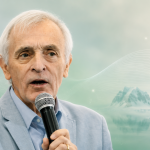
Serge Tisseron is a French psychiatrist and habilitated researcher in psychology, recognized for his work on images, screens and their impact on psychological development. He has become a key voice in understanding digital media use, particularly in children. His research examines how digital environments shape behaviour, attention and social interactions over time, highlighting their implications for cognitive and relational longevity.
“Each time I couldn’t figured out what had happened to me, I drew it. To make myself laugh, to make people laugh, or imply not to forget the intense anger i felt. Drawing allowed me to hold on my own perception of the world. I do not regret it at all.”
In this way, Serge Tisseron’s work is rooted in an intellectual trajectory that explores the role of images in the construction of the individual. For several decades, he has examined the transformations brought about by digital technologies with a nuanced perspective. He positioned himself neither as a naive technophile, nor as a radical critic, but he instead develops an analysis grounded in actual uses. His approach is based on the idea that digital tools extend existing human functions while also reshaping their underlying balances. This perspective leads him to consider screens as fully fledged cultural and psychological objects. In his public interventions, he consistently emphasizes the need to guide rather than prohibit. This framework is directly connected to a broader reflection on the long-term sustainability of mental capacities in an increasingly pervasive digital environment.
His career
Trained in psychiatry and psychoanalysis, Serge Tisseron developed from the outset a strong interest in images and their psychological effects. He first explored the dynamics of family secrets and their transmission before broadening his analysis field to visual representations. This orientation led him to study comic books, and later media images, by emphasizing their role in shaping imagination.
His work on Hergé’s creations is an important turning point: he demonstrated his ability to connect artistic production with psychoanalytic interpretation. Gradually, he shifted his focus toward digital images, as their mass diffusion transformed modes of perception and interaction. dd
His public recognition increased when he introduced the“3 6 9 12”guideline, designed to frame children’s exposure to screens according to age. This simple framework gained strong traction in educational and familial contexts. From that point onward, he became a key figure in debates on digital uses, with frequent interventions in both academic and public spheres. His work increasingly bridged theoretical analysis and practical societal issues related to everyday digital life.
His vision of longevity
Serge Tisseron’s thinking on longevity is centered on the notion of psychological health within a technological environment. He does not directly address biological life, but instead focuses on the conditions that allow cognitive, emotional and relational capacities to be preserved over time.
Ah the core of his thinking lies the idea that screens reshape the fundamental rhythms and balances of human existence. He emphasizes the importance of diversity of experiences in maintaining psychological stability. In several interventions, he stresses that children need to alternate between real-life interactions, physical activities and digital uses to develop themselves in a balanced way.
“The screen is not the problem, but the use we make of it.”
This formulations became one of his most frequently cited sentence in his writings and conferences. This idea structures his approach by shifting responsibility toward practices rather than tools themselves. It opens the way to an educational approach to screens based on regulation rather than prohibition.
In his work on younger audiences, he also states that “screens must be progressively introduced and accompanied by adults.” This position highlights the relational dimension of digital use. According to him, cognitive longevity depends on the quality of human interactions, including those mediated by technology.
His vision therefore follows an adaption logic. He argues that societies will need to develop new forms of digital hygiene to preserve attention spans, sleep quality and richness of social relationships. This perspective is directly linked to technological use to long-term mental health challenges.
His influence and impact
Serge Tisseron’s influence extends across academic, educational and media spheres. He has contributed to structuring a French approach to screen use based on moderation and guidance. The 3 6 9 12 guideline remains one of his most visible contributions, widely disseminated among families and institutions.
However, his position has also generated debates. Some stakeholders advocate for stricter restrictions, while others support his works to promote a more reasoned integration of digital technologies. These differing reactions reflect the complexity of the issue and the rapid evolution of digital practices.
His concrete impact can be seen in the development of educational recommendations and in raising public awareness of the psychological effects of screens. By introducing the concept of an ecology of digital uses, he helped situate these questions within a broader reflection on overall health and longevity. His work keeps to shape discussions on how to reconcile technological innovation with human balances.
Digital technology is not an ennemy
Serge Tisseron offers a deep reflection on technologies, grounded in the duration and complexity of human practices. By emphasizing regulation rather than restriction, he proposes an approach to societies profoundly transformed by digital environments. His work sheds light on the conditions required to maintain stable mental health in a constantly evolving environment.
As technologies become increasingly immersive, his contributions provide reference points for thinking about a sustainable coexistence between human and screens. The question remains open regarding the capacity of individuals and institutions to integrate these principles into everyday life.