
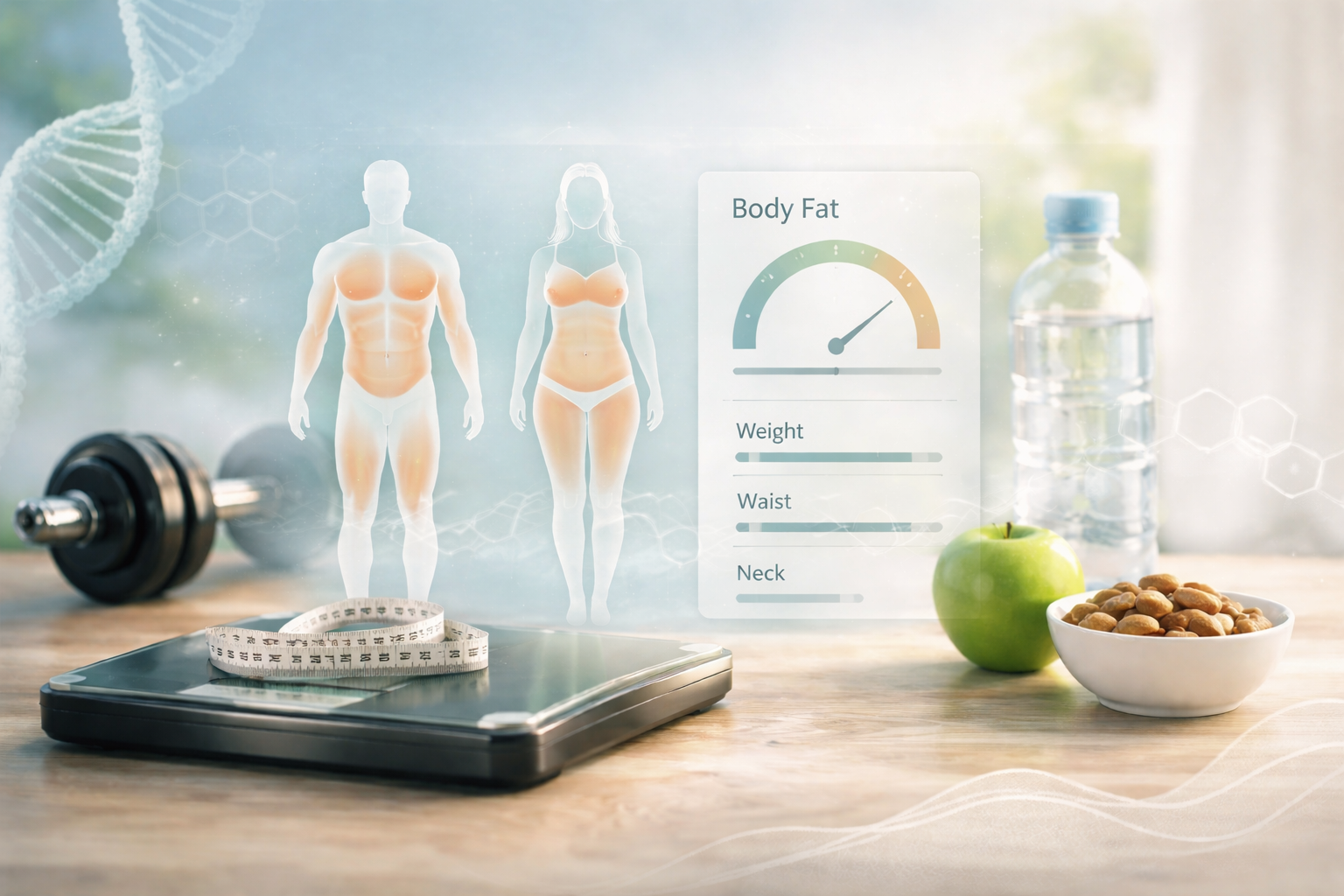
You step on the scale. A number appears.
But what does it really mean?
Two people can weigh the same… and have completely different bodies. That’s where a body fat percentage calculator becomes far more useful than weight alone—it helps you understand what your body is actually made of.
If you want a quick, science-based estimate, you can try the Sogevity tool here: https://sogevity.com/body-fat-percentage-calculator/
A body fat percentage calculator estimates how much of your total weight comes from fat mass versus lean mass—muscle, bone, and water. Using simple inputs like height, weight, age, and body measurements, it provides a practical snapshot of your body composition without the need for clinical testing.
And for many people, that’s where the real insight begins.
The science behind body fat percentage
Body fat is not just stored energy. It’s an active tissue involved in hormone regulation, metabolism, and overall health.
Most online tools rely on validated anthropometric formulas such as the U.S. Navy method. These models use circumference measurements—typically waist, neck, and hips—to estimate body fat based on fat distribution patterns.
It’s not perfect. But it’s surprisingly effective.
From a biological perspective, fat mass and lean mass play very different roles. Lean mass supports strength, mobility, and metabolic rate. Fat mass, on the other hand, helps regulate hormones like leptin and protects vital organs.
But location matters.
Visceral fat—stored around internal organs—is strongly associated with insulin resistance and chronic inflammation, while subcutaneous fat (under the skin) is generally less harmful.
This is why a simple body composition analysis often tells you more than weight ever could.
What is a healthy body fat percentage?
There isn’t a single “perfect” number. But there are ranges associated with good health.
In general:
Men tend to fall within a healthy body fat range of about 10–20%
Women typically fall between 18–28%
These ranges vary depending on age, genetics, and lifestyle. Athletes may fall below them. Others may sit slightly above and still be metabolically healthy.
Context matters.
The goal isn’t to chase the lowest number possible. It’s to stay within a range that supports energy, hormonal balance, and long-term health.
Accuracy, limitations, and how to interpret your result
No body fat calculator can deliver a perfectly precise number. Even advanced tools like DEXA scans have margins of error.
And here’s something many people don’t realize:
Two individuals can get the same body fat percentage… and look completely different.
Why? Because body composition is influenced by muscle distribution, bone density, and fat storage patterns.
Several factors can affect your result:
Hydration levels
Measurement accuracy
Body shape differences
Muscle mass distribution
That said, the real value isn’t in a single number.
It’s in tracking trends over time.
If your body fat drops from 25% to 22%, something meaningful has changed—even if your weight hasn’t moved much.
And that changes how you measure progress.
Why body fat percentage matters for longevity
This is where things become more serious.
Excess body fat—especially visceral fat—is closely linked to metabolic disorders, cardiovascular disease, and reduced lifespan. On the other end, too little fat can disrupt hormonal balance, affecting energy, recovery, and overall health.
Body fat plays a central role in:
Insulin sensitivity
Hormonal regulation (including leptin and cortisol)
Inflammation levels
Energy metabolism
From a preventive health perspective, maintaining a healthy body fat range is one of the most effective ways to support long-term health outcomes.
And yet, most people don’t track it.
That’s what makes tools like the Sogevity Body Fat Percentage Calculator so valuable. They bring a complex concept into a simple, accessible format—making regular monitoring possible without clinical equipment.
Practical benefits in real life
This is often where the shift happens.
Someone trying to lose weight realizes they’ve been losing muscle, not fat. Another sees no change on the scale—but a clear improvement in body composition.
It changes the strategy entirely.
Instead of chasing weight loss, you start focusing on body recomposition—reducing fat mass while maintaining or increasing lean mass.
Simple. But powerful.
A body fat percentage calculator also helps guide decisions:
Higher body fat → focus on fat loss and metabolic health
Lower body fat → prioritize recovery and muscle building
Healthy range → maintain and optimize lifestyle habits
No guesswork. Just clarity.
And over time, better decisions around nutrition, training, sleep, and recovery start to compound.
Conclusion
A body fat percentage calculator gives you something the scale never will: context. It helps you understand your body composition, track meaningful changes, and make smarter health decisions over time.
If you’re simply curious—or ready to take a more precise approach to your health—you can try the Sogevity Body Fat Percentage Calculator here: https://sogevity.com/body-fat-percentage-calculator/
Continue exploring longevity
Explore this longevity topic


