Definition
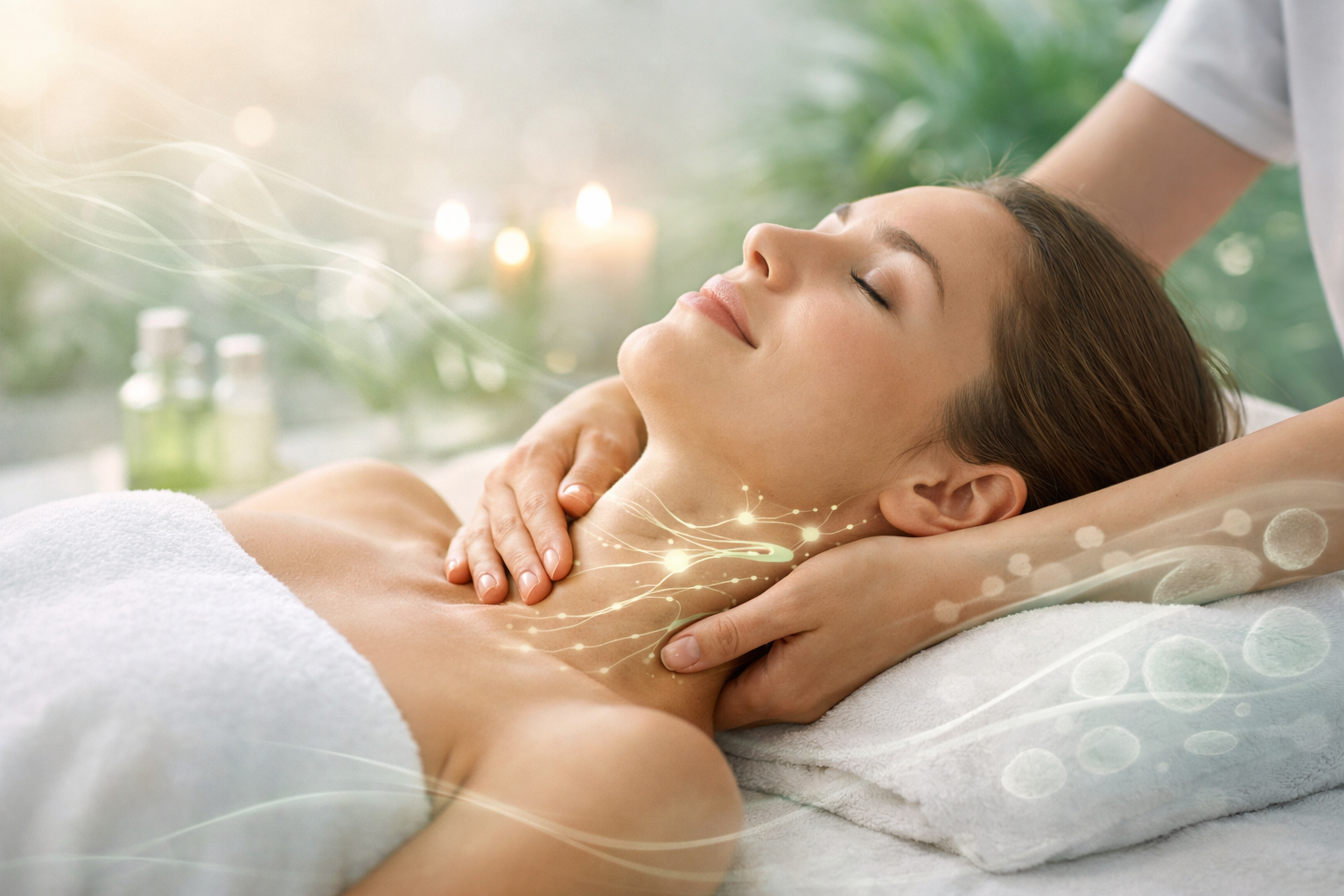
Manual lymphatic drainage is a therapeutic technic of massage aimed at stimulating the circulation of lymph in the lymphatic system. It relies on soft, slow and rhythmic movements performed on the surface of the skin following precise pathways corresponding to the lymphatic vessels. Unlike conventional massage, it does not involve deep pressure and does not target muscles, but rather the subcutaneous tissues.
Lymph is a clear fluid rich in proteins, immune cells and metabolic waste. It runs in a system parallel to the blood vessels, and it plays a key role in immunity and fluid balance. When the circulation is slowed or impaired, oedema may occur.
Manual lymphatic drainage aims to promote the return of lymph to the lymph nodes and improve its drainage. It is used in a medical setting, particularly kinesitherapy, but also in some aesthetic contexts.
Origin and context of use
Manual lymphatic drainage was developed in the 1930s by the Danish physiotherapist Emil Vodder. While observing patients suffering from chronic respiratory tract infections, he identified a link between lymphatic congestion and inflammatory symptoms. He manages to find a method to gently simulate the lymph nodes and lymphatic vessels.
The technique was subsequently structured and disseminated in Europe, particularly in Germany and France, where its integration progressively enters kinesitherapy practice. It is now recognized in the treatment of lymphoedema, particularly after an oncological surgery.
Its use has spread to other practices such as post-operative recovery, aesthetic medicine and the management of circulatory disorders. However, medical indications remain guided by specific protocols.
How does this work?
The lymphatic system does not possess a central pump like the heart. The circulation of lymph depends on the contraction of vessels, respiration and body movements. Manual lymphatic drainage acts by mechanically facilitating this flow.
The practitioner applies very light pressure, often under 40 mmHg, following the physiological direction of lymph flow. The movements include circular motions, pumping and gentle skin stretching. Treatment usually starts in areas near the lymph nodes to “clear” drainage pathways before treating oedematous areas.
This stimulation increases the lymphangion activity, the contractile units of lymphatic vessels, and promotes the opening of the lymphatic capillaries. It improves the resorption of interstitial fluids and the transport of the macromolecules.
Manual lymphatic drainage may also modulate the autonomic nervous system, resulting in a relaxing effect. However, its effectiveness depends on the underlying cause of the oedema and the regularity of treatment.
When is it used?
Manual lymphatic drainage is mainly used in the treatment of lymphoedema, whether they are primary (genetic) or secondary, particularly after a breast cancer with lymph node dissection.
It is also used after some surgical procedures to reduce post-operative oedema and support healing. In phlebology, it may be considered in cases of chronic venous insufficiency or heavy legs.
In non-medical contexts, it may be used to improve skin appearance or reduce temporary fluid retention. These uses do not always rely on approved clinical indications.
Some conditions constitute contraindications, such as acute infections, thrombosis or some forms of heart failure.
Benefits and objectives
Manual lymphatic drainage aims measurable physiological effects on the circulation of fluids and the comfort of the patient:
✓ Reduction of the size of oedema, particularly for chronic lymphoedema
✓ Improved clearance of metabolic waste
✓ Reduced sensation of heaviness and tissue tension
✓ Support for post-surgical healing
✓ Relaxing effect via parasympathetic activation
Objectives vary depending on the context. In rehabilitation, it is often part of a global comprehensive management plan including compression and exercises. In aesthetic practice, the effects are more superficial and temporary.
Risks, limitations or controversies
Manual lymphatic drainage is globally well supported when realized by a trained professional. However, its effectiveness is limited to certain situations, particularly in the cases of oedema of renal or cardiac origin.
It doesn’t replace underlying medical treatments and does not “detoxify” the body in a strict biological sense, despite common claims.
Strict contraindications include acute infections, untreated active cancer, deep vein thrombosis. Inappropriate use may worsen the condition of the patient.
Aesthetic benefits are often temporary and variable, which contributes to criticism of its use outside medical indications.
Research and innovations
Current research focuses on optimising protocols of drainage and combining them with other techniques such as pneumatic compression or multilayer bandaging.
Imaging studies help to better visualise lymphatic circulation and assess the actual impact of the techniques. The use of ultrasound and lymphoscintigraphy improves the diagnosis of lymphatic disorders.
Mechanical devices inspired by manual drainage are also being developed, although their effectiveness varies depending on the indication.
Training for practitioners is increasingly being standardised to ensure consistency with scientific evidence.
Frequently asked questions
Does manual lymphatic drainage promote weight loss?
No, it does not reduce fat mass. It can temporarily reduce swelling due to fluid retention, which can alter appearance, but it has no effect on adipose tissue.
Is it painful?
No, it is not. The movements are gentle and superficial. Pain during a session indicates either an incorrect technique or increased sensitivity.
How many sessions are needed?
It depends on the indication. Chronic lymphoedema requires regular, sometimes long-term management, whereas post-operative oedema may improve after a few weeks.
Can it be performed independently?
Self-drainage techniques exist, but they are less accurate. To avoid mistakes, proper training by a professional is recommended.
Are there any side effects?
Rarely. Mild fatigue or a temporary increase in urination may occur after a session.
Is it reimbursed?
Yes, it is in some medical cases and when prescribed, particularly for lymphoedema, when performed by a physiotherapist.
What is the difference from a conventional massage?
Lymphatic drainage targets lymphatic vessels using very light pressure, whereas conventional massage acts on muscles using deeper pressure.
Does it have any effect on cellulite?
It may improve appearance by reducing fluid retention, but it does not address the structural causes of cellulite.
Are there any contraindication?
Yes, there are. Acute infections, thrombosis and some cardiac conditions contraindicate this technique.
How long does a session last?
Usually between 30 and 60 minutes, depending on the area treated and the therapeutic objective.
Key points
Manual lymphatic drainage is a specific technique designed to stimulate the lymph circulation through gentle and targeted movements. Its effectiveness is recognised in the management of lymphoedema and post-operative oedema. It has effect on fluid dynamics without affecting fat tissue. Its use outside of medical context should be interpreted with caution, as effects are often temporary. The quality of the technique and adherence to appropriate indications determine outcomes.
Related Longevity Concepts
Scientific context
Field: Clinical medicine, biology, and preventive health
Biological process: Human physiology, pathology, and health-related mechanisms
Related systems: Metabolic, immune, cardiovascular, nervous, and cellular systems
Relevance to longevity: Understanding medical terminology and biological processes helps clarify how diseases, symptoms, biomarkers, and treatments influence long-term health, prevention, and healthy aging.