When orthodontists recommend a palate expander, many patients and parents feel uncertain. The device looks unusual, the idea of widening the upper jaw sounds intense, and questions naturally arise. Is it painful? Is it necessary? Does it really change facial structure?
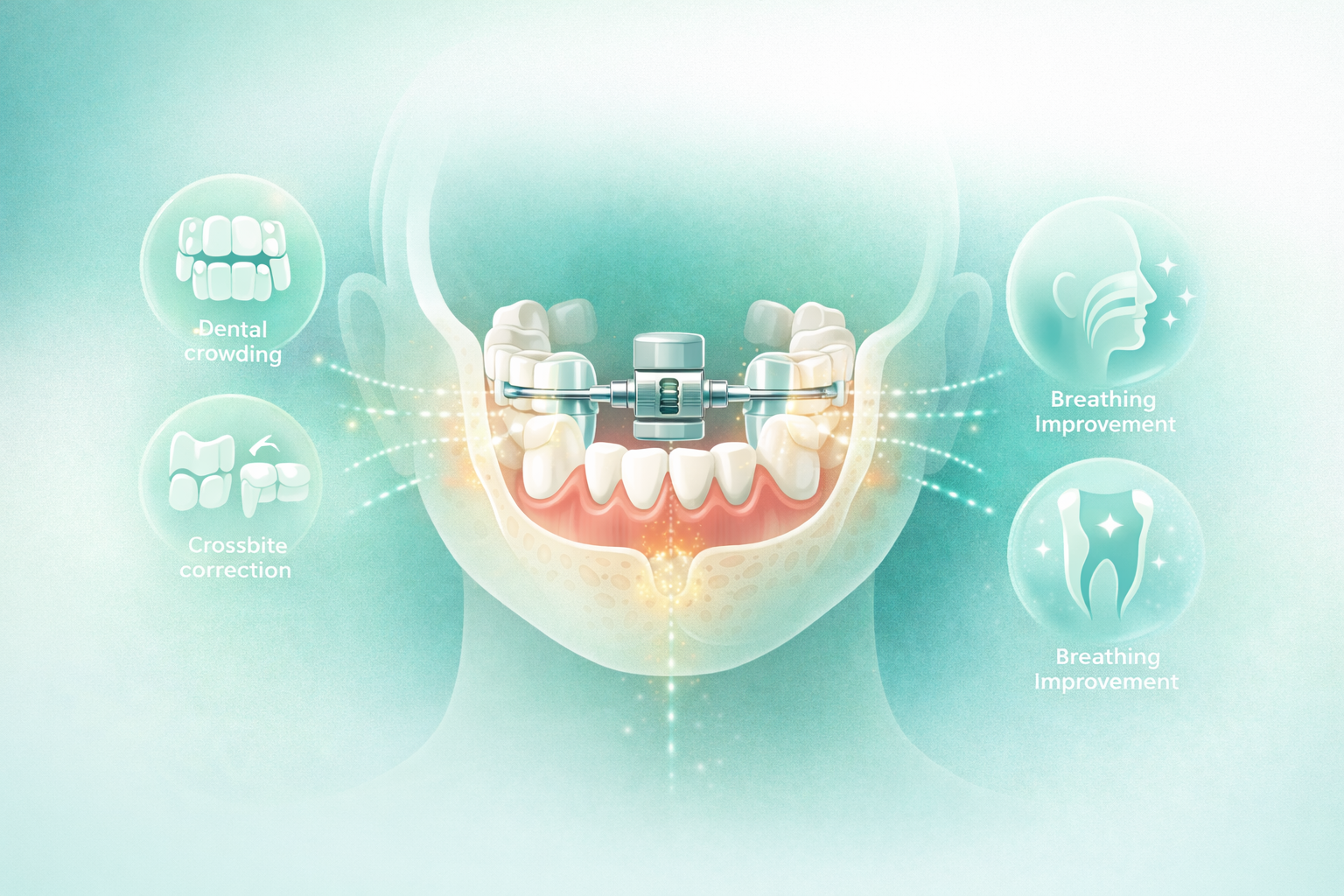
A palate expander is an orthodontic appliance designed to widen the upper jaw, medically known as the maxilla. By gently applying pressure over time, it stimulates the mid-palatal suture to gradually separate, creating more space in the mouth. This space can correct bite issues, reduce crowding, and improve breathing.
Understanding how a palate expander works helps transform anxiety into clarity. Orthodontic treatment is not just about straighter teeth. It is about function, balance, and long-term oral health.
What is a palate expander?
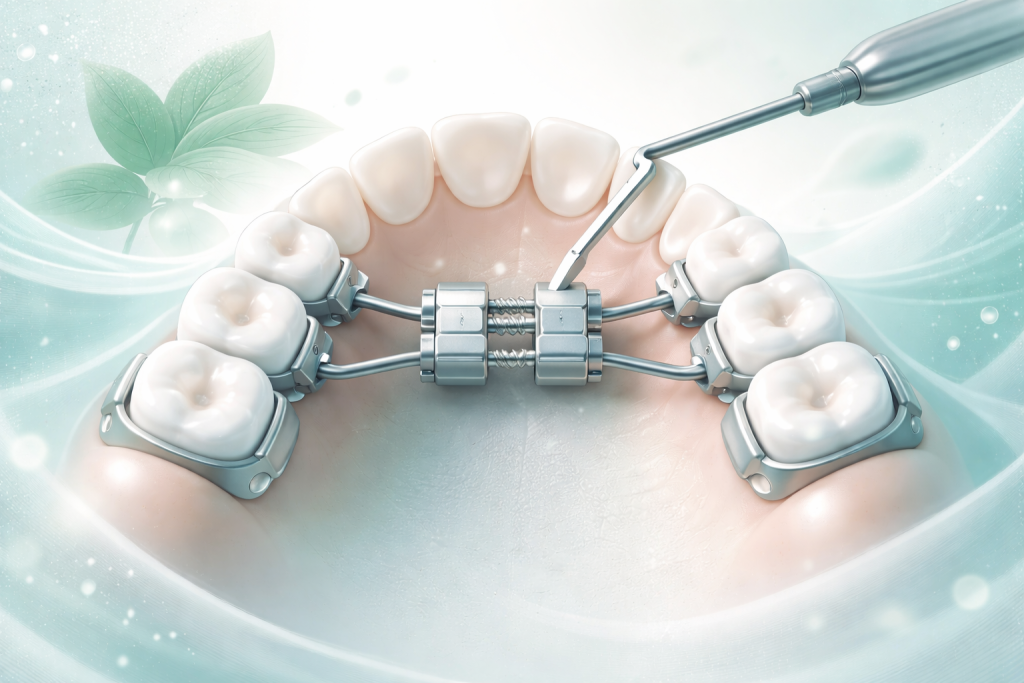
A palate expander is a fixed orthodontic device attached to the upper molars. In its center sits a small screw mechanism. When adjusted with a special key, the screw gradually widens the appliance, applying controlled pressure to the upper jaw.
This process is called maxillary expansion.
In children and adolescents, the bones of the upper jaw have not fully fused. This makes expansion more predictable and efficient. In adults, where the suture is already fused, expansion may require additional procedures or specialized techniques.
The goal is simple: create adequate space for proper alignment and functional bite.
Why would someone need a palate expander?
Orthodontists typically recommend a palate expander for several reasons.
1. Dental crowding
When the upper jaw is too narrow, teeth may overlap or erupt out of position. Expanding the palate creates room, potentially reducing the need for tooth extraction.
2. Crossbite correction
A posterior crossbite occurs when upper teeth sit inside lower teeth rather than outside. This can lead to uneven wear, jaw strain, and asymmetrical growth. Expansion repositions the upper arch to correct this imbalance.
3. Breathing improvement
A narrow palate is sometimes associated with reduced nasal airway space. By widening the upper jaw, nasal airflow may improve, supporting healthier breathing patterns, especially in growing children.
Orthodontics increasingly considers airway health as part of overall well-being.
How does a palate expander work biologically?
The upper jaw consists of two halves joined at the mid-palatal suture. In children, this suture is still flexible. Gradual mechanical pressure stimulates bone remodeling, a natural biological process where bone tissue breaks down and rebuilds in response to force.
When the expander screw is turned, it creates tension. The body responds by forming new bone in the widening gap. Over time, this stabilizes the expansion.
This is not about forcing bone apart. It is about guiding growth in a controlled and medically supervised way.
Types of palate expanders
There are several types of palate expanders depending on age and clinical need.
Rapid palate expander (RPE)
The rapid palate expander is most commonly used in children and teenagers. It requires daily adjustments for a few weeks to achieve the desired width.
Removable expanders
These are less common and typically used for minor adjustments. They must be worn consistently to be effective.
Adult palate expanders
In adults, expansion is more complex due to bone fusion. Some cases may require surgically assisted expansion or mini-implant supported devices for stability.
An orthodontic consultation determines the most appropriate option.
Is a palate expander painful?
Most patients describe pressure rather than pain. Mild discomfort or tightness is common during the first few days and after adjustments.
Some temporary effects may include:
- Increased saliva
- Slight speech changes
- Mild soreness
These symptoms usually subside as the mouth adapts. Over-the-counter pain relief may be recommended if needed.
Clear communication with the orthodontist ensures the process remains manageable and safe.
How long does treatment last?
Active expansion typically lasts a few weeks. However, the appliance often remains in place for several months to allow new bone to solidify and stabilize.
Total orthodontic treatment, including braces or aligners, may continue afterward to refine tooth alignment.
Patience during this phase supports long-term stability.
What results can you expect?
When used at the appropriate age and indication, a palate expander can:
- Create space for erupting teeth
- Correct crossbite
- Improve bite alignment
- Potentially enhance nasal breathing
- Support balanced facial development
Results vary based on age, biology, and treatment plan. Early intervention often provides the most predictable outcomes.
Final thoughts
A palate expander may look intimidating at first glance, but it is a carefully designed orthodontic tool grounded in biological principles.
By gently guiding jaw development, it supports healthier alignment, improved function, and long-term oral stability.
Understanding the process replaces fear with confidence.
Because orthodontic care is not only about appearance. It is about structure, function, and lifelong health.
Continue exploring longevity
Explore this longevity topic