Key Takeaways
- May contribute to improving skin texture by promoting gentle exfoliation
- Combines keratolytic action (salicylic acid) with hydrating support (betaine)
- Supports cellular renewal and overall skin balance
- Used topically for skin prone to imperfections
- Studies on salicylates suggest measurable improvements in desquamation and skin clarity
Betaine salicylate is an increasingly used cosmetic active ingredient in formulations designed for combination to oily or blemish-prone skin. Appreciated for its progressive exfoliating action and improved tolerance compared to pure salicylic acid, it reflects a modern approach to skincare: supporting the skin’s natural renewal mechanisms without disrupting the protective barrier.
From a longevity perspective, maintaining skin balance—the body’s first line of defense—may contribute to visible and lasting vitality. Understanding how betaine salicylate works allows for a more conscious skincare routine, one that respects tissues and adapts to the evolving needs of the skin over time.
What Is It?
Betaine salicylate is a compound formed by combining two molecules:
- Betaine, commonly derived from sugar beet, known for its hydrating and osmoprotective properties
- Salicylic acid, a beta-hydroxy acid (BHA) naturally found in willow bark
This combination creates a gentler exfoliating agent compared to isolated salicylic acid.
Biologically, salicylic acid promotes the shedding of dead skin cells at the surface, while betaine helps maintain cellular hydration and osmotic balance. This synergy supports epidermal renewal while potentially reducing irritation.
Did you know?
Beta-hydroxy acids, including salicylic acid, have been studied for decades for their ability to improve cohesion and turnover of the stratum corneum.
How Does It Work?
Primary Action
Betaine salicylate acts primarily as a mild keratolytic agent.
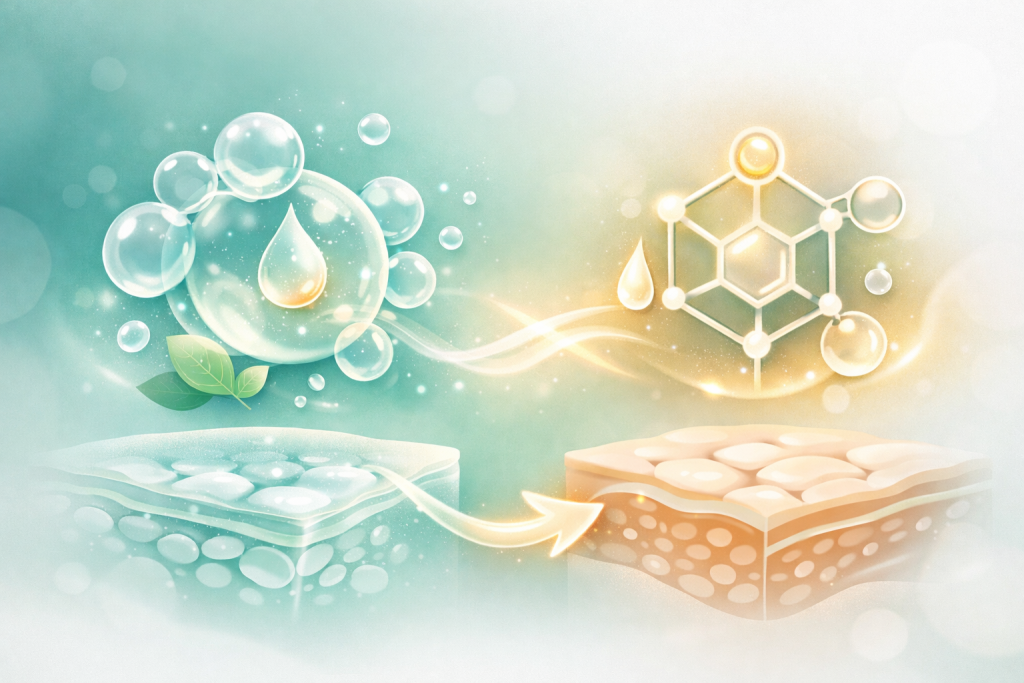
It helps loosen the bonds between dead cells in the outermost layer of the skin, facilitating their gradual removal. This process may assist in unclogging pores and improving overall skin texture.
Effects at the Tissue Level
At the epidermal level, it may:
- Promote more harmonious cellular turnover
- Support balance in sebum-prone skin
- Contribute to reducing superficial irregularities
At the same time, the presence of betaine helps preserve hydration and support the skin barrier function.
What This Means for Longevity
Balanced cellular renewal plays a role in maintaining a more uniform and resilient skin surface.
Within a sustainable health approach, gently supporting the skin’s natural mechanisms—rather than overstimulating them—may help preserve structural integrity over time.
Study Spotlight
2013 – In vitro study
Połubińska et al. – International Journal of Cosmetic Science
https://pubmed.ncbi.nlm.nih.gov/23815490/
Key finding: Agents that modulate skin renewal processes may positively influence fibroblast activity and extracellular matrix quality.
Benefits
Improved Skin Texture
By facilitating the removal of dead surface cells, betaine salicylate may contribute to smoother skin.
In practical terms, this may translate into a more even complexion and visibly refined texture after several weeks of consistent use.
Support for Blemish-Prone Skin
Its action on pores and excess sebum is particularly relevant in formulations targeting combination to oily skin.
Incorporated into a lotion or serum, it may complement a routine aimed at maintaining more stable skin balance.
Relative Respect for the Skin Barrier
Thanks to the presence of betaine, this compound is generally better tolerated than equivalent concentrations of pure salicylic acid.
This may allow for more progressive use, especially for individuals seeking gentle exfoliation while maintaining barrier comfort.
Natural Sources
- Sugar beet (source of betaine)
- Willow bark (natural source of salicylates)
- Certain plants rich in salicylate derivatives
Dosage, Forms & Bioavailability
Betaine salicylate is used exclusively in topical applications.
Concentrations in cosmetic products typically range from 1% to 4%.
It is commonly found in:
- Exfoliating toners
- Serums
- Targeted cleansers
It may be combined with:
- Niacinamide (to support sebum balance)
- Hyaluronic acid (for hydration)
- Panthenol (for soothing support)
Gradual use—starting 2 to 4 times per week—is often recommended to promote skin tolerance.
Safety & Precautions
Betaine salicylate generally demonstrates a favorable tolerance profile in cosmetic use.
However:
- Mild tingling may occur
- Very sensitive skin may react
- Sun exposure requires appropriate protection
It is not recommended for individuals with known salicylate allergies.
Professional dermatological guidance may be appropriate in cases of specific skin conditions.
How to Integrate It into a Longevity Routine
When to Use
In the evening, on clean and dry skin, to align with the skin’s natural nighttime renewal cycle.
What to Pair It With
A hydrating and barrier-supporting moisturizer.
Daily sun protection is recommended.
Simple Routine Example
- Gentle cleanser
- Betaine salicylate lotion (2–3 times per week)
- Hydrating serum
- Barrier-support cream
Who May Benefit Most
- Combination to oily skin
- Skin prone to visible irregularities
- Individuals seeking gradual, well-tolerated exfoliation
A Gentle Approach to Supporting Skin Vitality Over Time?
Betaine salicylate reflects an evolving vision of exfoliation—more measured, more respectful of tissues, and oriented toward balance.
By supporting natural skin renewal without excess, it may contribute to maintaining smoother texture and visible clarity over time.
In a conscious longevity approach, consistency and gentleness often make the difference. Supporting biological mechanisms without overstimulation allows the skin to preserve its integrity and vitality.
A discreet yet coherent ingredient within a sustainable skincare philosophy.
Sources
Połubińska, A., et al. (2013). N-acetylglucosamine modulates function of the skin fibroblasts. International Journal of Cosmetic Science, 35(5), 472–476.
https://pubmed.ncbi.nlm.nih.gov/23815490/
Kligman, A. M., & Mills, O. H. (1972). The follicular reservoir of salicylic acid. Journal of Investigative Dermatology.
Draelos, Z. D. (2018). The role of exfoliation in healthy skin. Dermatologic Therapy.
Continue exploring longevity
Explore this longevity topic