Introduction
Axbety is a term that has begun to surface in digital conversations around mental health, stress, and modern life. While not yet a formal clinical definition, axbety captures something very real: a persistent state of low-grade tension, mental overload, and emotional restlessness that many adults experience daily.
Unlike acute stress, axbety does not always announce itself loudly. It lives in constant notifications, unprocessed information, tight schedules, and the feeling of never fully switching off. From a longevity perspective, this matters deeply. Chronic mental stress is one of the most underestimated accelerators of biological aging, affecting inflammation, sleep quality, metabolic health, and even cellular repair.
Understanding axbety is not about labeling ourselves. It is about recognizing a modern physiological reality and learning how to respond with awareness, science, and gentleness. In this article, we explore how axbety interacts with the body, why it influences healthspan, and what you can do to restore balance in a sustainable way.

Axbety as a chronic nervous system imbalance
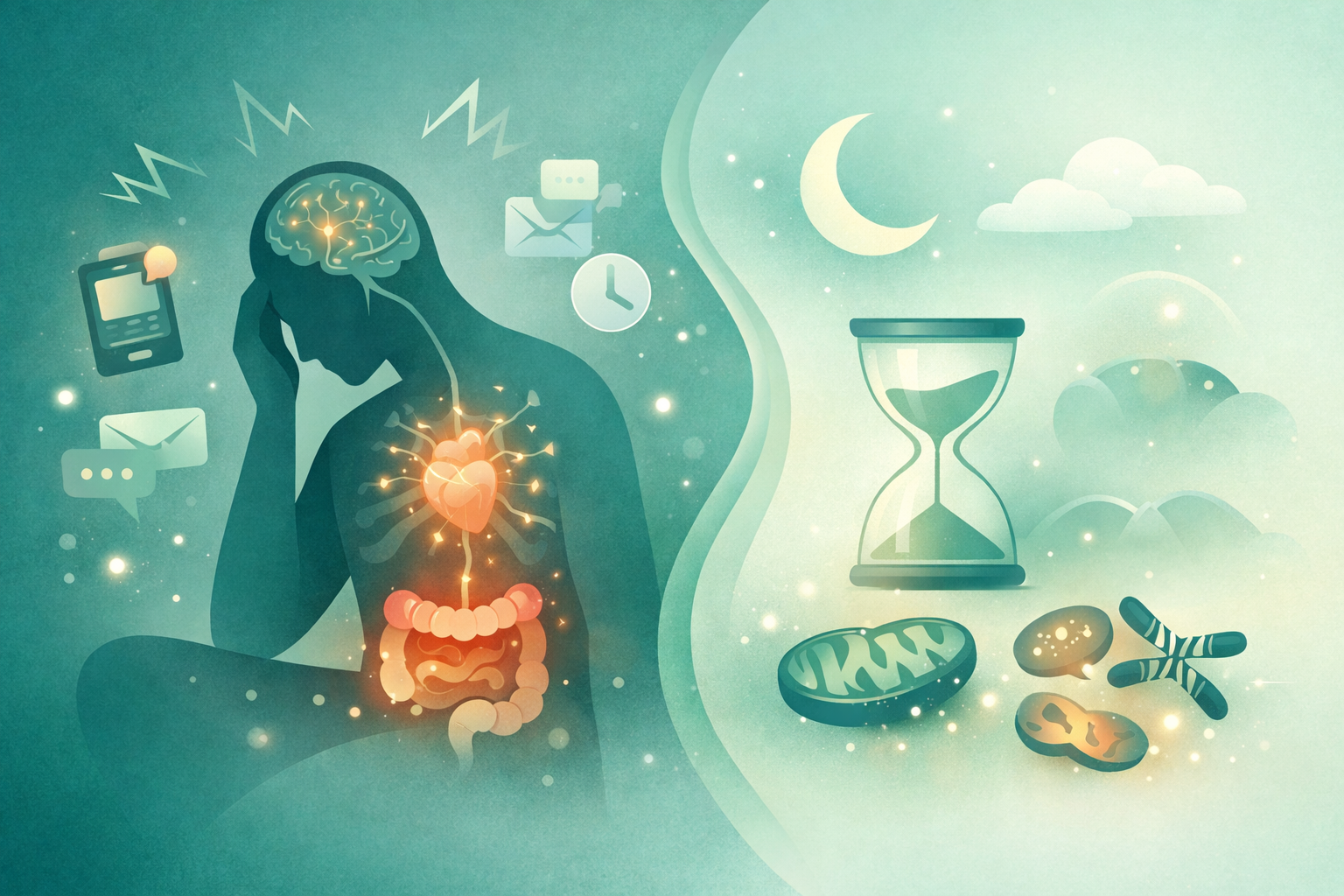
At its core, axbety reflects prolonged activation of the stress response. The nervous system remains biased toward “on” mode, driven by cortisol, adrenaline, and constant cognitive stimulation. Over time, this state reduces vagal tone, disrupts circadian rhythms, and limits the body’s capacity to recover.
From a biological perspective, chronic stress signaling increases systemic inflammation and oxidative stress. Mitochondria, the energy centers of our cells, become less efficient. Sleep becomes lighter. Digestion slows. The immune system loses precision. None of this happens overnight, but the accumulation matters.
What you can apply starts with regulation, not suppression. Gentle practices that activate the parasympathetic nervous system are foundational: slow breathing, extended exhales, walking in nature, and reducing evening screen exposure. These are not lifestyle clichés. They are biological signals of safety that help the body shift out of axbety-driven stress patterns.
Longevity begins when the nervous system feels safe.
The link between axbety and biological aging
Emerging research in psychoneuroimmunology shows clear links between chronic stress and markers of biological aging. Elevated cortisol over time is associated with telomere shortening, increased inflammatory markers, and impaired glucose regulation. Axbety, as a persistent mental state, fits directly into this framework.
When the mind is constantly anticipating, comparing, or reacting, the body behaves as if it is under threat. Repair mechanisms become secondary. This is why stress management is not a “soft” wellness topic, but a core pillar of healthspan optimization.
Practically, addressing axbety means creating micro-moments of recovery throughout the day. Short pauses between tasks, exposure to daylight in the morning, and consistent meal timing help resynchronize internal clocks. Wearable data can also be useful, not to chase perfection, but to notice patterns between stress, sleep, and recovery.
Axbety in the context of conscious longevity
At Sogevity, we speak of conscious longevity: the art of extending life quality by aligning biology, behavior, and awareness. Axbety challenges this alignment, but it also invites a deeper recalibration.
Rather than fighting stress, conscious longevity encourages listening. What drains your energy? What restores it? Which inputs are necessary, and which are simply noise? Reducing axbety is often less about doing more and more about doing less, with intention.
Simple rituals can become anchors. A calm morning routine. A technology boundary in the evening. A weekly moment of reflection without performance goals. These practices may seem subtle, but over years, they shape nervous system resilience and biological aging trajectories.
Conclusion
Axbety is a modern signal, not a personal failure. It reflects a world that moves faster than human biology was designed to handle. The good news is that the body remains remarkably responsive to safety, rhythm, and presence.
By understanding axbety through the lens of science and longevity, we move away from guilt and toward agency. Small, consistent adjustments can restore balance, protect cellular health, and extend not just lifespan, but healthspan.
Longevity is not about control. It is about coherence.
Sogevity. The longevity experience
Live longer. Live better.
Continue exploring longevity
Explore this longevity topic