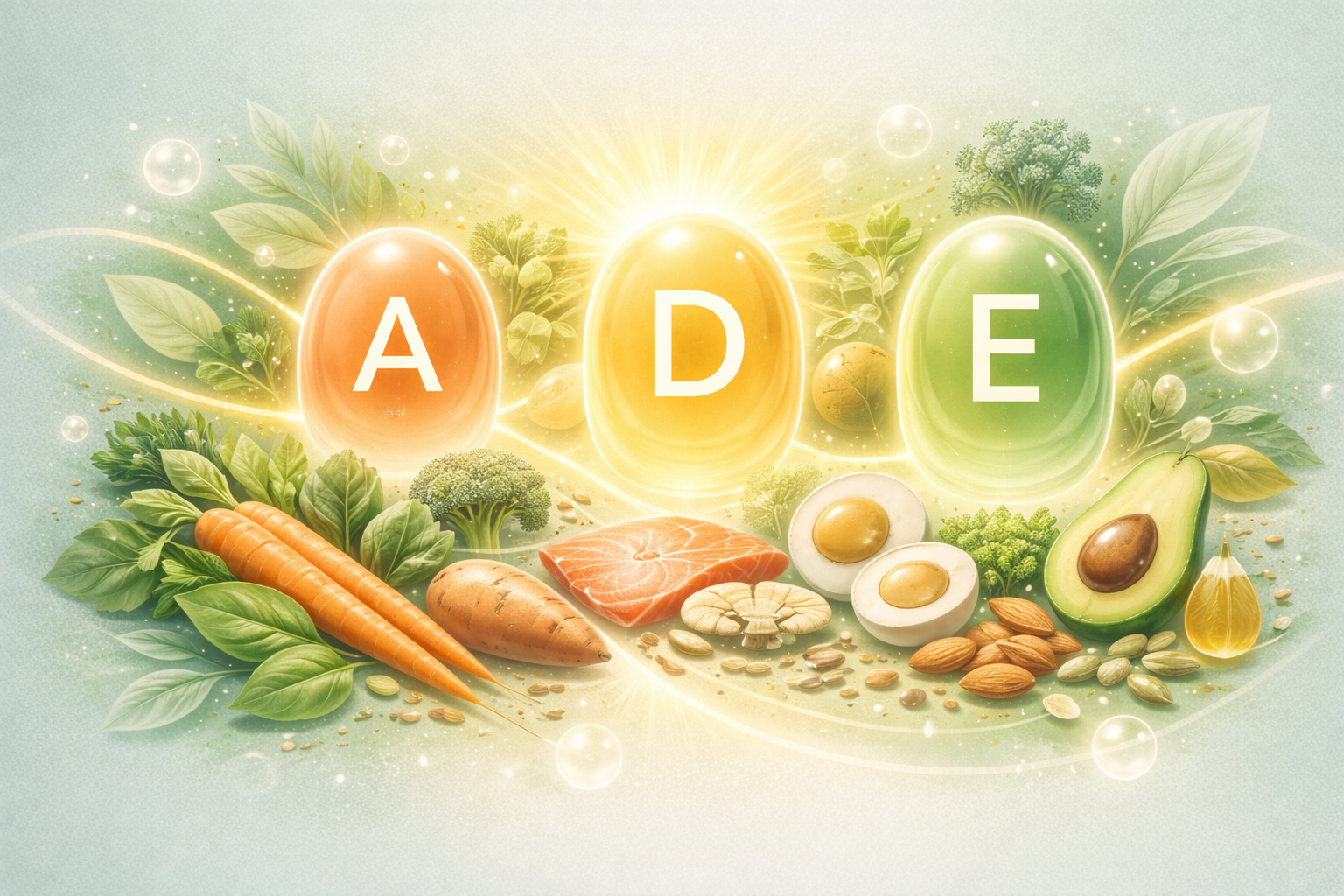
When we talk about longevity, we often think of sleep, movement, stress management or advanced health technologies. Yet behind these visible habits lies a quieter foundation: micronutrients. Among them, vitamins A, D and E play a central role in how our cells function, repair and protect themselves over time.
These three vitamins belong to the family of fat-soluble vitamins. They are stored in the body and act deeply within tissues, influencing immunity, inflammation, mitochondrial function and cellular integrity. Their impact is subtle but profound. Deficiencies may not always be obvious at first, yet over years they can influence biological aging.
Understanding how vitamins A, D and E work allows us to move from reactive health to conscious prevention. Not in a supplement-driven way, but as part of a broader strategy for extending healthspan, the years lived in good vitality.

Vitamin A: cellular renewal and immune intelligence
Vitamin A is often associated with vision, but its role goes far beyond eyesight. In the body, it supports cellular differentiation, meaning it helps cells develop into their proper functional form. This is essential for skin integrity, mucosal barriers and immune defense.
At a cellular level, vitamin A influences gene expression. It interacts with nuclear receptors that regulate growth and repair. This makes it a key player in maintaining healthy tissues and supporting the body’s first line of defense against pathogens.
For longevity, this matters because strong epithelial barriers and balanced immune responses reduce chronic low-grade inflammation, one of the hallmarks of aging.
What you can apply:
Prioritize natural sources such as carrots, sweet potatoes, spinach, kale and liver in moderate amounts. Beta-carotene from colorful vegetables is converted into vitamin A according to your body’s needs, making it a safe and intelligent source. Avoid high-dose supplementation unless prescribed, as excess vitamin A can be harmful.
Small daily choices build long-term resilience.
Vitamin D: hormonal regulator of longevity
Vitamin D behaves more like a hormone than a simple vitamin. It is synthesized in the skin under sunlight exposure and then activated in the liver and kidneys. Once active, it regulates hundreds of genes involved in immunity, bone metabolism, muscle function and inflammation control.
Low vitamin D levels have been associated in numerous studies with increased risk of osteoporosis, weakened immune response, metabolic disorders and even accelerated biological aging. One reason is its influence on inflammatory pathways and mitochondrial efficiency.
Healthy mitochondria are central to energy production and cellular longevity. When vitamin D levels are adequate, inflammatory signaling tends to be better regulated, supporting long-term metabolic balance.
What you can apply:
Aim for regular, moderate sun exposure when possible, ideally 10 to 20 minutes on arms and face depending on skin type and latitude. During winter or in low-sun regions, testing your vitamin D level through a blood test can guide personalized supplementation. Combine this with dietary sources such as fatty fish, eggs and fortified foods.
Conscious longevity begins with measurable awareness.
Vitamin E: guardian against oxidative stress
Vitamin E is a powerful antioxidant that protects cell membranes from oxidative damage. Every day, our cells produce energy through mitochondrial activity. This process naturally generates reactive oxygen species. In excess, these molecules contribute to oxidative stress, damaging lipids, proteins and DNA.
Vitamin E, particularly alpha-tocopherol, helps neutralize these reactive species within cell membranes. By preserving membrane integrity, it supports cellular communication and resilience.
Oxidative stress is closely linked to aging processes, including telomere shortening and chronic inflammation. While antioxidants are not magic shields, maintaining adequate vitamin E intake contributes to a balanced redox environment.
What you can apply:
Include vitamin E-rich foods such as almonds, sunflower seeds, hazelnuts, avocado and high-quality plant oils like olive oil. Focus on whole foods rather than high-dose isolated supplements, as synergy between nutrients enhances effectiveness.
Protection is not about excess. It is about balance.
The synergy of fat-soluble vitamins
Vitamins A, D and E do not work in isolation. As fat-soluble nutrients, they depend on healthy lipid metabolism for absorption. They also interact with one another and with other micronutrients such as vitamin K and zinc.
For example, vitamin D and vitamin A share common pathways in gene regulation. Balance between them is essential. Excessive supplementation of one may disturb the function of another. This is why a food-first approach, combined with targeted testing when needed, aligns best with a long-term longevity strategy.
From a Sogevity perspective, this reflects a broader truth. Health is rarely about a single molecule. It is about networks, feedback loops and intelligent adaptation.
Conclusion
Vitamin A supports cellular renewal and immune barriers. Vitamin D regulates inflammation, bone health and mitochondrial vitality. Vitamin E protects membranes from oxidative stress. Together, they form part of the invisible architecture of healthy aging.
They are not miracle solutions. They are foundational allies.
By integrating nutrient-dense foods, mindful sun exposure and personalized monitoring, you strengthen the biological terrain that determines how you age. This is the essence of conscious longevity: informed, calm, science-based choices that compound over time.
Sogevity. The longevity experience
Live longer. live better.