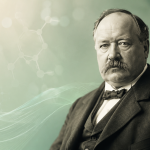
A controversial figure of the American counterculture, Timothy Leary was a psychologist and writer known for his role in popularizing psychedelic substances in the 1960s. His work, at the intersection of psychology and consciousness exploration, questioned the boundaries between mental health and perception. Through his research and public stance, he indirectly influenced contemporary discussions on cognitive longevity and the optimization of the human mind.
It is difficult to understand Timothy Leary without placing him within the intellectual and social upheaval of his time. A Harvard professor, brilliant and provocative, he pursued a radical quest to understand the human mind. Where traditional psychology sought to define limits, Leary aimed to explore beyond them. He embodied a rupture, rejecting imposed constraints on consciousness. His famous injunction, “Turn on, tune in, drop out”, became both a philosophical and cultural statement, reflecting a desire to expand cognitive horizons, even at the cost of defying scientific and social norms.
The journey
Timothy Leary’s career began within a conventional academic framework. Trained in psychology, he taught at Harvard, where he conducted research on personality and behavior. In the early 1960s, his trajectory shifted dramatically. Fascinated by the effects of LSD and psilocybin, he launched the Harvard Psilocybin Project, exploring how these substances altered human consciousness. His work quickly sparked both fascination and controversy. Accused of ethical misconduct, he was dismissed from the university. This marked his transition from academic to public figure of the counterculture. From that point on, Leary gave lectures, published extensively, and became a media presence. He emerged as a symbol of intellectual freedom, but also as a target for authorities. His legal troubles and imprisonment further reinforced his image as a dissident, amplifying the reach of his message.
His vision of longevity
Timothy Leary’s vision of longevity did not align with a traditional biological framework. For him, extending life was not limited to preserving the body, but involved transforming consciousness itself. He believed that human evolution depended on the expansion of mental capacities. In this context, psychedelics were seen as tools for exploration, capable of reshaping perception and opening new cognitive states. “The nervous system can be consciously reprogrammed,” he stated, suggesting that the human mind possesses a largely untapped plasticity. This idea, marginal in his time, resonates today with research on neuroplasticity. Leary challenged normative approaches to mental health, which he viewed as restrictive. He advocated for a model in which individuals actively shape their own cognitive evolution. In his later writings, he extended this thinking to technology, anticipating a convergence between humans and digital systems. “Humans are becoming the sex organs of the machine world,” he wrote, outlining a continuity between biological consciousness and artificial systems. In this sense, his concept of longevity becomes informational: survival lies in the transmission and transformation of consciousness beyond the body.
Influence and impact
Timothy Leary’s influence remains deeply ambivalent. On one hand, he contributed to opening research areas that are now being revisited, particularly the therapeutic use of psychedelics in treating depression and post-traumatic stress. On the other, his methods and rhetoric drew strong criticism, with some arguing that he undermined the scientific credibility of such research. His legacy persists in contemporary debates on mental health, cognitive freedom, and the limits of experimentation. He played a role in shifting perspectives, introducing the idea that consciousness itself can be a field of innovation. This influence is visible both in scientific research and in cultural movements questioning traditional models of health.
Expanding consciousness as a frontier of longevity
Timothy Leary remains a singular figure, difficult to categorize, oscillating between researcher, provocateur, and visionary. His approach to longevity, centered on the expansion of consciousness rather than purely biological preservation, continues to inform contemporary thought. At a time when cognitive science and technology are converging, his ideas find an unexpected resonance. The question remains whether this pursuit of mental expansion can be sustainably integrated into a structured scientific framework, or whether it will remain a shifting frontier between exploration and controversy.
Continue exploring longevity
Explore this longevity topic