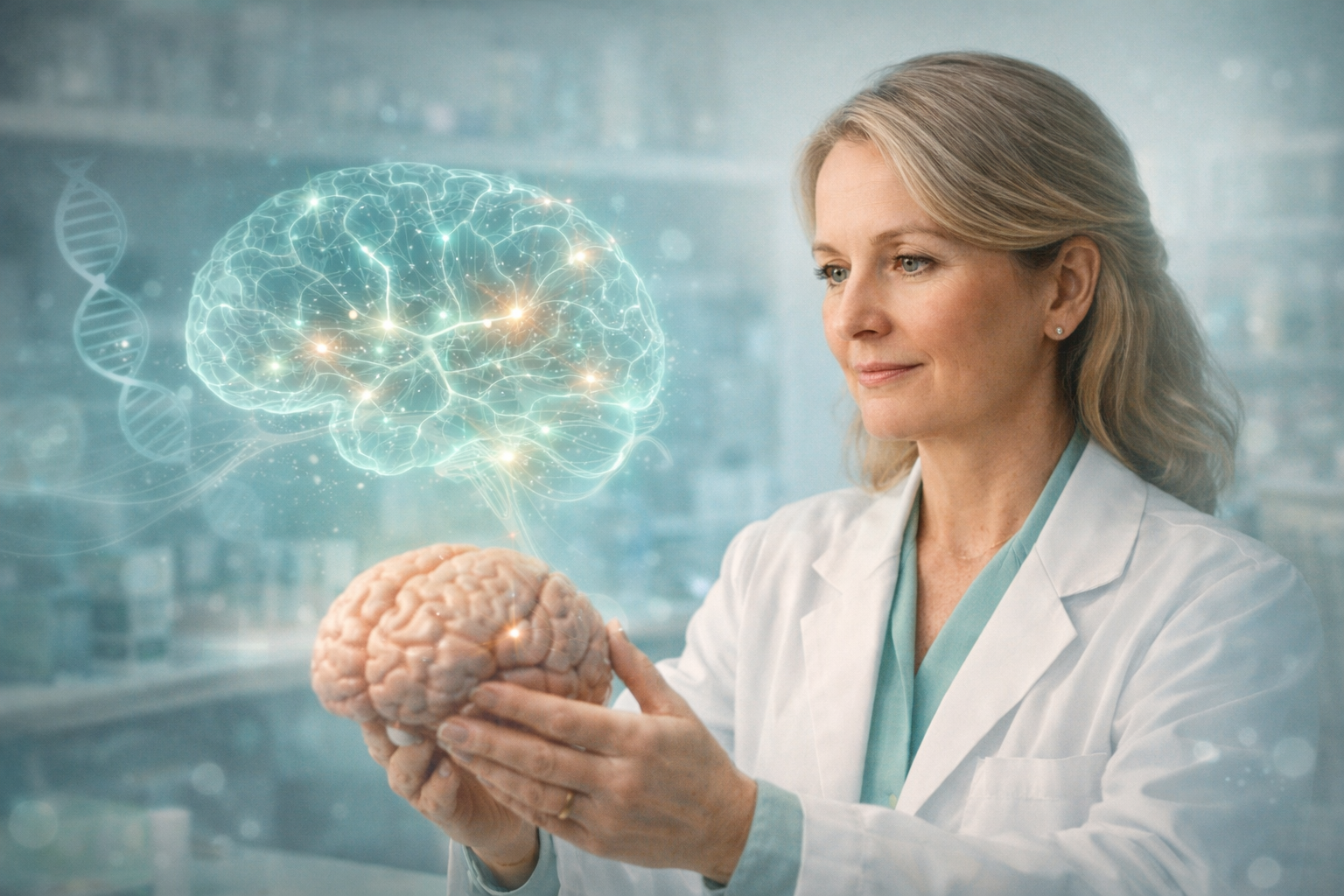
Laura Elin Pigott is a British neuroscientist and lecturer specializing in neuroscience and neuro-rehabilitation, recognized for her work on the human brain and neuroplasticity. She is also a course lead at London South Bank University and among the youngest academics in the UK to hold a neuroscience teaching position. Her work is important for longevity because it explores how the brain adapts, responds to life experiences, and can be protected against age or stress-related decline.
Laura Elin Pigott represents a new generation of neuroscience researchers whose work bridges cognition, mental health, and applied neuroscience. Born in 1998, she became a lecturer and researcher at a very young age, studying how the human brain develops, adapts, and reconnects when facing modern life challenges. Her energy is evident in how she connects complex neurological concepts to practical well-being issues, such as the effects of social interactions and stress reduction on brain chemistry. Her public talks, particularly on the calming influence of human and animal contact on oxytocin, the “love hormone”, have helped make brain science accessible to a broad audience. She advocates that understanding the neurobiological mechanisms underlying plasticity is essential to optimizing cognitive health throughout life.
Career journey
Laura Elin Pigott grew up between Norway and Greece before beginning university studies at 17, often combining multiple courses simultaneously. Fascinated by the workings of the human brain, she earned a degree in physiotherapy and a master’s in clinical neuroscience, laying the foundation for her expertise in neurophysiology and neurology. After completing her studies, she joined London South Bank University, becoming one of the youngest neuroscience lecturers in the UK at just 22, a milestone that drew attention from both academic circles and specialized media. She also conducts research at the Queen Square Institute of Neurology at University College London, focusing on topics ranging from glioma progression to neuroplasticity and post-injury recovery. Her trajectory illustrates rapid advancement and an ability to link fundamental research with clinical and social applications, positioning her as an emerging voice in brain science and cognitive health.
Her vision of longevity
For Laura Elin Pigott, longevity is not merely about extending lifespan but about maintaining cognitive health and the brain’s ability to stay adaptable and functional over time. She emphasizes neuroplasticity, the phenomenon by which the brain can reorganize itself; learning, repairing, and strengthening circuits in response to experience; even in adulthood. This perspective challenges the traditional notion that the brain becomes fixed after childhood. Pigott argues that creating environments that stimulate plasticity, through lifelong learning, meaningful social interactions, or engaging activities, can help prevent age-related cognitive decline.
She also highlights the importance of interdisciplinary research in understanding brain longevity, combining neuroscience with behavioral and social perspectives. For instance, in her work on oxytocin, she explains that “positive social interactions, such as simply petting an animal, can trigger calming biological responses in the brain,” which may help reduce stress and its neurological impact. Pigott challenges the idea that cognitive aging is irreversible. Her work demonstrates that behaviorally-informed interventions; stimulating activities, stress reduction, social engagement; are practical levers to extend cognitive health. She envisions a future where longevity includes not only biological survival but also a vibrant and active cognitive life.
Influence and impact
Laura Elin Pigott’s influence extends beyond academia. By publishing accessible articles on platforms such as The Conversation and speaking at international conferences, she contributes to democratizing brain science. Her research on the role of oxytocin in human and animal interactions has been cited in various media, raising awareness of the links between well-being, mental health, and neurobiology.
Her impact is also evident in educating future healthcare professionals and researchers, inspiring young scientists—particularly women in STEM. By integrating modern approaches to neuroplasticity and cognitive health, she stimulates a vital debate: how can science guide lifestyle practices that extend not just lifespan but cognitive quality of life?
Redefining cognitive longevity
Laura Elin Pigott is part of a movement of researchers redefining our understanding of the human brain and its capacity to adapt. In a world with rapidly aging populations, her work on neuroplasticity, social interactions, and stress-related brain responses offers an essential perspective on cognitive longevity. As science progresses, it opens avenues for keeping our brains flexible, engaged, and resilient throughout life, ultimately questioning what it truly means to age healthily.