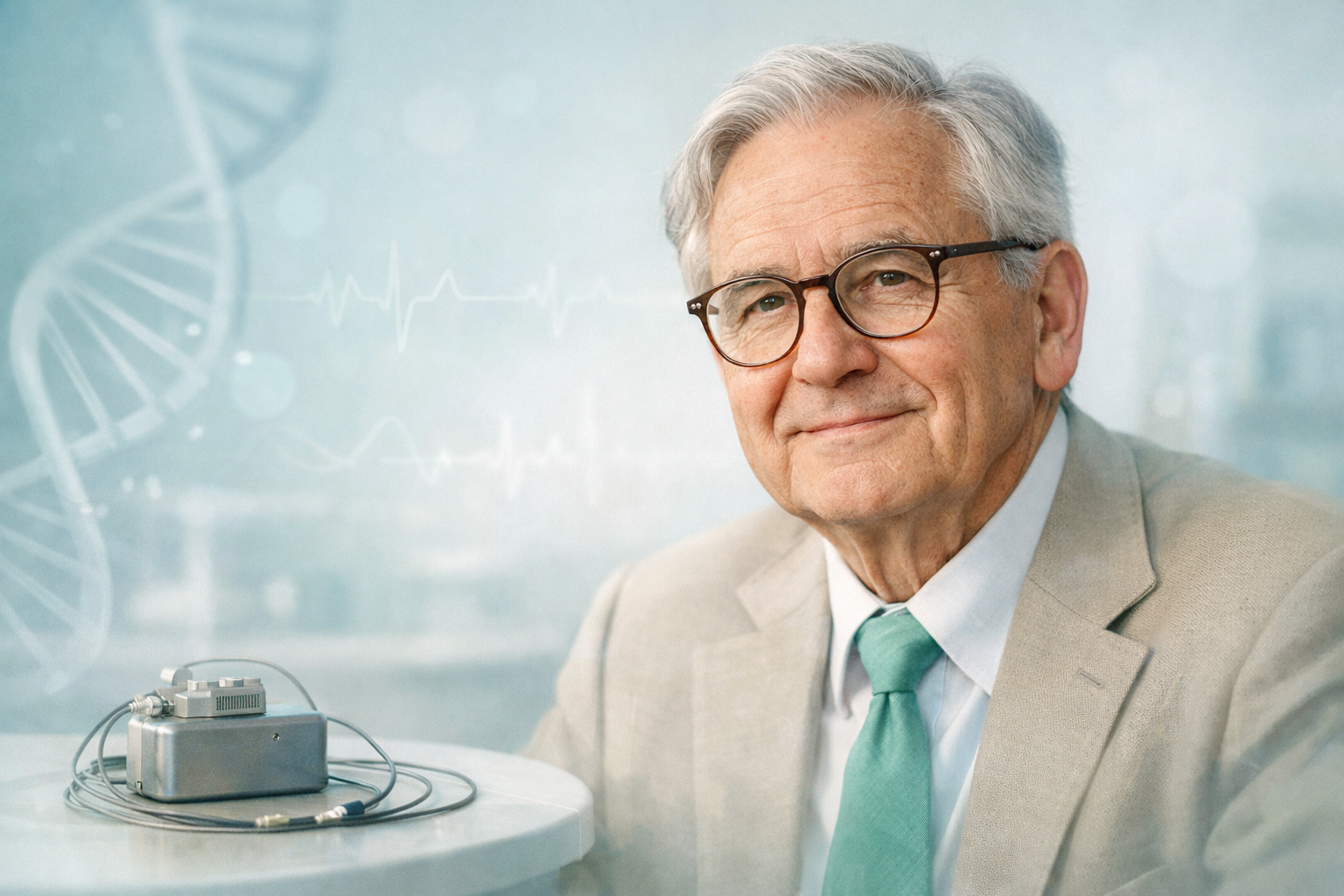
Born in 1919 in Winnipeg, John Alexander Hopps was an electrical engineer and medical researcher who helped create the first external artificial pacemaker in 1951. This device paved the way for implantable cardiac pacemakers and revolutionized the treatment of cardiac arrhythmias. His contributions significantly shaped the field of bioengineering, bridging electrical engineering and human health.
John Hopps was an engineer at the National Research Council of Canada who had not initially planned to work in medicine, but whose inventive mind led to a life-changing innovation. Collaborating with clinicians studying hypothermia for cardiac operations, he observed that electrical impulses could restart a stopped heart. This serendipitous discovery led him to design the first external artificial pacemaker. Far from being a mere technical invention, his work marked a turning point between engineering and medicine, giving birth to modern bioengineering and enhancing the longevity of patients with cardiac conditions.
Career Path
John Alexander Hopps was born in Winnipeg, Manitoba, on May 21, 1919, and studied electrical engineering at the University of Manitoba, graduating in 1941. He quickly joined the National Research Council of Canada (NRC) in 1942, a leading multidisciplinary research institution. Early in his career at the NRC, he worked on diverse projects ranging from radio technology to radio-frequency pasteurization, before being assigned to the Banting Institute at the University of Toronto to assist doctors studying hypothermia and heart function.
In collaboration with Drs. Wilfred G. Bigelow and John C. Callaghan, Hopps developed in 1951 the first external cardiac pacemaker, initially designed to restore heart rhythm during surgical procedures. The bulky device used vacuum tubes and delivered regular impulses through an electrode inserted via a vein. Although far from today’s implantable pacemakers, it demonstrated for the first time that a heart could be regulated electrically.
After this breakthrough, Hopps returned to the NRC, where he led the medical engineering section and developed additional medical devices, including monitoring systems and technologies for people with disabilities. In 1965, he founded the Canadian Medical and Biological Engineering Society, formalizing his vision of a durable bridge between engineering and medicine.
His Vision of Longevity
For Hopps, longevity was not merely about mechanically extending life; it was about using engineering to restore organ function and improve quality of life. His pioneering work on the pacemaker illustrates this approach: by applying electrical technology to a biological problem, he enabled failing hearts to beat again and allowed patients to live years, even decades, longer. Reflecting on later developments, Hopps remarked, “I was constantly amazed at how technology had refined the device I helped create”, showing his respect for ongoing innovation in medical technology.
Hopps challenged traditional disciplinary boundaries. He believed collaboration between engineers and clinicians was essential to tackle complex health challenges—a principle central to bioengineering today. His founding of the Canadian Medical and Biological Engineering Society aimed to legitimize and structure the emerging field, promoting engineering’s role in advancing patient care.
In his vision of the future, Hopps anticipated even more integrated technologies, with devices becoming smaller, more reliable, and more patient-centered. Though his work began when electronics were rudimentary by today’s standards, he foresaw that such innovations could directly contribute to human longevity when applied wisely.
Influence and Impact
Hopps’s impact extends far beyond his initial invention. As the founder of professional societies and president of international bioengineering federations, he structured the discipline in Canada and abroad. His external pacemaker served as a conceptual model for implantable devices that transformed 20th-century cardiology and, by extension, patient longevity.
Peers regard him as a pioneer who catalyzed the rise of bioengineering as a recognized profession. His influence continues today through academic programs, professional societies, and clinical innovations. The pacemaker remains a metaphor for technology’s impact on human life: a simple idea applied rigorously can save millions of lives.
Shaping the Future of Longevity
John Alexander Hopps embodied the convergence of engineering and medicine, demonstrating that technological solutions can restore vital biological functions and, in doing so, extend both lifespan and quality of life. His legacy is expressed not only in the devices that keep hearts beating but also in the professional infrastructure he helped build for bioengineering. As medical technologies continue to evolve, his work poses a question that remains relevant: how far can innovation push the boundaries of human longevity?