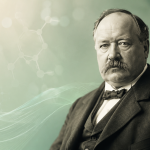
John A. Hopps was a Canadian electrical engineer known for his role in developing one of the first external cardiac pacemakers in the early 1950s. Working at the National Research Council of Canada, he explored how electrical stimulation could control heart rhythm. His research helped open the path toward the modern pacemaker, a technology that would transform cardiology and extend the lives of millions of patients suffering from cardiac rhythm disorders.
The story of modern longevity is not limited to molecules or biotechnology. It is also written in engineering laboratories where devices capable of sustaining vital functions are developed. John A. Hopps belongs to a generation of inventors for whom electricity became a language capable of interacting with the human body. In the early 1950s, while cardiology was still searching for solutions to severe rhythm disorders, he participated in an unexpected research program. The original goal was not to create a pacemaker but to study the effects of electrical fields on the heart during hypothermia experiments. Surgeons were investigating how cooling the body could support complex cardiac procedures. These studies revealed an important observation. Electrical stimulation could restart a stopped heart. This discovery led to a radical idea for the time. If electricity could restart the heart, perhaps it could also control its rhythm. That insight opened a new chapter in medicine, where engineering and physiology began to work together in a lasting way.
The journey
John Alexander Hopps was born in Canada in 1919. Trained as an electrical engineer, he specialized in radio technology and electronic systems during a period when these fields were expanding rapidly. His career took a decisive turn when he joined the National Research Council of Canada in Ottawa, one of the country’s leading scientific institutions. The organization played a central role in advancing applied science and emerging technologies.
In the early 1950s Hopps became involved in a research project focused on medical hypothermia. At the time surgeons were experimenting with lowering body temperature to slow metabolism during certain cardiac procedures. However, cooling the body often caused the heart to stop beating. Researchers therefore needed a way to restore or maintain cardiac activity.
Within this context Hopps worked on electronic devices capable of delivering controlled electrical impulses to the heart. He designed a system that could stimulate the cardiac muscle through electrodes connected to an electrical generator. The device was large and external but it proved that rhythmic contractions of the heart could be triggered artificially.
This early pacemaker demonstrated a crucial concept. The heartbeat could be regulated by electrical stimulation when the natural rhythm failed. Although the first models were bulky and not yet suitable for implantation, the principle was established. Later technological advances would lead to implantable pacemakers that became standard in cardiology. Hopps’s work therefore represents one of the foundational steps in the technological treatment of cardiac rhythm disorders.
His vision of longevity
John A. Hopps was not a longevity scientist in the biological sense. Yet his work illustrates a fundamental approach to longevity medicine. Instead of attempting to directly modify the aging process, the goal is to support essential physiological functions when they begin to fail.
In the case of the heart the challenge is straightforward. Severe rhythm disorders can lead to fainting, heart failure, or sudden death. Before the development of pacemaker technology, treatment options were extremely limited. The possibility that a simple electrical impulse could correct this dysfunction changed the medical landscape.
Hopps’s contribution helped introduce a new paradigm in modern medicine. Organs were no longer viewed only through chemical or pharmacological interventions. They could also be assisted by technological systems capable of interacting directly with biological signals. The heart became one of the first organs whose rhythm could be regulated electronically.
Over time this concept evolved significantly. Pacemakers became smaller, safer, and more sophisticated. Modern devices can adapt their stimulation to the patient’s activity level, monitor cardiac rhythms continuously, and transmit data to physicians. These capabilities transformed the pacemaker from a simple stimulator into a long term physiological support system.
From a longevity perspective the impact is considerable. Patients with conditions such as bradycardia or heart block can now live for decades with stable cardiac function. Technology therefore extends not only lifespan but also the functional reliability of the cardiovascular system.
Regarding public quotations from John A. Hopps, historical archives contain very few direct statements from the engineer. No verified public quotations from interviews, conferences, or publications were identified in accessible sources. For this reason no quotation is included in this article in order to maintain strict factual accuracy.
His influence and impact
The influence of John A. Hopps is measured less by public recognition than by the global impact of the technology he helped pioneer. The pacemaker is now one of the most widely used implantable medical devices in the world. Millions of patients live with these systems that correct life threatening cardiac rhythm disorders.
His work also reflects the emergence of a new scientific frontier at the intersection of engineering and medicine. Bioelectronic devices rely on the same fundamental principle demonstrated in his research. Electrical signals can communicate with biological tissues and regulate their activity.
This concept has expanded far beyond cardiology. Implantable defibrillators, deep brain stimulators, cochlear implants, and many physiological monitoring systems rely on similar interactions between electronics and the body. Each of these technologies illustrates how engineering can intervene directly in biological processes.
Within the broader longevity ecosystem this technological dimension is becoming increasingly important. Efforts to extend human life are no longer limited to pharmaceuticals or genetics. They also involve devices capable of monitoring, correcting, or supporting physiological functions throughout the lifespan.
When engineering extends the rhythm of life
John A. Hopps belongs to a category of innovators whose influence extends far beyond their public visibility. By demonstrating that the heart could be controlled through electrical impulses, he helped open a major chapter in modern medicine. The pacemaker became one of the earliest examples of long term collaboration between technology and human physiology. From a longevity perspective the lesson is clear. Extending human life is not only about slowing biological aging. It is also about preserving vital functions when the body needs support. As medical technologies become smaller, smarter, and more integrated with the human organism, the relationship between biology and machines may continue to evolve in unexpected ways.
Continue exploring longevity
Explore this longevity topic