Definition
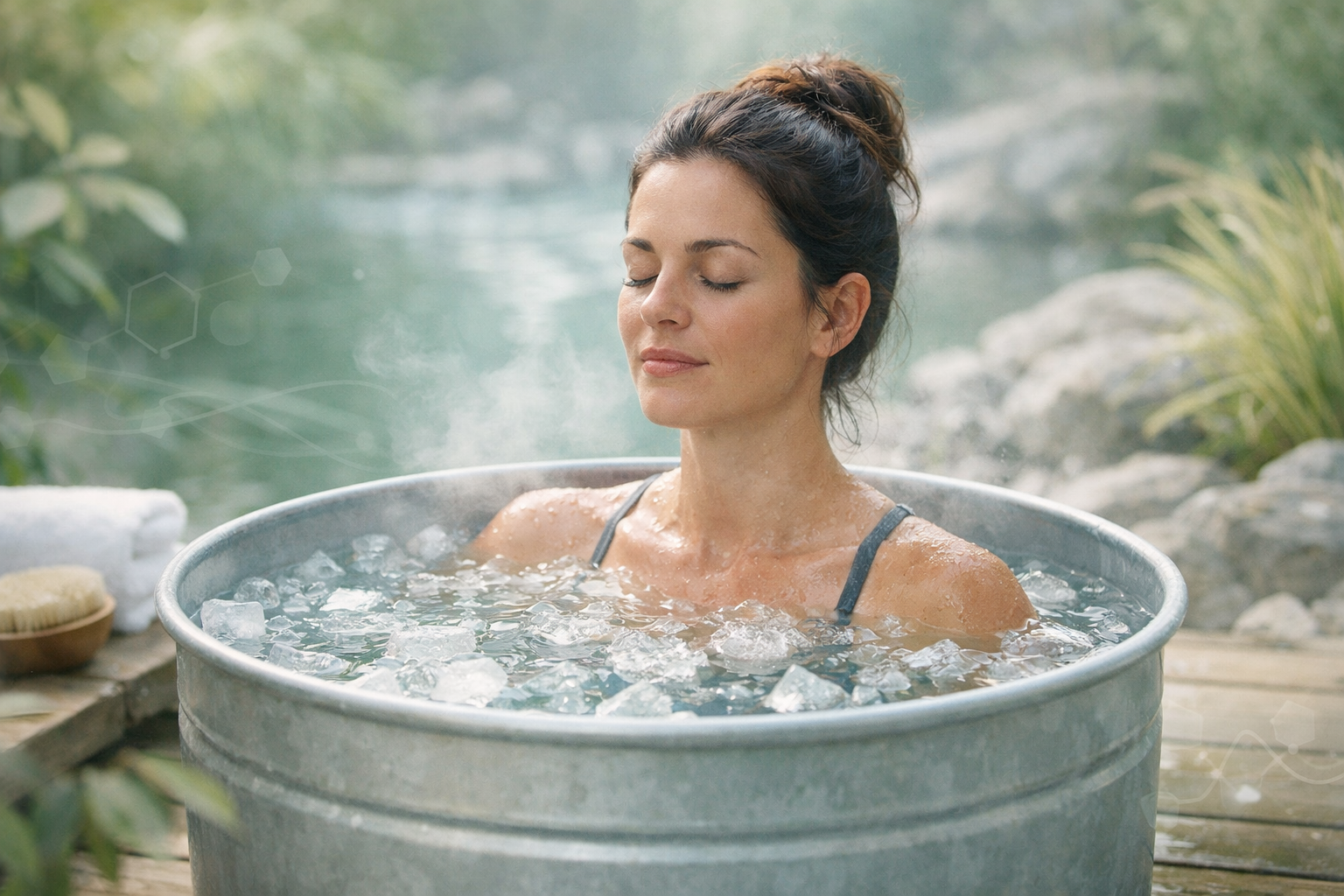
An ice bath refers to the partial or full immersion of the body in cold water, generally between 8 °C and 15 °C, sometimes with added ice to maintain the temperature. This practice belongs to the field of immersion cryotherapy. It is mainly used after intense physical exertion to provoke a rapid decrease in the temperature of superficial tissues.
Cooling induces vasoconstriction of cutaneous and muscular blood vessels. This phenomenon temporarily reduces local blood flow and slows certain inflammatory reactions. After leaving the bath, the subsequent vasodilation may promote tissue reperfusion.
Ice baths are mainly used in sports recovery, particularly in disciplines involving repeated muscle contractions or significant impact. Professional and amateur athletes use them after training sessions or competitions.
The practice is simple in terms of equipment: a bathtub, container, or basin filled with cold water and ice. Exposure time generally ranges between 5 and 15 minutes depending on protocols studied in exercise physiology.
Origin and Context of Use
The therapeutic use of cold dates back to Antiquity. Medical writings attributed to Hippocrates already describe the application of cold to limit inflammation and pain. Cold baths were later integrated into several health traditions, including Roman baths and certain Nordic practices.
The modern form of the ice bath emerged in sports medicine during the 20th century. Exercise physiologists began studying recovery strategies after training. Professional sports teams gradually adopted cold-water immersion following demanding competitions.
The primary objective concerns the management of delayed onset muscle soreness, commonly known as DOMS (« Delayed Onset Muscle Soreness »). These pains generally appear 24 to 72 hours after unusual or intense physical effort.
Ice baths spread widely in the 2000s as elite athletes’ recovery routines became more visible. Standardized protocols then began to be investigated in physiology and sports medicine laboratories.
How Does It Work?
An ice bath first acts through a direct thermal effect. Immersion in cold water causes a rapid drop in skin and subcutaneous temperature. Muscle temperature also decreases, but more slowly because of tissue mass.
The body’s immediate response is peripheral vasoconstriction. Blood vessels narrow, reducing local blood flow. This reaction limits the diffusion of certain inflammatory mediators released after exercise-induced muscle micro-damage.
Cold also slows nerve conduction. The transmission of pain signals through peripheral nerve fibers decreases slightly, which can reduce the sensation of discomfort following exercise.
At the cellular level, reduced temperature decreases enzymatic activity involved in inflammatory processes. Metabolic reactions temporarily slow down, which may limit the spread of inflammation within the stressed muscle tissues.
When a person leaves the bath, body temperature gradually rises again. Blood vessels dilate, leading to increased blood flow. This reperfusion may contribute to the removal of certain metabolites produced during exercise, such as lactate.
The exact effects vary depending on immersion duration, water temperature, exposed muscle mass and the intensity of the preceding effort.
In Which Cases Is It Used?
Ice baths are mainly used in sports recovery. They often appear in protocols applied after intensive training sessions or closely scheduled competitions.
Sports involving explosive or repetitive effort frequently use them: football, rugby, athletics, cycling and combat sports. Muscle microtrauma is common in these activities and may lead to delayed muscle soreness.
Some rehabilitation centers also use cold-water immersion to limit swelling after minor soft-tissue injuries such as mild contusions or low-grade sprains.
The practice can also be integrated into broader recovery routines including stretching, compression, hydration and rest. In these contexts, the objective is functional rather than strictly therapeutic: helping athletes regain training capacity more rapidly.
Benefits and Objectives
Cold-water immersion pursues several physiological and functional objectives linked to post-exercise recovery.
✓ Reduce the perception of muscle soreness after intense exercise
✓ Limit local inflammation caused by muscle micro-damage
✓ Temporarily decrease swelling associated with minor trauma
✓ Promote a faster subjective sense of recovery in some athletes
✓ Help maintain the ability to perform repeated efforts during competitions
Meta-analyses in exercise physiology indicate that cold-water immersion can moderately reduce muscle soreness during the 24 to 72 hours following intense effort. Effects on subsequent performance remain more variable depending on sport and protocol.
Benefits tend to be more noticeable when training sessions occur in close succession, such as during tournaments or intensive training camps.
Risks, Limitations or Controversies
The effectiveness of ice baths remains debated in scientific literature. Several studies report reductions in muscle soreness, but effects on performance recovery remain inconsistent.
Some research suggests that systematic use after training could attenuate certain muscular adaptations. Cooling may slow cellular processes involved in muscle hypertrophy and adaptation to training stimuli.
Ice baths can also provoke cardiovascular stress in some individuals. Sudden exposure to cold activates the sympathetic nervous system and increases heart rate and blood pressure.
Risks of hypothermia exist when immersion duration is excessive or when water temperature is extremely low. The practice is generally discouraged for individuals with cardiovascular disease or peripheral circulation disorders.
Research and Innovations
Current research examines several parameters influencing the effects of cold-water immersion. Studies focus on optimal water temperature, exposure duration and frequency of use.
The most frequently studied protocols involve water temperatures between 10 °C and 15 °C for approximately 10 minutes. Researchers also analyze differences between full-body immersion, lower-limb immersion and alternating hot-cold exposure.
Muscle imaging techniques, particularly MRI, now allow more precise observation of tissue changes after cold exposure. Some studies also evaluate effects on biological markers of inflammation.
Cryotherapy technologies are also evolving. Temperature-controlled immersion systems are used in high-level training centers to maintain stable water temperature and standardize recovery protocols.
Short FAQ
Does an ice bath really reduce muscle soreness?
Some studies show a moderate reduction in delayed muscle soreness after cold-water immersion. The effect is usually observed within 24 to 48 hours following intense exercise. Results vary depending on bath duration, water temperature and the type of physical activity performed.
How long should you stay in an ice bath?
Protocols used in sports medicine commonly recommend immersion lasting between 5 and 15 minutes. Longer exposure does not necessarily increase benefits and may raise the risk of hypothermia or significant discomfort.
What temperature should the water be?
Most studies use water temperatures between 10 °C and 15 °C. Below 8 °C, exposure becomes considerably more stressful for the body and the risk of cardiovascular reactions increases.
Is full-body immersion necessary?
In many sports contexts, only the lower limbs are immersed, especially when the exercise mainly involves the legs. Full immersion is sometimes used but is not essential to obtain recovery effects on muscles.
Do ice baths improve athletic performance?
Scientific data do not demonstrate direct improvement in performance. The main interest lies in reducing soreness and enabling athletes to perform repeated efforts with less muscular discomfort.
Can you take an ice bath after every workout?
Occasional use after very intense sessions is common. Systematic use could reduce some training adaptations, particularly in programs aiming to increase muscle mass.
Are ice baths dangerous?
For a healthy person, short and controlled immersion is generally well tolerated. Risks mainly appear with prolonged exposure, extremely cold water or pre-existing cardiovascular conditions.
Do ice baths help with weight loss?
Cold exposure can slightly increase short-term energy expenditure, but the effect remains modest. Ice baths are not recognized as an effective method for long-term weight loss.
Can a cold shower replace an ice bath?
A cold shower also produces skin cooling but usually less intense and less uniform. Immersion allows continuous and direct contact with cold water, which lowers tissue temperature more effectively.
Can everyone practice ice baths?
People with heart conditions, uncontrolled hypertension, Raynaud’s disease or circulatory disorders should avoid this practice or seek medical advice before trying it.
Scientific context
Field: Clinical medicine, biology, and preventive health
Biological process: Human physiology, pathology, and health-related mechanisms
Related systems: Metabolic, immune, cardiovascular, nervous, and cellular systems
Relevance to longevity: Understanding medical terminology and biological processes helps clarify how diseases, symptoms, biomarkers, and treatments influence long-term health, prevention, and healthy aging.
Key Takeaways
An ice bath involves immersion in cold water primarily used in sports recovery. Cold exposure triggers vasoconstriction, slows certain inflammatory reactions and can reduce the sensation of muscle soreness after intense exercise. Benefits mainly concern comfort and management of delayed muscle pain. Effects on performance recovery remain variable across studies. Excessive use may limit some muscular adaptations to training. Immersion duration should remain short and water temperature controlled in order to reduce risks associated with cold exposure.
Related Articles
Related Longevity Concepts