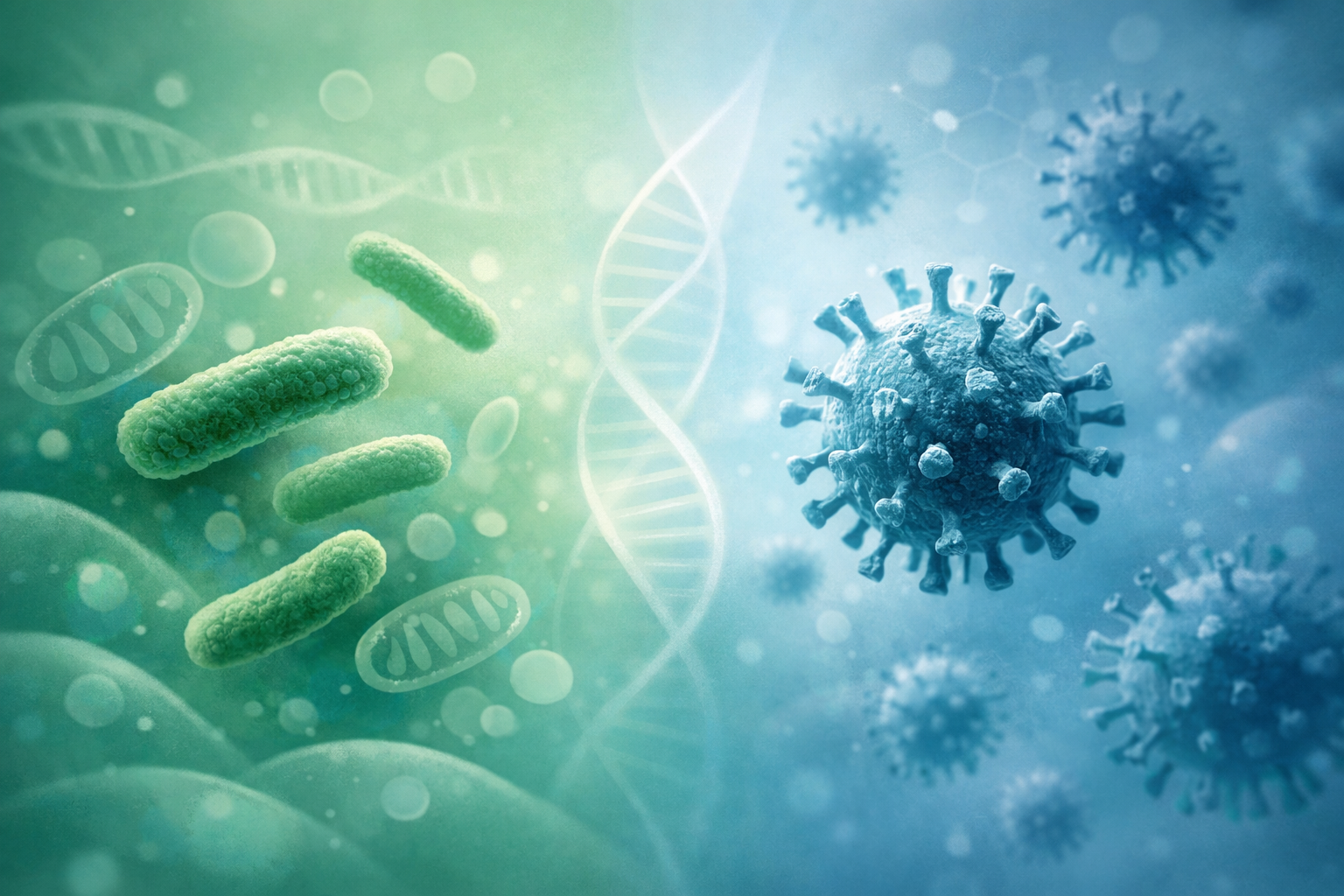
Definition
The distinction between bacterial and viral infections depends on the nature of the pathogen involved. A bacterial infection is caused by bacteria which are single-celled microorganisms that reproduce independently. A viral infection is caused by viruses, infectious particles made of genetic material surrounded by a protein coat, which cannot replicate without a host cell.
In medical language, the expression bacterial vs viral infection describes the comparison between these two categories of disease in order to guide diagnosis, treatment, and prevention strategies. The differences concern the biology of the infectious agent, how it reproduces, the immune response it triggers, and the therapeutic approach used.
Bacteria can live and multiply in many parts of the body, including the skin, bloodstream, lungs, and urinary tract. Viruses must enter a human cell and use its molecular machinery to produce new viral particles.
This distinction directly affects the use of antibiotics. These drugs act against bacteria but have no effect on viruses.
Origin and context of use
The separation between bacterial and viral infections developed during the rise of microbiology in the nineteenth century. Research by Louis Pasteur and Robert Koch identified bacteria responsible for several infectious diseases, including Tuberculosis and Cholera.
At the beginning of the twentieth century, scientists discovered infectious agents smaller than bacteria that could pass through microbiological filters. These agents were later named viruses. The development of the electron microscope in the 1930s allowed researchers to observe viral particles directly.
Today, the distinction between bacterial and viral infections guides clinical reasoning in many situations. Physicians rely on it when managing respiratory, digestive, skin, and neurological infections.
Modern diagnostic methods such as Polymerase chain reaction, bacterial cultures, and antigen tests help clinicians identify the pathogen and select an appropriate treatment.
How it works
Bacteria are complete living cells. They contain a cellular membrane, cytoplasm, genetic material, and enzymes that support their metabolism. Most reproduce by cell division through a process called binary fission. Some species produce toxins that damage human tissues.
In bacterial infections, disease may result from tissue invasion, toxin production, or an intense inflammatory response triggered by the immune system. Antibiotics target bacterial structures such as the cell wall or the mechanisms used for protein synthesis.
Viruses differ in organization. They lack cellular structure and have no independent metabolism. Their genome consists of either DNA or RNA. After entering a host cell, the virus releases its genetic material, which uses the host cell’s enzymes to produce viral proteins.
These proteins assemble into new viral particles. The infected cell may be destroyed during this process, which contributes to symptoms.
The immune response also differs. Viral infections often trigger strong production of interferons and activation of cytotoxic T lymphocytes. Bacterial infections more often involve neutrophils and the production of specific antibodies.
When is it used
The distinction between bacterial and viral infections appears in many clinical situations. It guides the decision to prescribe antibiotics.
Respiratory infections provide a common example. The common cold, Influenza, and most cases of acute bronchitis have a viral origin. Conditions such as bacterial pneumonia, Streptococcal pharyngitis, and certain sinus infections require antibiotic treatment.
In digestive illnesses, some forms of diarrhea result from viruses such as Norovirus, while others are caused by bacteria including Salmonella and Campylobacter.
Public health authorities also rely on this distinction to monitor outbreaks, guide vaccination programs, and limit inappropriate antibiotic use.
Benefits and goals
Correctly identifying whether an infection is bacterial or viral helps adapt medical care.
The main goals include choosing an appropriate treatment and reserving antibiotics for confirmed bacterial infections. Another goal involves limiting antibiotic resistance caused by unnecessary prescriptions.
This distinction also guides further diagnostic tests. It supports epidemiological monitoring of infectious diseases and informs prevention strategies such as vaccination or patient isolation when needed.
Accurate differentiation improves quality of care. It reduces side effects linked to unsuitable treatments and helps physicians explain the expected course of illness to patients.
Risks, limits, and controversies
In clinical practice, distinguishing between bacterial and viral infections is not always straightforward. Symptoms often overlap, particularly in respiratory illnesses.
Some viral infections also create conditions that allow secondary bacterial infections. After influenza, for example, bacterial pneumonia may develop.
Rapid diagnostic tests have improved detection of viruses and bacteria, yet they are not available in every setting. Bacterial cultures may require several days before results appear.
Another issue concerns excessive antibiotic use. Despite clinical guidelines, antibiotics are still prescribed for infections that likely have a viral cause. This practice contributes to the rise of antibiotic-resistant bacteria.
Research and innovations
Current research focuses on improving rapid differentiation between bacterial and viral infections. Blood biomarkers such as Procalcitonin and C‑reactive protein are studied to support diagnostic decisions.
Multiplex molecular tests can detect several respiratory viruses within a few hours. Hospitals increasingly use these technologies in emergency departments and infectious disease units.
Advances in Metagenomics allow scientists to analyze all genetic material present in a biological sample, which helps identify pathogens that are difficult to culture.
Genomic surveillance of viruses and bacteria also tracks the emergence of new strains and informs public health responses.
Short FAQ
What is the fundamental difference between a bacterium and a virus?
Bacteria are living cells capable of independent reproduction. Viruses are infectious particles that must enter a host cell to replicate. This difference explains why antibiotics work against bacteria but not against viruses.
Can antibiotics treat viral infections?
No. Antibiotics target structures specific to bacteria, such as their cell wall or ribosomes. Viruses do not have these structures. Treatment usually depends on the immune system or, in some cases, specific antiviral drugs.
How do physicians distinguish between bacterial and viral infections?
Diagnosis relies on symptoms, clinical examination, and laboratory tests. Blood tests, bacterial cultures, PCR assays, and antigen tests can identify the organism responsible for the infection.
Why do some viral infections cause high fever?
Fever results from the immune response. Immune cells release cytokines that act on the hypothalamus and raise body temperature, which slows pathogen replication.
Can a viral infection become bacterial?
Yes. Some viral infections weaken tissues or disrupt local immune defenses. Bacteria may then colonize these tissues and cause a secondary infection.
Are all bacteria harmful?
No. Many bacteria normally live in the human body. The intestinal, skin, and oral microbiota contribute to digestion, protection against pathogens, and immune system development.
Why do viral infections often resolve on their own?
The immune system gradually eliminates infected cells and viral particles. T lymphocytes and antibodies play central roles in this process.
What is antibiotic resistance?
Resistance occurs when bacteria acquire mutations or genes that allow them to survive exposure to an antibiotic. Excessive or inappropriate use of these drugs accelerates this process.
Are there vaccines for bacterial and viral infections?
Yes. Some vaccines target bacteria, such as those against pneumococcal infections or tetanus. Others protect against viruses including influenza, measles, and hepatitis B.
Why are laboratory tests sometimes necessary?
Symptoms alone do not always identify the pathogen responsible for an infection. Laboratory analyses provide confirmation and help guide treatment decisions.
Key information
Bacterial vs viral infection refers to the difference between two types of infectious disease based on the nature of the pathogen and how it reproduces. Bacteria are living cells capable of independent multiplication, while viruses rely on host cells to replicate. This distinction affects diagnosis, treatment decisions, and prevention strategies. Antibiotics act only against bacteria. Advances in molecular testing and biomarker research improve the ability to distinguish these infections and support more appropriate use of treatments while addressing antibiotic resistance.
Related Longevity Concepts
Scientific context
Field: Clinical medicine, biology, and preventive health
Biological process: Human physiology, pathology, and health-related mechanisms
Related systems: Metabolic, immune, cardiovascular, nervous, and cellular systems
Relevance to longevity: Understanding medical terminology and biological processes helps clarify how diseases, symptoms, biomarkers, and treatments influence long-term health, prevention, and healthy aging.