Definition
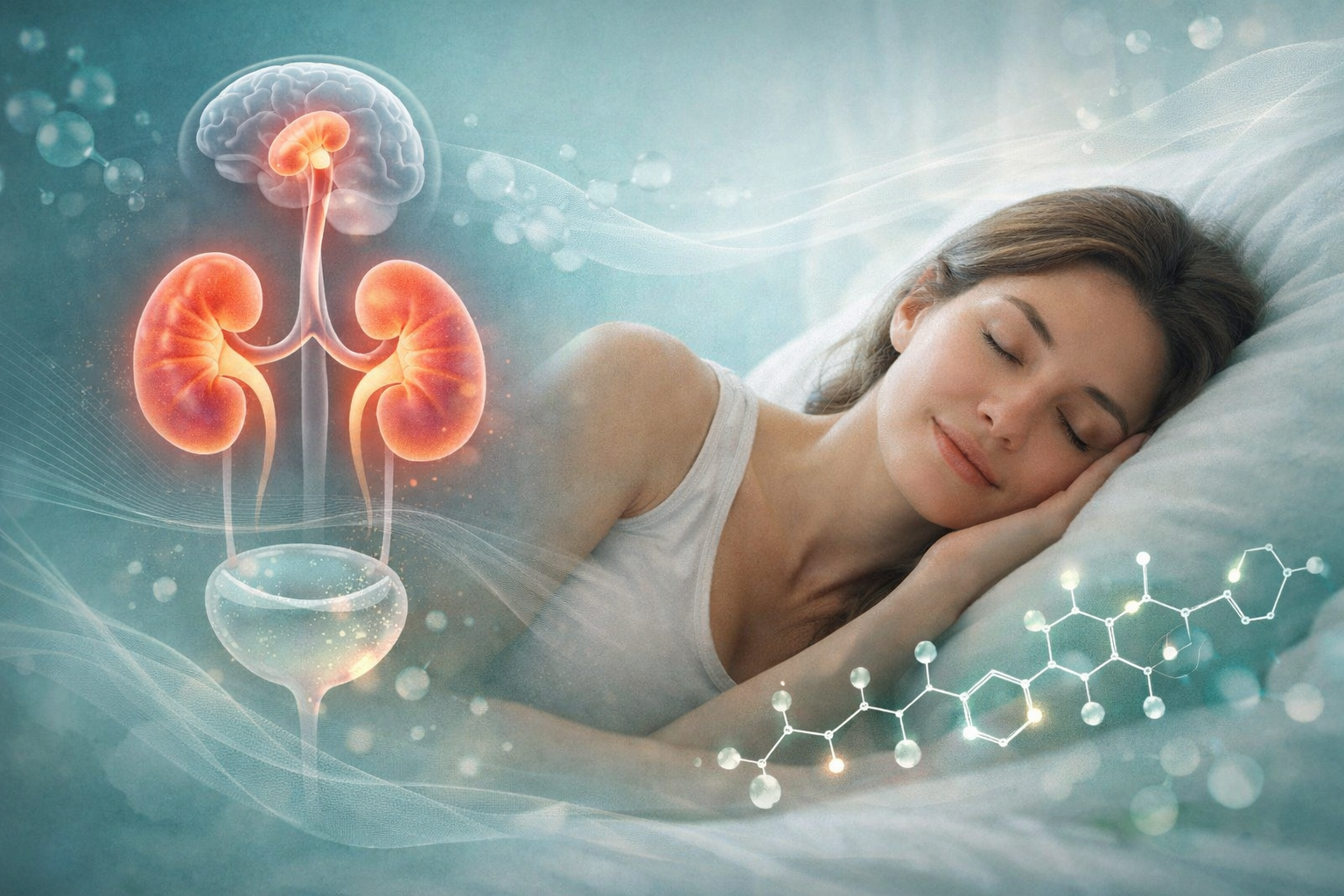
Antidiuretic hormone (ADH), otherwise known as vasopressin or arginine vasopressin, is a peptide hormone produced by neurons in the hypothalamus and released into the bloodstream by the posterior pituitary gland. ADH plays a key role in regulating the body’s water balance.
It mainly works by limiting water loss through the kidneys. When ADH is released, it acts on the renal tubules to increase water reabsorption into the blood. This makes the urine more concentrated and reduces its volume. This mechanism helps keep electrolyte concentrations stable and blood volume adequate.
ADH secretion is closely controlled by plasma osmolality and blood volume. An increase in the concentration of solutes in the blood or a decrease in circulating volume triggers its release. On the other hand, a large intake of water reduces its secretion.
This hormone also contributes to the regulation of blood pressure through its vasoconstrictive effect on blood vessels.
Origin and context of use
The antidiuretic hormone is synthesized in two groups of neurons located in the hypothalamus: the supraoptic and paraventricular nuclei. After being produced, it is transported along the neuronal axons to the neurohypophysis, where it is stored and then released into the bloodstream.
The first studies describing the antidiuretic effect of this hormone date back to the early 20th century, when extracts from the posterior pituitary gland were observed to reduce urine production. The term “vasopressin” was then introduced because of its action on blood vessel contraction.
The study of ADH has become particularly important in understanding water balance disorders, including diabetes insipidus and certain syndromes of inappropriate hormone secretion. These pathologies have led to a better understanding of the physiological role of the hormone in regulating body water and maintaining homeostasis.
How does it work?
The main action of antidiuretic hormone takes place in the kidneys, precisely in the collecting tubules of the nephron. After its release into the bloodstream, ADH binds to V2 receptors located on the surface of renal epithelial cells.
This binding activates an intracellular signaling cascade involving adenylate cyclase and the production of cyclic AMP. The signal triggers the insertion of proteins called type 2 aquaporins into the cell membrane. These specialized channels enable the rapid passage of water from the primary urine to the renal cells and then into the bloodstream.
The result is increased water reabsorption, which reduces urine volume and increases urine concentration. This mechanism continuously adjusts the amount of water excreted by the kidneys.
ADH also has a vascular action. By binding to V1 receptors on the smooth muscle cells of blood vessels, it causes vasoconstriction. This effect helps maintain blood pressure, particularly during a decrease in blood volume or dehydration.
When is it used?
Antidiuretic hormone and its synthetic analogues are used in medicine to treat several disorders associated with water regulation.
The main clinical context is central diabetes insipidus, a condition characterized by insufficient ADH production. Patients experience excessive urine production and intense thirst. The administration of vasopressin analogues restores the kidneys’ ability to concentrate urine.
Some ADH variants are also used to treat bedwetting in kids when they pee too much at night.
In emergencies, these variants can be used to control certain types of gastrointestinal bleeding or keep blood pressure up during cardiovascular shock.
Benefits and goals
The action of the antidiuretic hormone helps maintain a stable water balance despite variations in water intake or losses due to sweating, breathing, or kidney activity.
Its main physiological goals are well established:
✓ maintaining plasma osmolality within a narrow range
✓ preserving circulating blood volume
✓ limiting dehydration in the event of water deficiency
✓ helping to stabilize blood pressure
✓ adapting urine concentration to the body’s needs
In a therapeutic context, ADH analogues can be used to correct water imbalances caused by hormonal deficiency or certain kidney diseases.
Risks, limitations, or concerns
Excessive secretion of ADH can lead to significant water retention. This situation occurs in particular in the syndrome of inappropriate antidiuretic hormone secretion (SIADH). The body then retains too much water, which dilutes the sodium in the blood and causes hyponatremia.
Symptoms may include headaches, nausea, confusion, or seizures in severe cases.
Conversely, insufficient ADH production leads to diabetes insipidus, characterized by the kidneys’ inability to concentrate urine.
As part of treatment, excessive administration of analogues can also cause hyponatremia. Monitoring water balance and sodium concentrations is therefore essential.
Research and new developments
Current research seeks to gain a more detailed understanding of vasopressin receptors and their signaling pathways. These findings enable the development of more targeted drugs that act specifically on certain receptors while limiting adverse effects.
V2 receptor antagonists, referred to as “vaptans,” have been developed to treat certain forms of hyponatremia associated with SIADH or heart failure. These molecules promote the excretion of free water by the kidneys without significant loss of electrolytes.
Research is also exploring the role of ADH in broader areas, including the regulation of stress, social behavior, and certain brain functions.
Frequent questions
What is the main function of antidiuretic hormone?
It regulates the amount of water eliminated by the kidneys. It reduces urine volume and maintains a stable concentration of body fluids through the increase of water and reabsorption in the renal tubules,.
Where is antidiuretic hormone produced?
It is synthesized by neurons in the hypothalamus. It is then transported to the posterior pituitary gland, where it is stored before being released into the bloodstream.
Why is it also called vasopressin?
This name reflects the hormone’s effect on blood vessels. It causes vascular muscle contraction, which increases blood pressure in certain physiological situations.
What is diabetes insipidus?
It is a disorder characterized by excessive production of very diluted urine. In its classic form, it results from a deficiency in antidiuretic hormone, preventing the kidneys from concentrating urine properly.
What is inappropriate ADH secretion syndrome?
This syndrome corresponds to excessive production of antidiuretic hormone despite normal or low osmolality. The body then retains too much water, which dilutes the sodium in the blood.
How is ADH regulated?
It is mainly controlled by hypothalamic osmoreceptors that detect changes in plasma concentration and by baroreceptors that are sensitive to blood volume.
Does ADH act only on the kidneys?
No. It also acts on blood vessels via V1 receptors, causing vasoconstriction. This effect helps maintain blood pressure.
What drugs mimic ADH?
Synthetic analogues such as desmopressin reproduce the antidiuretic action. They are used to treat central diabetes insipidus and certain cases of nocturnal enuresis.
Can ADH be measured in the blood?
Yes, but this measurement is technically difficult and rarely used on its own. Diagnosis is often based on functional tests and analysis of blood and urine osmolality.
Does dehydration influence its secretion?
Yes. An increase in plasma osmolality due to water loss rapidly stimulates the release of ADH, which allows the kidneys to retain more water.
Key information
Antidiuretic hormone is a major regulator of water balance. Produced in the hypothalamus and released by the posterior pituitary gland, it acts primarily on the kidneys to increase water reabsorption.
Its secretion depends on plasma concentration and blood volume. A deficiency causes diabetes insipidus, while excessive secretion can lead to hyponatremia.
Its therapeutic analogues are used to correct certain water regulation disorders and, in some contexts, to support blood pressure.
Related Longevity Concepts
Scientific context
Field: Clinical medicine, biology, and preventive health
Biological process: Human physiology, pathology, and health-related mechanisms
Related systems: Metabolic, immune, cardiovascular, nervous, and cellular systems
Relevance to longevity: Understanding medical terminology and biological processes helps clarify how diseases, symptoms, biomarkers, and treatments influence long-term health, prevention, and healthy aging.