Definition
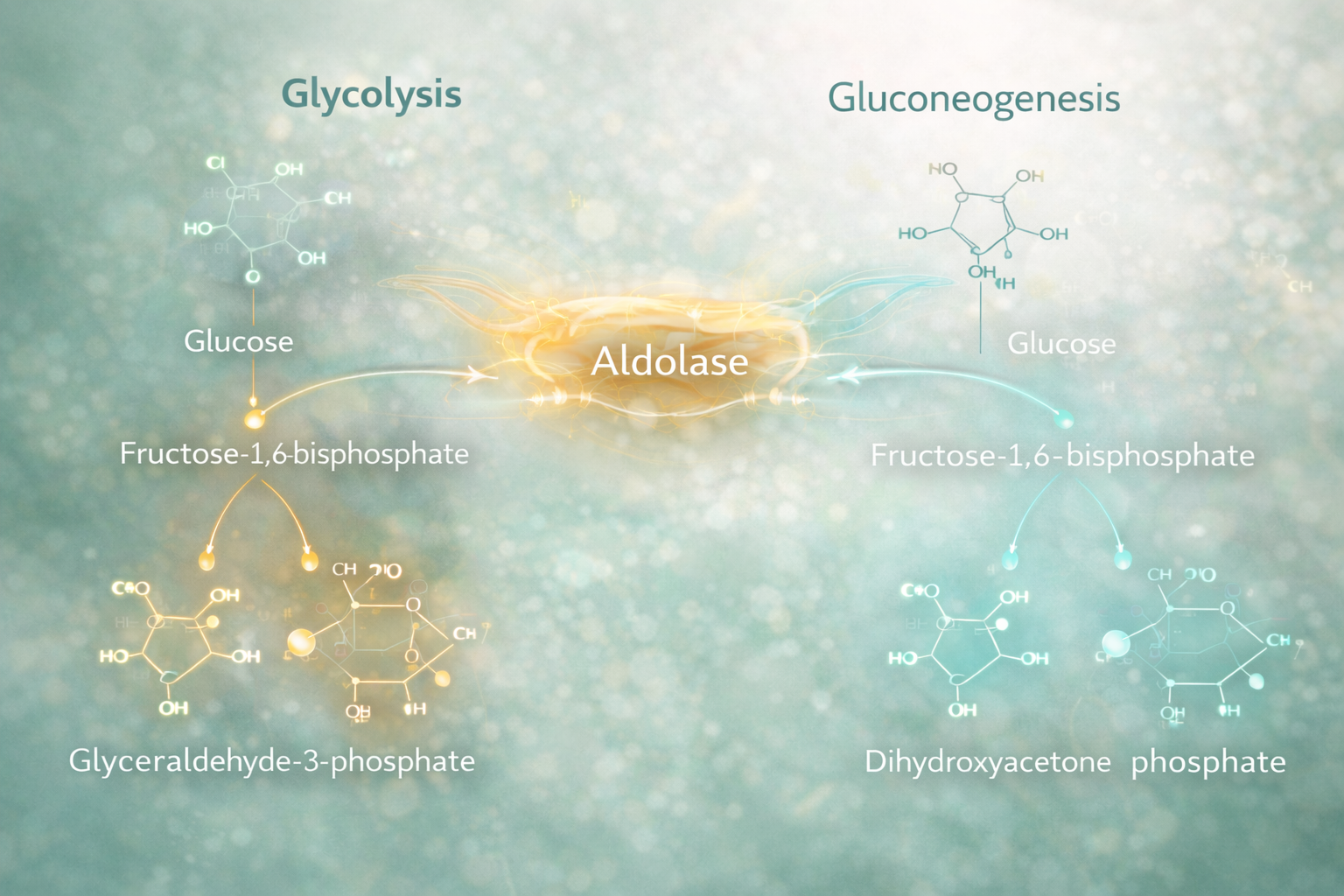
Aldolase is a key enzyme in carbohydrate metabolism, involved in glycolysis and gluconeogenesis. It catalyzes the cleavage of fructose-1,6-bisphosphate into two triose phosphates: glyceraldehyde-3-phosphate and dihydroxyacetone phosphate. This reaction is reversible and essential for producing cellular energy in the form of ATP. Humans have three main isoforms: aldolase A, predominant in muscle and red blood cells; aldolase B, mainly hepatic and involved in fructose metabolism; aldolase C, located in the brain. Measuring aldolase activity in the blood can reflect muscle or liver integrity, as its levels increase in case of cellular damage. Aldolase is thus both a fundamental element of energy metabolism and a useful clinical biomarker.
Origin and Context of Use
Aldolase was identified in the 1930s during studies on glycolysis. It is naturally present in most tissues, with expression varying depending on the organ and isoform. Clinically, aldolase is used as a biomarker to assess certain muscle disorders, such as inflammatory or degenerative myopathies, and liver diseases affecting fructose metabolism. It complements other muscle and liver enzymes, like creatine kinase or AST, to provide a more precise picture of cellular health. Understanding its role in metabolism has also contributed to research on inherited enzyme deficiencies and carbohydrate metabolism disorders.
How It Works
Aldolase catalyzes a reversible aldol cleavage reaction. In glycolysis, it converts fructose-1,6-bisphosphate, an intermediate derived from glucose-6-phosphate, into two triose phosphates that continue through glycolysis to form pyruvate and ATP. Its structure contains an active site that stabilizes reaction intermediates and facilitates the breaking of carbon–carbon bonds. Muscle aldolase A is substrate-activated and functions optimally at physiological pH. Hepatic aldolase B has a specific affinity for fructose-1-phosphate, making it essential for dietary fructose degradation. Brain aldolase C contributes to local energy production for neurons and glial cells. Specific inhibitors can modulate activity in vitro, helping to understand enzyme deficiencies and the energetic role of each isoform.
In Which Cases Is It Used?
Blood aldolase measurement is indicated in several clinical contexts. It detects muscle damage, as seen in inflammatory or degenerative myopathies, where levels increase. It can complement liver function tests to identify hepatic damage, particularly in hereditary fructose intolerance. In neurology, analyzing aldolase C provides insights into brain energy metabolism in certain conditions. Aldolase is also used to monitor medical or nutritional interventions aimed at correcting enzyme deficiencies or limiting muscle and liver damage.
Benefits and Objectives
Using aldolase in clinical practice allows to:
-
✔ Assess muscle integrity and detect early lesions.
-
✔ Identify liver disorders related to fructose metabolism.
-
✔ Complement enzymatic profiles for more accurate diagnosis.
-
✔ Monitor the progression of muscle or liver diseases.
-
✔ Study cerebral metabolism and neuronal energy needs.
Risks, Limitations or Controversies
Interpreting aldolase levels has limitations. Values can be influenced by age, sex, physical activity, or other concurrent diseases. Isolated elevations do not always allow precise diagnosis and must be interpreted with other enzymatic markers. Aldolase B, in particular, may not reflect all liver impairments, limiting its use as a single test. The relevance of routinely measuring aldolase C is debated, as brain expression is less accessible and clinical implications remain under study.
Research and Innovations
Current research explores aldolase as a therapeutic target in certain metabolic disorders and cancers. Studies investigate selective inhibition of aldolase A to slow tumor proliferation and genetic interventions to correct inherited aldolase B deficiencies. High-resolution structural analysis and molecular modeling are used to develop specific inhibitors or activators. In neurology, aldolase C research aims to understand cerebral energy metabolism and its potential role in neurodegenerative diseases. These innovations aim to combine precise diagnostics with targeted therapeutic strategies.
Short FAQ
What is aldolase?
It is an enzyme in carbohydrate metabolism that cleaves fructose-1,6-bisphosphate into triose phosphates.
Which tissues produce aldolase?
Muscle (A), liver (B), and brain (C) are the main tissues producing each isoform.
Why measure aldolase in the blood?
To detect muscle or liver damage and monitor certain metabolic disorders.
Which diseases increase aldolase?
Inflammatory myopathies, muscular dystrophies, and some hereditary liver conditions.
What is the difference between aldolase A, B and C?
A: muscle and red blood cells; B: liver and fructose metabolism; C: brain and neuronal metabolism.
Can aldolase be used alone for diagnosis?
No, it must be combined with other enzymes and clinical tests.
Can aldolase be modulated?
In vitro, some inhibitors exist; clinically, regulation mainly occurs via substrate or nutrition.
Is aldolase involved in cancer?
Yes, aldolase A is studied as a target to slow tumor cell proliferation.
How does aldolase change after treatment?
It can decrease if therapy corrects enzyme deficiency or limits cellular damage.
Are there specific tests for each isoform?
Yes, immunological assays can distinguish A, B, and C in some laboratories.
Key Points
Aldolase is a central enzyme in carbohydrate metabolism, with three main isoforms suited to muscle, liver, and brain tissues. Measuring its levels helps detect muscle or liver injury. Although influenced by multiple factors, aldolase remains a valuable tool to complement enzymatic profiles and explore metabolic and neurological disorders.
Related Longevity Concepts
Scientific context
Field: Clinical medicine, biology, and preventive health
Biological process: Human physiology, pathology, and health-related mechanisms
Related systems: Metabolic, immune, cardiovascular, nervous, and cellular systems
Relevance to longevity: Understanding medical terminology and biological processes helps clarify how diseases, symptoms, biomarkers, and treatments influence long-term health, prevention, and healthy aging.