Definition
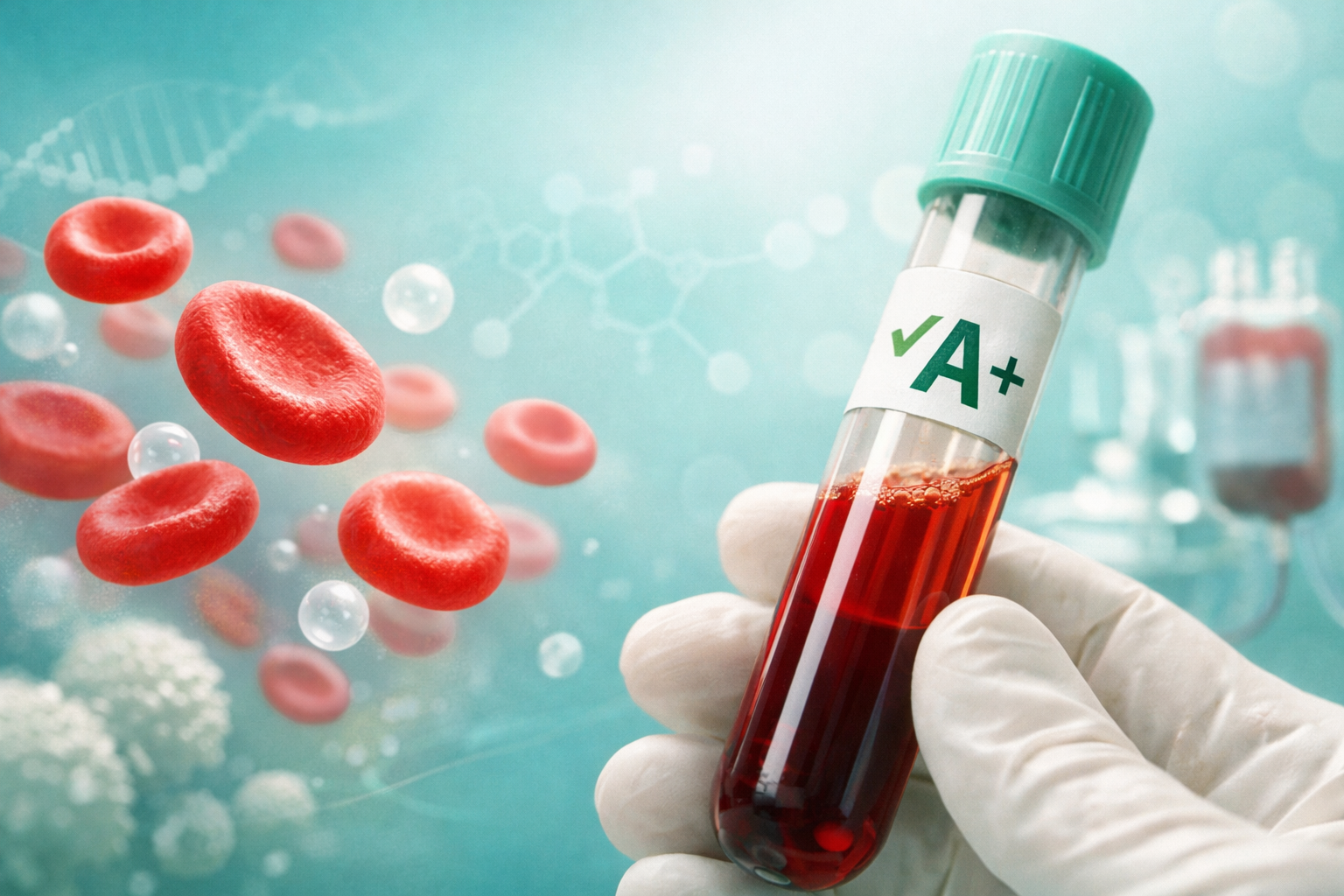
A positive blood type refers to blood group A combined with the presence of the Rh D factor on the surface of red blood cells. In the ABO system, red blood cells in group A carry the A antigen on their membrane. The plasma naturally contains antibodies directed against the B antigen. The term “positive” indicates the presence of the Rh D antigen, a transmembrane protein involved in red blood cell membrane structure.
An individual with A positive blood has two immunological characteristics: the A antigen and the Rh D antigen. This combination determines transfusion compatibility. If exposed to an antigen absent from their own red blood cells, the immune system may produce antibodies that can cause a hemolytic reaction. Blood type is genetically determined and remains the same throughout life. A positive is one of the most common blood groups in Europe.
Origin and context of use
The ABO system was described in 1900 by Karl Landsteiner, who demonstrated that blood compatibility depends on the presence of specific antigens on red blood cells. The Rh factor was identified in 1940 after unexplained transfusion reactions were observed in certain patients.
The A positive classification results from combining these two major systems: ABO and Rh. It is routinely used in transfusion medicine, surgery, obstetrics, and pregnancy monitoring. Blood typing is part of standard laboratory testing, especially before transfusion, scheduled surgery, or at the beginning of pregnancy. Accurate knowledge of blood type reduces the risk of acute immunological complications.
How does it work?
The specificity of A positive blood type is based on membrane antigen expression. The A antigen is a carbohydrate structure attached to glycoproteins and glycolipids on the red blood cell membrane. It results from the action of an enzyme encoded by the ABO gene, which modifies a precursor substance known as the H antigen.
The Rh D factor is a complex transmembrane protein involved in maintaining red blood cell membrane integrity. Its presence defines Rh-positive status. Unlike the ABO system, anti-D antibodies are not naturally present. They develop after exposure to Rh-positive red blood cells in an Rh-negative individual, such as during an incompatible transfusion or pregnancy.
In a person with A positive blood, the immune system recognizes the A and D antigens as self. It produces anti-B antibodies instead. In transfusion practice, this individual can receive red blood cells from group A or O donors, provided they are Rh-compatible. Compatibility therefore depends on matching both ABO and Rh antigens to prevent antibody-mediated acute hemolysis.
In which cases is it used?
A positive blood type is primarily relevant in blood transfusion. Before any red blood cell transfusion, ABO-Rh typing and compatibility testing are performed.
It is also important in obstetrics. A woman with A positive blood does not face the risk of anti-D alloimmunization, unlike Rh-negative women. Blood type is required for blood donation, organ transplantation, and certain medico-legal situations.
In emergencies, rapid identification of blood type allows administration of compatible blood products and reduces the risk of hemolytic shock.
Benefits and objectives
The A positive classification supports safe medical practices involving blood. It serves several concrete objectives:
✓ Ensure transfusion compatibility and prevent acute hemolytic reactions
✓ Guide obstetric management and prevent Rh-related maternal-fetal alloimmunization
✓ Organize blood supply based on group frequency
✓ Facilitate compatibility in organ transplantation
Accurate blood typing reduces mortality associated with incompatible transfusions. It structures the entire transfusion chain, from donation to administration.
Risks, limitations or controversies
The main risk lies in errors in blood typing or patient identification, which remain major causes of severe transfusion accidents. ABO incompatibility can trigger rapid intravascular hemolysis, acute kidney injury, and shock.
The ABO-Rh system does not account for all red blood cell antigens. Other systems, such as Kell or Duffy, may also cause alloimmunization. Being A positive does not eliminate all compatibility risks.
There is no scientific controversy regarding blood group validity, but popular claims linking blood type to personality traits have no biological foundation.
Research and innovations
Current research explores enzymatic conversion of A, B, and AB blood groups into group O by modifying surface antigens. The aim is to expand the availability of universal donor blood for transfusion.
Other studies focus on producing red blood cells from stem cells in laboratory settings. This approach could reduce dependence on blood donation.
Advances in molecular typing techniques allow more precise identification of ABO and RHD gene variants, reducing classification errors and improving compatibility in chronically transfused patients.
FAQ
Is A positive blood type common?
Yes. In Europe, it represents approximately 35 to 40% of the population. Its frequency varies worldwide according to the genetic distribution of ABO and RHD alleles.
Can blood type change during life?
No. Blood type is genetically determined and remains stable throughout life, except in rare situations such as certain bone marrow transplants that may temporarily modify blood characteristics.
Who can receive blood from an A positive donor?
An A positive individual can donate red blood cells to A positive and AB positive recipients, provided standard compatibility testing confirms safety.
Who can donate blood to someone with A positive blood?
They can receive red blood cells from A positive, A negative, O positive, or O negative donors, subject to confirmed pretransfusion compatibility testing.
Does the Rh factor have a known physiological function?
The Rh D protein contributes to red blood cell membrane structure and stability. Its absence does not in itself cause disease.
Is there a link between blood type and disease?
Some statistical associations exist, such as a higher thrombotic risk in non-O groups. These associations are multifactorial and do not alone determine disease occurrence.
Why is blood type tested during pregnancy?
Testing identifies potential Rh incompatibility. In Rh-negative mothers, specific monitoring and anti-D prophylaxis may be required to prevent sensitization.
Does blood type influence diet?
No solid scientific evidence supports diets based on blood type. Nutritional recommendations rely on metabolic and clinical criteria instead.
What happens in case of incompatible transfusion?
An immune reaction may rapidly destroy transfused red blood cells, causing fever, pain, hypotension, and renal complications. This is a medical emergency.
How is A positive blood type determined?
Typing is performed by mixing red blood cells with anti-A and anti-D antibodies. Agglutination confirms the presence of the corresponding antigens.
Key points
A positive blood type combines the A antigen of the ABO system with the presence of the Rh D factor. This dual characteristic determines transfusion compatibility and obstetric management. It is genetically determined and lifelong. Transfusion safety depends on precise identification and systematic compatibility testing.
Related Longevity Concepts
Scientific context
Field: Clinical medicine, biology, and preventive health
Biological process: Human physiology, pathology, and health-related mechanisms
Related systems: Metabolic, immune, cardiovascular, nervous, and cellular systems
Relevance to longevity: Understanding medical terminology and biological processes helps clarify how diseases, symptoms, biomarkers, and treatments influence long-term health, prevention, and healthy aging.