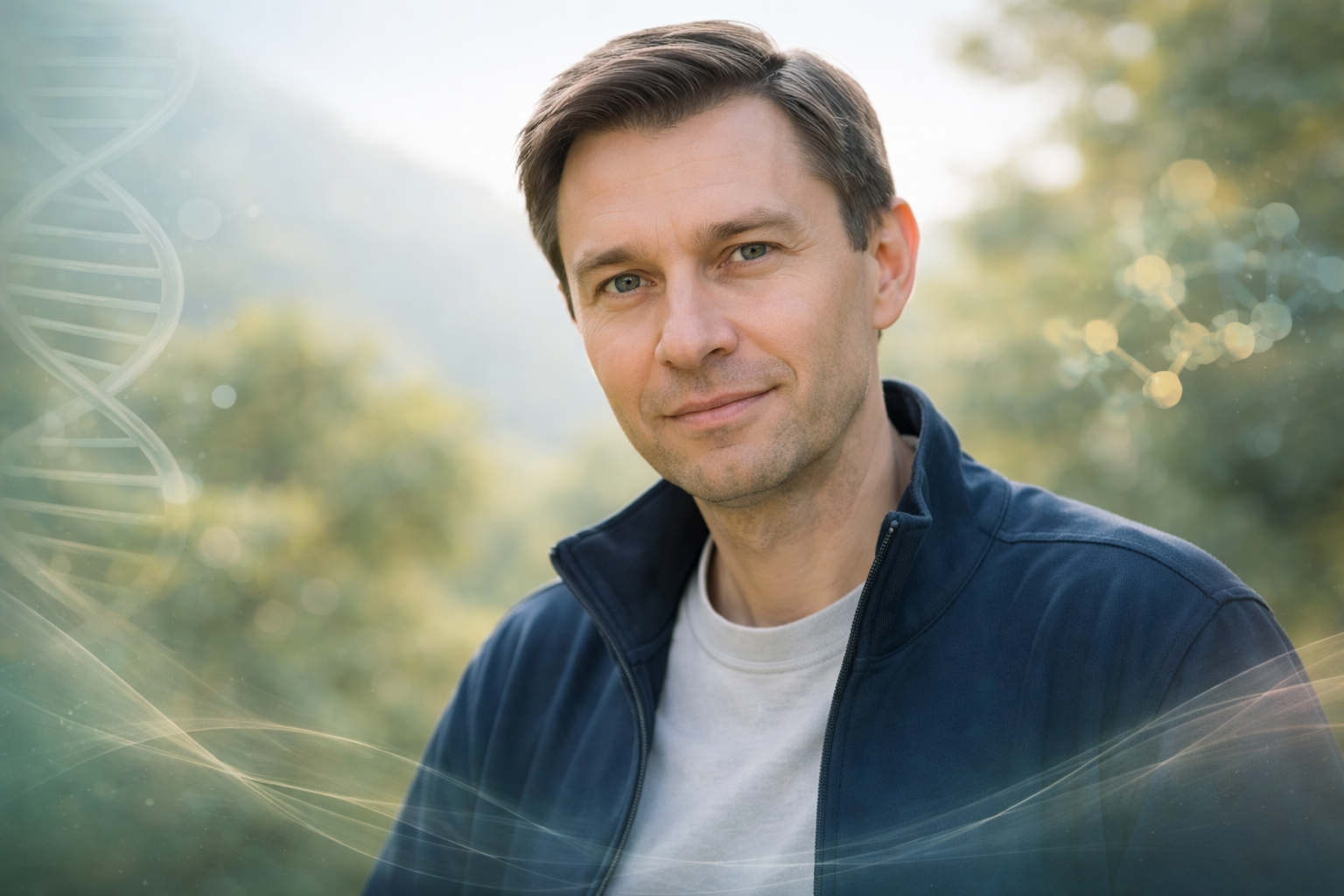
David Sinclair is an Australian biologist known for his research on the mechanisms of aging. A professor at Harvard Medical School, he has become a central figure in longevity biology. His work on sirtuins and molecules capable of influencing cellular aging has helped reposition age as a modifiable variable, opening new perspectives in health and preventive medicine.
David Sinclair represents a generation of scientists pushing the boundaries between fundamental biology and clinical application. With an approach that is both rigorous and ambitious, he defends an idea that sparks as much interest as controversy: aging is not an immutable biological fate, but a process that can be understood, slowed, and potentially reversed. In his public statements, he emphasizes the urgency of treating aging as the primary cause of chronic diseases. “Aging is a disease, and that disease is treatable,” he states, summarizing a position that underpins his research and communication.
The journey
David Sinclair’s path begins in Australia, where he studied genetics before continuing his work in the United States. He quickly distinguished himself through research on longevity genes, particularly sirtuins, a family of proteins involved in cellular regulation. His move to Harvard marked a decisive turning point, providing both a scientific and media platform to amplify his work. In the early 2000s, his research on resveratrol drew public and investor attention, helping popularize the idea that certain molecules could influence aging. This visibility led to industrial collaborations, particularly in biotech, where he contributed to the creation of several companies aiming to translate discoveries into therapeutic solutions. His prominence grew further with the publication of his book Lifespan, which synthesizes his research and presents an accessible vision of longevity. This moment marked his transition from a recognized scientist to a key voice in the public debate on health and aging.
His vision of longevity
At the core of David Sinclair’s thinking is a redefinition of aging. For him, it is not merely the accumulation of damage, but a loss of biological information. He develops the theory that cells gradually lose their ability to correctly read their genetic “software,” leading to dysfunction and disease. This perspective drives his exploration of cellular reprogramming and activation of repair mechanisms. In his talks, he notes: “We are learning how to reverse aging, at least in mice, and perhaps soon in humans,” highlighting experimental progress while acknowledging current limitations. His vision of longevity relies on a combination of factors: pharmacological interventions, lifestyle modifications, and emerging technologies. He challenges a disease-centered medical model, advocating instead for a systemic approach where aging itself becomes the primary target. This perspective paves the way for a radically different preventive medicine, where extending healthy lifespan becomes a central objective.
Influence and impact
David Sinclair’s influence extends beyond academia. His work has helped structure a new ecosystem around longevity, combining research, investment, and innovation. He plays an active role in disseminating these ideas to the public through conferences, podcasts, and publications. However, this visibility also brings debate. Some researchers question the robustness of certain conclusions or the pace at which clinical applications are projected. Others highlight the risk of oversimplification in the communication of still-experimental findings. Despite these criticisms, his impact is tangible: he has contributed to making aging a central topic in contemporary biomedical research and has attracted significant funding to the field. His approach also influences health policies and investment strategies in biotechnology.
Redefining the limits of human longevity
David Sinclair stands at a pivotal moment in the history of medicine, where understanding aging is becoming a structuring challenge. By proposing to treat age as a modifiable condition, he redefines scientific priorities and opens new perspectives for global health. While some of his hypotheses remain to be validated at scale, his role in transforming how longevity is perceived is already established. As research advances, the question is no longer simply how to live longer, but how far this ambition can truly take us.
Continue exploring longevity
Explore this longevity topic