Introduction
Seeing clumps of blood during menstruation can be unsettling. Many women immediately wonder whether something is wrong, or if these clots are a sign of hormonal imbalance or underlying disease. In reality, menstrual blood clots are often a normal physiological response, especially during heavier flow days.
At Sogevity, we believe that cycle health is an essential pillar of female longevity. The menstrual cycle is not merely a monthly event. It is a reflection of hormonal balance, uterine health, stress levels, and metabolic resilience. Learning to read its signals with calm and clarity can support long-term well-being.
This article explains what clumps of blood during menstruation actually are, why they form, when they are considered normal, and when they may deserve medical attention. Rather than fear, the goal is awareness.
The body speaks quietly. The menstrual cycle is one of its most honest languages.
What are menstrual blood clots?
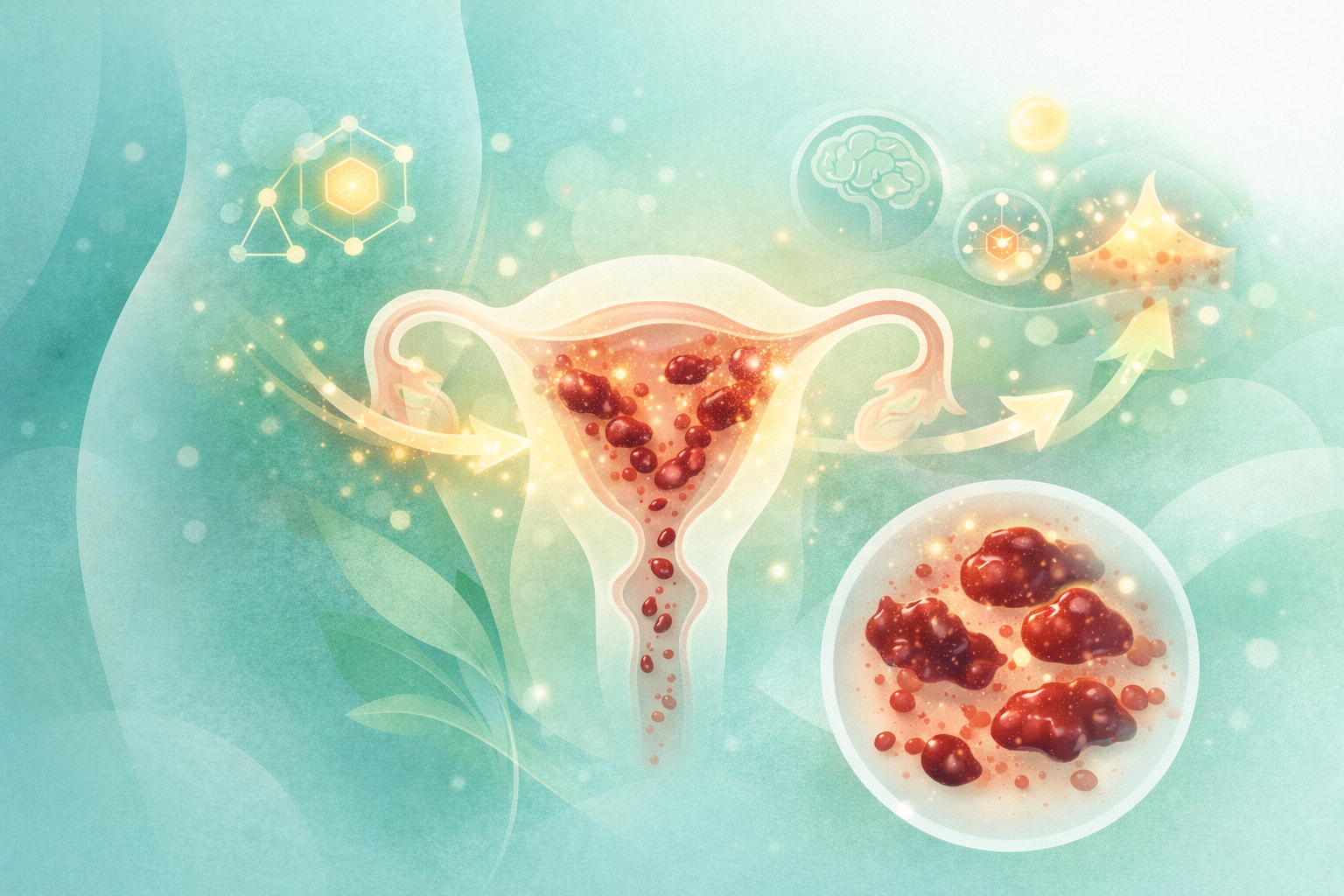
Clumps of blood during menstruation, also called menstrual blood clots, are gel-like collections of blood and tissue expelled from the uterus during a period. They are formed when menstrual flow is heavy enough that blood pools in the uterus or vagina before exiting the body.
To prevent excessive bleeding, the body releases natural anticoagulants that keep menstrual blood fluid. However, during heavier flow, these mechanisms may not work fast enough, allowing blood to coagulate temporarily. The result is visible clots.
These clots often contain not only blood, but also fragments of the uterine lining. Their color may range from bright red to dark burgundy, depending on oxygen exposure and flow speed.
In most cases, small clots are simply a sign that the uterus is shedding efficiently. They are not inherently pathological.
When clumps of blood during menstruation are considered normal
For many women, clumps of blood during menstruation are most noticeable during the first one or two days of the cycle. This is when hormonal signals trigger the strongest uterine contractions and the heaviest flow.
Clots smaller than a coin, occurring occasionally and without significant pain, are generally considered normal. They may appear more frequently after long periods of sitting or sleeping, when blood has had time to collect before being released.
Life stages also play a role. Adolescence, postpartum recovery, and perimenopause are times of hormonal fluctuation where clotting may temporarily increase. Stress, poor sleep, and sudden changes in physical activity can also influence menstrual patterns.
From a longevity perspective, occasional clotting reflects adaptability rather than dysfunction. The key is consistency. Sudden or progressive changes deserve attention.
When menstrual blood clots may signal imbalance
While clumps of blood during menstruation are often benign, certain patterns may indicate an underlying issue. Large clots, especially those larger than a few centimeters, combined with very heavy bleeding or prolonged periods, may suggest excessive endometrial buildup.
Hormonal imbalances, particularly estrogen dominance relative to progesterone, can lead to a thicker uterine lining and heavier shedding. Conditions such as fibroids, adenomyosis, or thyroid dysfunction may also contribute.
Pain is another important signal. Severe cramping alongside heavy clotting may reflect stronger-than-normal uterine contractions attempting to expel tissue. Chronic fatigue, dizziness, or anemia symptoms should never be ignored.
In these cases, medical evaluation is not a cause for alarm, but a step toward understanding. Early attention supports long-term reproductive and metabolic health.
Hormonal balance and uterine health over time
Menstrual patterns are closely tied to hormonal rhythm. Estrogen stimulates growth of the uterine lining, while progesterone stabilizes and prepares it for shedding. When this balance shifts, menstrual flow characteristics change.
Chronic stress, inflammation, insulin resistance, and sleep disruption all influence hormonal signaling. Over time, these factors may affect cycle regularity, bleeding intensity, and clot formation.
From a conscious longevity perspective, supporting hormonal health means addressing the foundations: stable blood sugar, adequate micronutrients, stress regulation, and gentle movement. The menstrual cycle often improves when the nervous system feels safe and supported.
The uterus responds not only to hormones, but to lifestyle.
What you can observe and apply
Rather than focusing on a single symptom, it is helpful to observe trends. Tracking cycle length, flow intensity, clot size, pain, and energy levels provides valuable insight. This information empowers more meaningful conversations with healthcare professionals.
Supporting uterine health may include prioritizing iron-rich foods, anti-inflammatory nutrition, and regular physical activity that improves circulation. Adequate recovery and sleep are equally important, especially in hormonally sensitive phases of life.
Supplementation or medical treatment should always be personalized and guided by professional advice. The goal is regulation, not suppression.
Listening precedes healing.
Conclusion
Clumps of blood during menstruation are a common and often normal part of the menstrual cycle. In many cases, they reflect efficient uterine shedding rather than dysfunction. However, changes in size, frequency, pain, or bleeding volume deserve calm attention.
Understanding menstrual signals is an act of self-respect and long-term health awareness. The cycle is not a problem to fix, but a system to understand.
At Sogevity, we see menstrual health as a vital expression of conscious longevity. When hormonal balance is supported early, the benefits extend far beyond reproductive years.
Sogevity. The longevity experience
Live longer. Live better.