Key takeaways
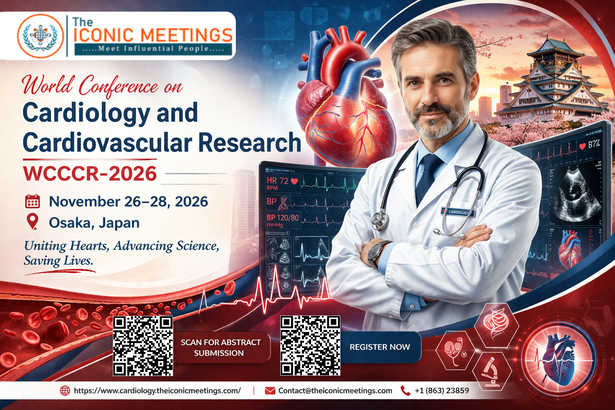
✔ The World Conference on Cardiology and Cardiovascular Research (WCCCR-2026) will take place from November 26–28, 2026, in Osaka, Japan.
✔ The three-day event will bring together cardiologists, cardiovascular researchers, clinicians, healthcare professionals, academics, and representatives from the pharmaceutical and medical device sectors.
✔ The scientific program will cover topics including precision cardiology, artificial intelligence, digital health, interventional cardiology, electrophysiology, heart failure, cardiac imaging, preventive cardiology, and emerging therapies.
✔ WCCCR-2026 will follow a hybrid format, allowing participants to attend in person in Osaka or participate virtually.
✔ The conference aims to facilitate scientific exchange and collaboration between professionals working across cardiovascular research, clinical practice, healthcare, and related industries.
Cardiovascular medicine continues to evolve as researchers and healthcare professionals explore new approaches to prevention, diagnosis, treatment, and patient care. Advances in medical imaging, digital technologies, personalized medicine, and therapeutic development are contributing to changes across many areas of cardiology.
Against this background, the World Conference on Cardiology and Cardiovascular Research (WCCCR-2026) will bring together international participants in Osaka, Japan, from November 26–28, 2026. The hybrid event will provide opportunities to attend scientific sessions, hear expert presentations, exchange knowledge, and discuss developments in cardiovascular medicine and research.
Why cardiovascular research remains central to modern healthcare?
Quick Answer: Cardiovascular research helps improve the understanding, prevention, diagnosis, and treatment of diseases affecting the heart and blood vessels, while supporting the development of new medical technologies and therapeutic approaches.
Cardiology covers a broad range of conditions and clinical challenges, from hypertension and heart failure to arrhythmias and acute cardiac events. Research in the field therefore involves multiple disciplines, including clinical medicine, biology, medical imaging, pharmacology, biomedical engineering, and digital health.
The development of more personalized approaches is also becoming an important area of investigation. Precision cardiology seeks to incorporate individual characteristics and clinical information into strategies for assessing cardiovascular risk and managing disease.
Scientific perspective
Current developments in cardiovascular medicine increasingly combine clinical expertise with advances in technology and data analysis. Artificial intelligence, digital health platforms, advanced imaging techniques, and emerging therapeutic strategies are among the areas influencing cardiovascular research.
| Research area | Potential focus |
|---|---|
| Precision cardiology | Personalized approaches to cardiovascular care |
| Artificial intelligence | Data analysis and digital applications in cardiology |
| Cardiac imaging | Advanced approaches to cardiovascular diagnosis |
| Electrophysiology | Arrhythmias and heart rhythm disorders |
| Regenerative cardiology | Emerging approaches to cardiac tissue repair |
| Preventive cardiology | Risk reduction and cardiovascular health |
From prevention to advanced cardiovascular therapies
Quick Answer: Modern cardiovascular medicine combines prevention, early diagnosis, medical treatment, interventional procedures, rehabilitation, and emerging therapeutic approaches to address different stages of cardiovascular disease.
Prevention remains an important component of cardiovascular health. Lifestyle, nutrition, public health strategies, and the management of cardiovascular risk factors can all contribute to reducing the burden associated with cardiovascular disease.
At the same time, research continues to explore new options for patients requiring more advanced care. WCCCR-2026 will address areas including interventional cardiology, heart failure, electrophysiology, regenerative medicine, drug development, and acute cardiac care.
The conference topics also include women’s cardiovascular health and geriatric cardiology, reflecting the need to consider different patient populations and their specific cardiovascular challenges.
Why WCCCR-2026 matters?
The World Conference on Cardiology and Cardiovascular Research (WCCCR-2026) is designed as an international forum for researchers, clinicians, healthcare professionals, academics, and industry representatives to exchange knowledge and discuss developments in cardiovascular medicine.
According to the organizers, participants from more than 40 countries are expected to take part in the event. The hybrid format also allows professionals who cannot travel to Japan to participate virtually.
The three-day program will include:
- Plenary sessions
- Keynote presentations
- Scientific sessions
- Oral and poster presentations
- Expert discussions
- Networking opportunities
- Hybrid participation for onsite and online attendees
Abstract submissions are also part of the conference program, providing researchers with an opportunity to present their work within the scientific sessions.
A scientific committee bringing together international expertise
The conference materials identify several researchers and medical experts as members of its scientific committee. Their affiliations span universities and medical institutions in different countries.
| Expert | Institution | Country |
|---|---|---|
| Gregg L. Semenza | Johns Hopkins University School of Medicine | USA |
| Valentin Fuster | The Mount Sinai Hospital | USA |
| Roxana Mehran | Icahn School of Medicine at Mount Sinai | USA |
| Alessandro Bianchi | University of Sussex | UK |
| Giovanni A. Rossi | University of Genoa | Italy |
| Karen Sliwa | University of Cape Town | South Africa |
The organizers also present additional speakers on the official conference website, covering different areas of cardiovascular medicine and research.
Scientific topics at WCCCR-2026
The WCCCR-2026 program covers a broad range of subjects related to cardiovascular science and clinical medicine.
Precision cardiology and digital health
- Precision cardiology and personalized medicine
- Artificial intelligence in cardiology
- Digital health
- Emerging technologies in cardiovascular care
Clinical cardiology
- Advances in interventional cardiology
- Cardiac electrophysiology and arrhythmias
- Heart failure and advanced therapies
- Acute cardiac care and emergency medicine
Cardiovascular research and emerging therapies
- Regenerative cardiology
- Stem cell therapy
- Emerging therapies
- Drug development
- Cardiovascular complications of systemic diseases
Prevention and patient-centered care
- Preventive cardiology
- Public health
- Women’s cardiovascular health
- Geriatric cardiology
- Lifestyle and nutrition
- Cardiac rehabilitation
Cardiac imaging
Innovations in cardiac imaging will also form part of the scientific program, highlighting the role of imaging technologies in cardiovascular assessment and diagnosis.
Together, these topics illustrate the multidisciplinary nature of contemporary cardiovascular research, connecting prevention, diagnosis, treatment, technology, and long-term patient care.
A three-day program combining scientific sessions and networking
WCCCR-2026 will take place over three days, with the program beginning with registration and introductory sessions on November 26. The schedule includes plenary and keynote sessions alongside scientific presentations.
The second and third days will focus extensively on scientific sessions, with scheduled networking breaks throughout the program. Certification and a closing ceremony are also planned as part of the final stages of the event.
This combination of scientific presentations and informal exchanges is intended to provide participants with opportunities to discuss research findings and establish professional connections.
Why Osaka is hosting WCCCR-2026?
Osaka is one of Japan’s major urban centers and offers a combination of modern infrastructure, cultural heritage, and international accessibility. The city is known for landmarks such as Osaka Castle, Dotonbori, Shinsaibashi, and the Umeda Sky Building.
For international participants, Osaka is served by Kansai International Airport (KIX) and Osaka Itami Airport (ITM). Both airports provide connections to the city through public transportation and other travel options.
The conference venue will be the Grand Prince Hotel Osaka Bay, where participants attending in person will be able to take part in the scientific program and networking activities.
Who should attend WCCCR-2026?
| Audience | Potential benefits |
|---|---|
| Cardiologists | Explore developments across different areas of cardiology |
| Researchers | Present research and exchange scientific knowledge |
| Clinicians | Follow emerging approaches in cardiovascular medicine |
| Healthcare professionals | Discover developments in cardiovascular health and care |
| Academics | Connect with international researchers and institutions |
| Pharmaceutical professionals | Follow developments in therapies and drug research |
| Medical device professionals | Explore advances in cardiovascular technologies |
| Students | Learn about current research and expand professional networks |
Practical information
Event: World Conference on Cardiology and Cardiovascular Research (WCCCR-2026)
Dates: November 26–28, 2026
Location: Grand Prince Hotel Osaka Bay, Osaka, Japan
Format: Hybrid — In-person and Online
Abstract submission: Available through the official conference website
Official website: https://www.cardiology.theiconicmeetings.com/
Abstract submission: https://www.cardiology.theiconicmeetings.com/abstractsubmission
Registration: https://www.cardiology.theiconicmeetings.com/registration
The organizers indicate that group discounts are available for groups of more than three participants.
Frequently Asked Questions
What is WCCCR-2026?
WCCCR-2026 is the World Conference on Cardiology and Cardiovascular Research, an international event focusing on developments in cardiology, cardiovascular research, clinical medicine, and related technologies.
When will WCCCR-2026 take place?
The conference is scheduled for November 26–28, 2026.
Where will the conference be held?
The in-person event will take place at the Grand Prince Hotel Osaka Bay in Osaka, Japan.
Can participants attend online?
Yes. WCCCR-2026 will use a hybrid format, allowing participants to attend onsite in Osaka or participate virtually.
What topics will be discussed?
The scientific program covers precision cardiology, personalized medicine, artificial intelligence, digital health, interventional cardiology, electrophysiology, heart failure, cardiac imaging, regenerative cardiology, preventive cardiology, emerging therapies, women’s cardiovascular health, geriatric cardiology, nutrition, and cardiac rehabilitation.
Who can participate?
The conference is intended for cardiologists, researchers, clinicians, healthcare professionals, academics, students, pharmaceutical representatives, medical device professionals, and other specialists working in cardiovascular medicine and research.
Can researchers submit an abstract?
Yes. Abstract submissions are available through the conference’s official submission platform.
Sources and methodology
The event-specific information presented in this article is based on the official conference materials and information provided by the organizers of WCCCR-2026, including the conference program, scientific topics, venue, participation format, and registration information.
General explanations concerning cardiovascular research, prevention, digital health, and medical innovation are based on established scientific knowledge. The article distinguishes between information provided by the event organizers and broader editorial context.
Disclaimer
This article is published for informational purposes only. It does not constitute medical advice, diagnosis, or treatment recommendations. Readers should consult qualified healthcare professionals for questions concerning their individual health or medical care.
Continue exploring longevity
Explore this longevity topic