
Definition
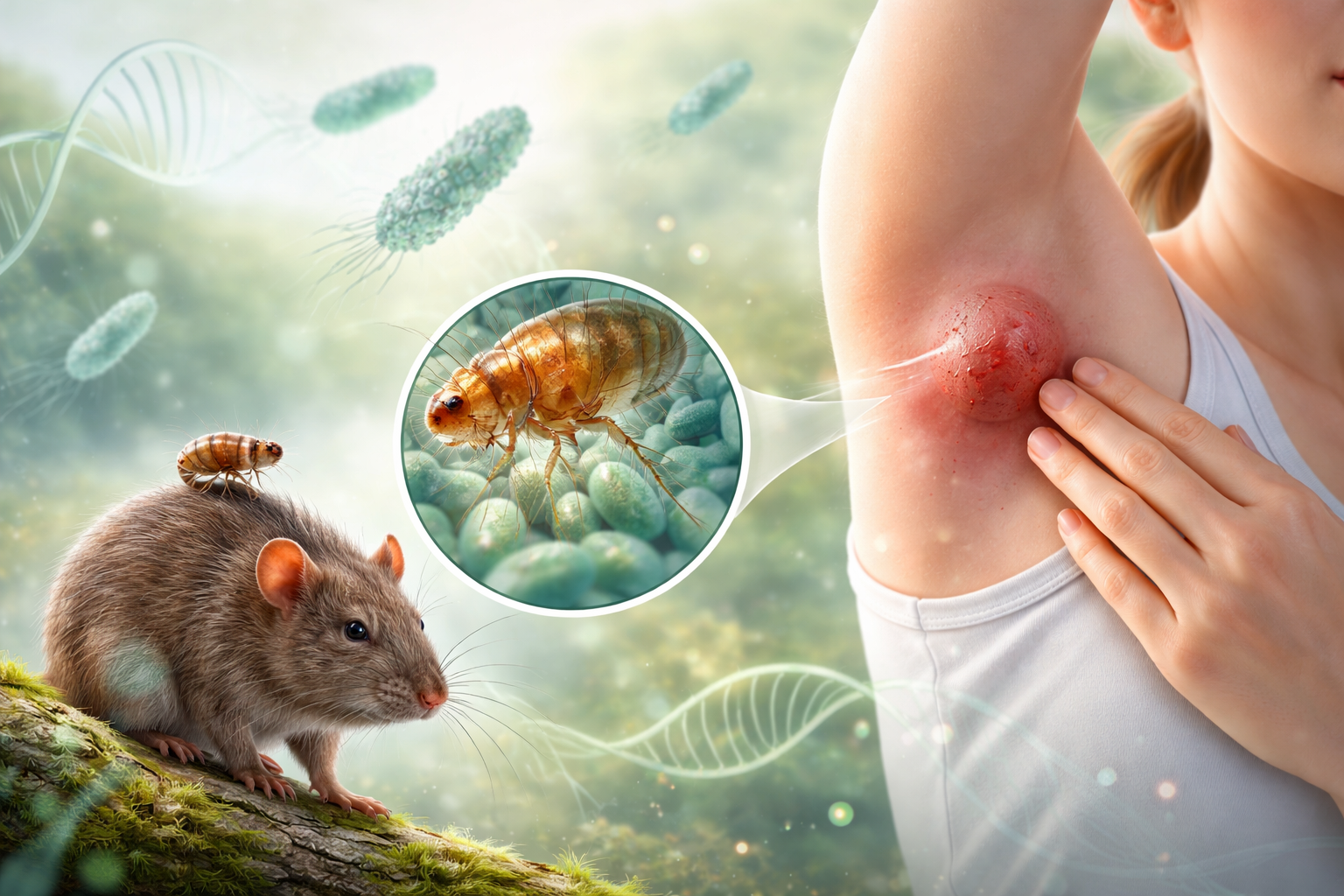
Bubonic plague is an acute bacterial infection caused by Yersinia pestis, a Gram-negative bacillus primarily transmitted through the bite of infected fleas. It is the most common form of plague in humans. After an incubation period of a few days, the disease presents with high fever, chills, rapid deterioration of general condition, and the appearance of « buboes », which are swollen, painful, and inflamed lymph nodes, most often located in the groin, armpits, or neck.
Without prompt antibiotic treatment, the infection can progress to severe forms such as septicemic plague or pneumonic plague, both associated with high mortality. Historically, bubonic plague was responsible for major pandemics, including the « Black Death » in the 14th century. Today, it persists in endemic areas, particularly in Africa, Asia, and the Americas, but remains rare and generally manageable with modern antibiotics.
Origin and context of use
Bubonic plague has been known since Antiquity, but it left a lasting mark during the Black Death pandemic in the 14th century, which caused millions of deaths in Europe. The causative agent, Yersinia pestis, was identified at the end of the 19th century by Alexandre Yersin during outbreaks in Asia.
The term « bubonic » refers to the buboes, the characteristic clinical sign observed in infected patients. The disease is closely linked to natural cycles involving wild rodents and their parasites, particularly fleas. Hygiene conditions, population density, and trade historically contributed to its spread.
Today, bubonic plague is monitored within global public health systems. It serves as a model for studying zoonotic diseases, highlighting interactions between humans, animals, and the environment in infectious transmission.
How does it work?
Infection usually begins with the bite of an infected flea, which regurgitates Yersinia pestis into the host’s skin. The bacteria then enter the tissues and spread through the lymphatic vessels, where they multiply rapidly. They reach regional lymph nodes, triggering an intense inflammatory response that leads to the formation of buboes.
Yersinia pestis has specific virulence factors that allow it to evade the immune system. It inhibits phagocytosis by macrophages and disrupts early inflammatory responses. This ability promotes rapid bacterial multiplication and potential dissemination into the bloodstream.
If the infection is not contained, the bacteria may invade the blood, causing septicemia. It can also reach the lungs, leading to pneumonic plague, a particularly contagious form transmitted via respiratory droplets. Disease progression depends on how quickly treatment is initiated and on the host’s immune response.
In which cases is it used?
Bubonic plague is primarily a medical diagnosis rather than a therapeutic tool. It is suspected in patients presenting with acute fever and painful lymphadenopathy, especially in endemic areas or after exposure to potentially infected animals.
It is considered in specific contexts:
- suspicion of zoonotic infection after contact with rodents or their fleas
- epidemiological surveillance in endemic regions
- management of imported cases in non-endemic countries
- public health situations requiring rapid response to prevent spread
Early recognition allows prompt treatment and limits severe complications as well as secondary transmission.
Benefits and objectives
Understanding bubonic plague has contributed to major advances in infectious disease and public health. Current goals focus on early detection and outbreak control.
✔ Improve rapid diagnosis through microbiological testing
✔ Administer effective antibiotics as early as possible
✔ Monitor animal reservoirs and vectors
✔ Implement preventive measures in high-risk areas
✔ Limit spread in case of outbreaks
These actions significantly reduce mortality and prevent large-scale epidemics, unlike historical periods when no treatment was available.
Risks, limitations or controversies
Despite medical progress, bubonic plague remains a serious disease. The main risk lies in delayed diagnosis or treatment, which can lead to rapid progression to life-threatening forms. Limited access to healthcare in some endemic regions remains a major constraint.
Antibiotic resistance is monitored, although it remains rare. Ecological conditions that favor rodent populations can complicate disease control.
Concerns also exist about the potential use of Yersinia pestis as a bioterrorism agent due to its virulence, reinforcing the need for robust surveillance and rapid response systems.
Research and innovations
Current research focuses on better understanding the virulence mechanisms of Yersinia pestis and its interactions with the immune system. Efforts are underway to develop more effective vaccines, although none is widely used for the general population at present.
Rapid diagnostic techniques such as PCR allow earlier identification of the bacterium. The study of ecosystems involving rodents and fleas also helps anticipate emergence risks.
Epidemic modeling and integration of environmental data improve surveillance strategies. These approaches enable more targeted public health interventions and help limit the impact of endemic outbreaks.
FAQ short
What is bubonic plague?
It is a bacterial infection transmitted by infected fleas, characterized by high fever and painful swollen lymph nodes called buboes.
How is it transmitted?
Transmission mainly occurs through flea bites from infected rodents. Less commonly, it can happen through contact with contaminated tissues.
What are the first symptoms?
Early signs include sudden fever, chills, intense fatigue, and the rapid appearance of swollen, painful lymph nodes.
Is it still present today?
Yes, it still exists in certain parts of the world, particularly in Africa and Madagascar, but remains rare and generally controlled.
Can it be cured?
Yes, early antibiotic treatment leads to recovery in most cases.
Is it contagious between humans?
The bubonic form is not directly transmitted between humans. However, the pneumonic form can spread via airborne droplets.
Which animals are involved?
Wild rodents are the main reservoirs, and fleas act as the transmission vectors to humans.
What is the incubation period?
The incubation period is usually 2 to 6 days after the infectious bite.
How can infection be prevented?
Prevention relies on rodent control, protection against flea bites, and monitoring of at-risk areas.
Why do buboes appear?
They result from inflammation of lymph nodes where the bacteria multiply after entering the body.
Key points
Bubonic plague is a severe bacterial infection transmitted by infected fleas, marked by painful swollen lymph nodes and high fever. It persists in certain regions despite medical advances. Early diagnosis and prompt antibiotic treatment ensure recovery in most cases. Monitoring animal reservoirs and vectors remains essential to prevent outbreaks. This disease highlights the importance of interactions between environment, animals, and human health.
Related Longevity Concepts
Scientific context
Field: Clinical medicine, biology, and preventive health
Biological process: Human physiology, pathology, and health-related mechanisms
Related systems: Metabolic, immune, cardiovascular, nervous, and cellular systems
Relevance to longevity: Understanding medical terminology and biological processes helps clarify how diseases, symptoms, biomarkers, and treatments influence long-term health, prevention, and healthy aging.


