Definition
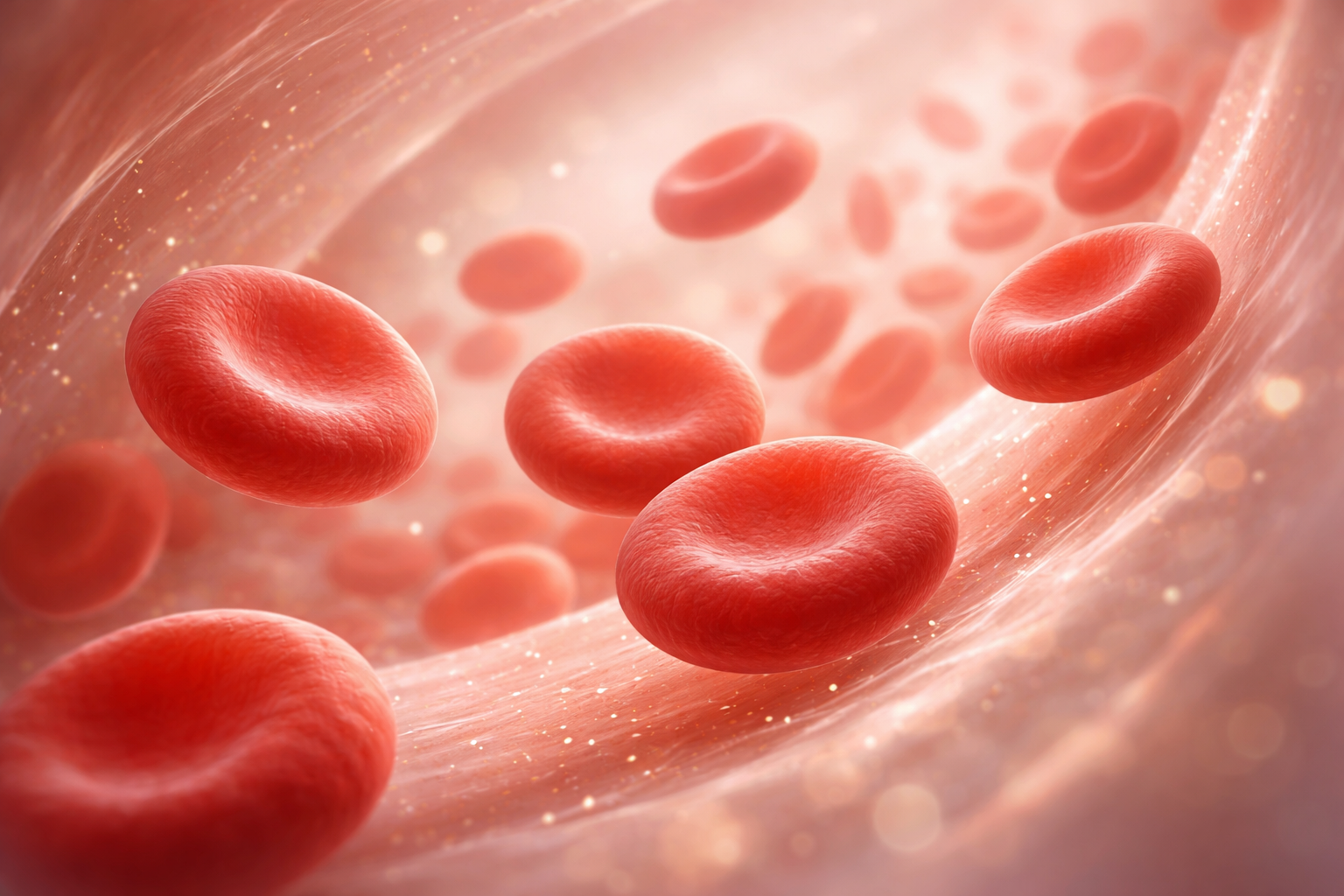
The amount of erythrocytes in a specific volume of blood is measured by the red blood cell count, which is often represented in millions per microliter. Because they contain hemoglobin, red blood cells, also known as erythrocytes, are blood cells that are specifically designed to carry oxygen. A common biological test used in medical practice, the complete blood count includes this value.
Age, sex, and some physiological variables like altitude all affect the concentration of red blood cells. Anemia is typically indicated by a drop in this count, although polycythemia may be indicated by an increase. Because it is linked to other measures like hematocrit and hemoglobin concentration, the interpretation never depends only on this one figure.
The red blood cell count thus provides essential information about the blood’s ability to transport oxygen to the tissues.
Origin and context of use
The measurement of red blood cells developed with the rise of hematology in the 19th century, when the first microscopy techniques allowed for the observation and quantification of blood cells. The initial manual methods, based on counting chambers, were gradually replaced by automated analyzers capable of providing quick and accurate results.
Today, this examination is part of the standard blood test prescribed in general medicine, hospitalization, or specialized follow-up. It is used both to detect anomalies and to monitor the progression of chronic diseases.
The red blood cell count is also essential in surgical, oncological, and sports medicine contexts, where the balance between oxygenation and performance is monitored.
How does this work?
The study of a blood sample, often obtained by venipuncture, is the basis for counting red blood cells. After that, the blood is put into a hematology analyzer, which counts the cells using both visual and physical methods.
Electrical impedance and flow cytometry are the two main concepts. The cells in the first technique change an electric current as they pass through an orifice, with each variation representing a cell. The second method allows for more accurate identification by analyzing the size and structure of the cells using a laser beam.
The apparatus determines the concentration of red blood cells and separates them from other blood components. Additionally, it offers erythrocyte measures that are helpful in identifying anomalies, such as the mean corpuscular volume (MCV).
The reliability depends on the quality of the sample and the absence of interferences such as agglutinins or certain morphological abnormalities.
When is it used ?
The study of a blood sample, often obtained by venipuncture, is the basis for counting red blood cells. After that, the blood is put into a hematology analyzer, which counts the cells using both visual and physical methods.
Electrical impedance and flow cytometry are the two main concepts. The cells in the first technique change an electric current as they pass through an orifice, with each variation representing a cell. The second method allows for more accurate identification by analyzing the size and structure of the cells using a laser beam.
The apparatus determines the concentration of red blood cells and separates them from other blood components. Additionally, it offers erythrocyte measures that are helpful in identifying anomalies, such as the mean corpuscular volume (MCV).
Benefits and goals
The red blood cell count serves several clinical purposes. It enables a rapid assessment of a patient’s hematological status and guides subsequent investigations. It notably offers:
✔ early detection of anemias
✔ monitoring of chronic diseases
✔ an evaluation of treatment effectiveness
✔ assistance in diagnosing bone marrow disorders
✔ monitoring of acute or chronic blood loss
This exam is quick, minimally invasive, and repeatable. It is a critical tool for medical decision-making.
Risks, limitations, or controversies
There aren’t many dangers associated with the red blood cell count itself; the primary one is associated with the blood draw, which may cause hematomas or local discomfort.
Its interpretation is the primary source of its restrictions. If the clinical context and other biological characteristics are not taken into account, an isolated result may be misleading. Dehydration and pregnancy are two circumstances that can change values without any underlying disease.
Even if they are uncommon, technical issues can distort the outcomes. These mistakes are lessened but not completely eliminated by automation.
Research and new developments
The goal of recent developments in hematology is to increase the precision and depth of data from blood analyses. Modern analyzers incorporate cutting-edge technology that are able to examine both the quantity and morphological features of red blood cells.
Additionally, research is investigating the use of artificial intelligence to identify minute abnormalities in blood profiles. The early diagnosis of several hematological disorders may be improved by these instruments.
Additionally, portable equipment for quick analyses at the patient’s bedside or in remote locations can be developed thanks to miniaturized techniques. Improved accessibility and a more sophisticated interpretation of the findings are still the goals.
Short FAQ
A red blood cell: what is it?
A red blood cell is a type of blood cell that uses hemoglobin to carry oxygen. Before being eliminated, it circulates for roughly 120 days after being generated in the bone marrow.
What is the typical value?
Age and sex have an impact on the values. They typically fall between 4 and 6 million cells per microliter of blood in individuals.
What does a low value mean?
Reduced production, excessive destruction, or blood loss are the most common causes of anemia.
What does a high number mean?
An increase could be indicative of polycythemia, which is occasionally linked to a bone marrow disorder or a chronic oxygen shortage.
How is the exam conducted?
An automated equipment is used in the lab to analyze the blood sample, which is typically drawn from the elbow crease.
Do you have to fast?
With the exception of some reasons related to other procedures, measuring red blood cells does not need fasting.
How long will it take to get the results?
Depending on the laboratory, the findings are frequently available the same day or the following day.
Is it possible to affect the outcome?
Yes, there are some variables that can momentarily change the readings, such as hydration, altitude, or physical activity.
Is the exam painful?
There is very little discomfort, and it only occurs at the time of the puncture. It vanishes fast.
Why is this exam common?
It provides essential information about general health and allows for the detection of numerous anomalies.
Key Information
A key component of the complete blood count, the red blood cell count indicates the blood’s capacity to carry oxygen and is crucial in the diagnosis of anemias and polycythemias. Its interpretation necessitates a thorough analysis that takes into account other blood indices as well as the clinical context. This test is simple to perform, fast, and accurate, and it is still a vital tool in routine biological assessments and the monitoring of many pathologies.
Related Longevity Concepts
Scientific context
Field: Clinical medicine, biology, and preventive health
Biological process: Human physiology, pathology, and health-related mechanisms
Related systems: Metabolic, immune, cardiovascular, nervous, and cellular systems
Relevance to longevity: Understanding medical terminology and biological processes helps clarify how diseases, symptoms, biomarkers, and treatments influence long-term health, prevention, and healthy aging.